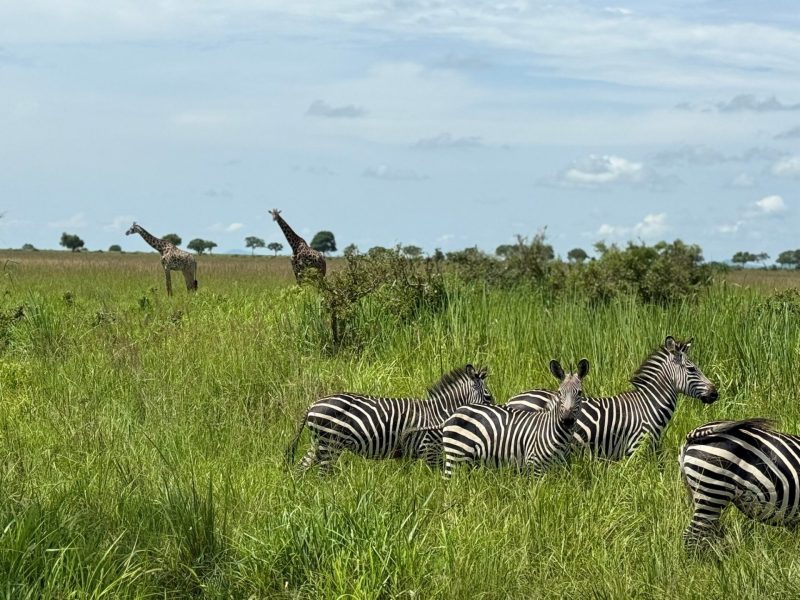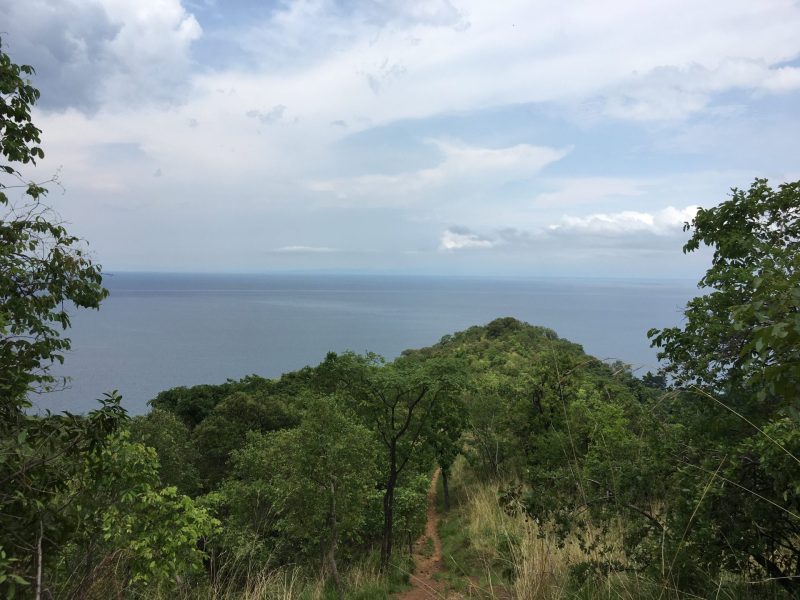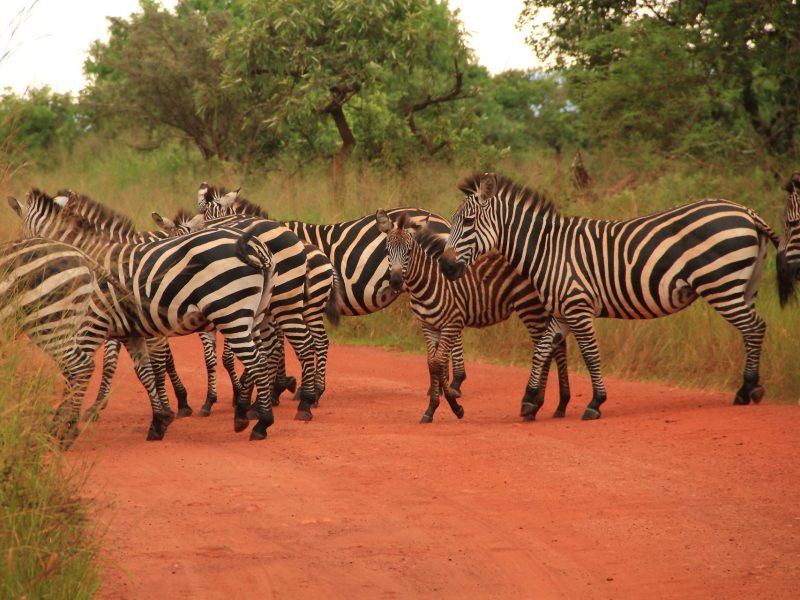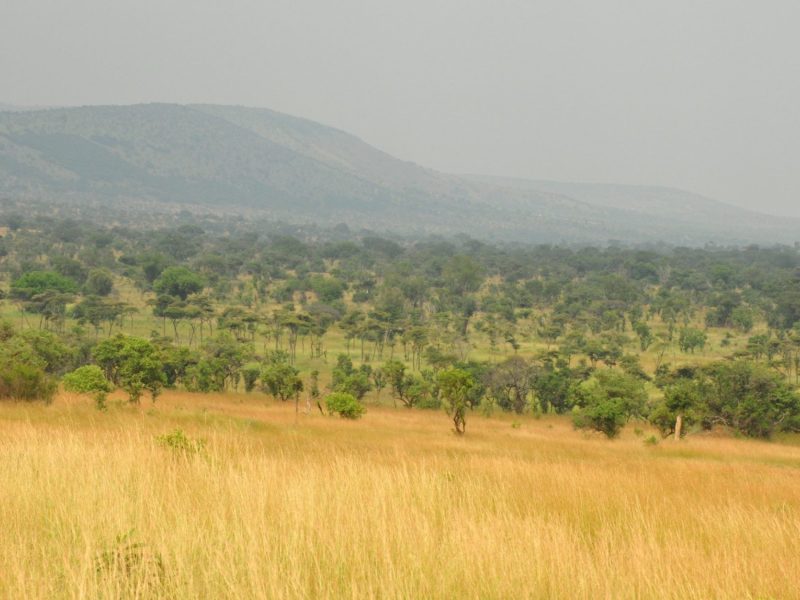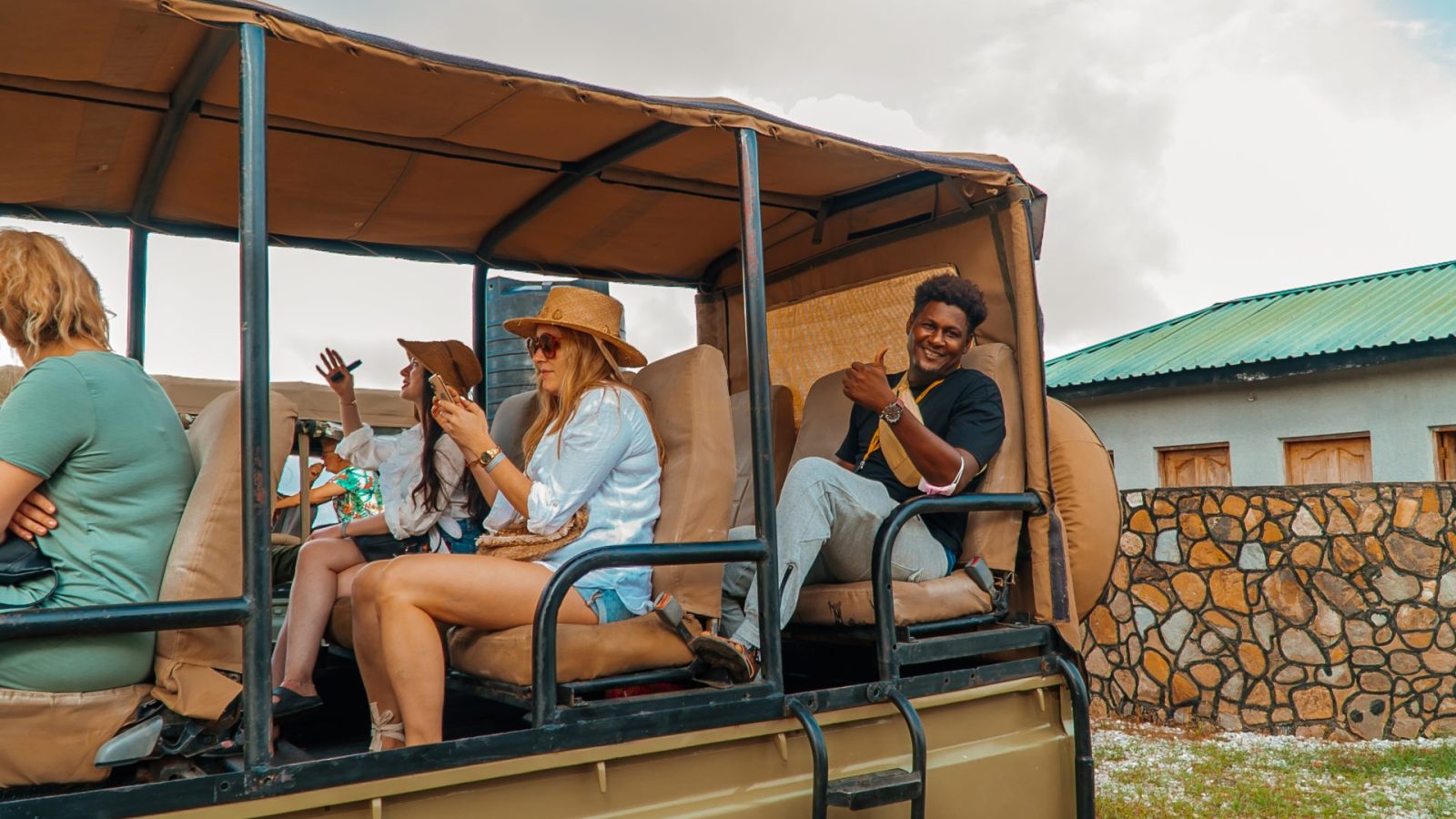
Game drives in Burigi-Chato National Park run through wooded savannah, floodplain margins and ridge country in a 4×4 with a park guide, working the drainage lines and water edges where wildlife concentrates. Night drives are permitted here, which is unusual in Tanzania. Burigi-Chato covers 4,707 square kilometres of northwestern Tanzania between Lake Victoria and the Rwandan border, and its size relative to its track network sets how a driving day works.
This is a park where the route matters more than the hours. Driving further does not help.
What a Burigi-Chato Game Drive Safari Involves
A game drive safari here is a 4×4 on unsurfaced tracks with a park guide aboard, running from a gate or a campsite out to whichever sector you have chosen for the day.
Vehicles are usually hired with a driver from Mwanza or Bukoba, since there are none available at the park itself. A high-clearance 4×4 with low range is necessary rather than advisable, because the internal routes include steep stony ridge sections and valley crossings that flood.
Park driving hours run from six in the morning to six in the evening, with a 50 kilometre per hour speed limit and a requirement to keep to authorised tracks. Night game drives are a permitted exception with a guide and the appropriate fee.
The park guide is charged per group per day rather than per person, which makes it cheap across four people and is the single most useful thing you can buy here.
Take the guide even if you are self-driving. Tracks are unsignposted in places, wildlife densities are patchy, and knowing which drainage lines are producing this month changes your day more than any amount of extra driving.
Which Sectors to Drive on Your Safari
The park is far too large to cover in one visit, and choosing a sector is the first real decision.
The Lake Burigi valley, west: The strongest ground overall. Shoreline drives, papyrus inlets and the water edges where everything concentrates in the dry season. Reached from the Nkonje ranger post.
The eastern fever tree ground: Sloping toward Lake Victoria on poorer soils, with large stands of Acacia xanthophloea. Open canopy, clear ground beneath, and the most accessible sector from the Katete Gate.
Ridge and escarpment routes: Stony, slow and steep, giving elevated viewpoints and rock-dwelling species. Best driven in the middle of the day when the woodland has gone quiet.
The wooded savannah interior: Hundreds of square kilometres of medium and tall grass beneath open canopy. Hardest ground for sightings, but where roan and sable antelope live.
Crossing from the eastern sector to the Lake Burigi valley takes most of a day, since tracks follow ridge crests or valley floors rather than moving freely between drainage systems. Two days means one sector.
Reading the Terrain on a Game Drive Safari
Sightings here come at edges rather than in the middle of anything, and learning to see that changes what your day produces.
Where woodland meets floodplain, grazers come out to feed and predators watch them. Where a track crosses a stream, animals have been drinking. Where a clearing opens in the miombo, you get sightlines that the interior never gives you. Where rocky ground rises, klipspringer and hyrax appear and nothing else does.
The internal structure is a series of long north to south ridges separated by drainage lines flowing north. Once you can read that, you can predict where the productive edges will be rather than hoping to stumble into them.
Ask your guide to plan a route that crosses at least two habitat types. It is the single easiest improvement available.
What You Will See on a Game Drive Safari
Realistic expectations serve you better than a species list, so here is the honest tiering.
Reliably seen: impala, warthog, baboon and vervet monkey, with giraffe easy to spot because they stand above the grass that hides everything else. Buffalo in sizeable herds, particularly on the floodplain margins as the dry season progresses. Defassa waterbuck near the water, topi and zebra on the open grassland stretches.
Possible with intent: roan and sable antelope in the wooded sectors, both miombo specialists worth naming to your guide. Eland, oribi, reedbuck and bushbuck. Elephant along the drainage lines and floodplains, depending on the valley and the season.
A good day rather than a plan: lion on the open floodplain edges, leopard in the riverine forest corridors or on the crags, spotted hyena along the drainage lines. Predator densities are recovering from severe mid-1990s losses and no sighting is guaranteed.
A game drive here is judged by what you found rather than how many species you ticked. The list is real; the numbers behind it are still rebuilding.
Night Game Drive Safaris, Permitted in Few Tanzanian Parks
Burigi-Chato allows night driving, alongside Katavi, Ruaha, Mikumi, Tarangire, Lake Manyara, Nyerere and Ibanda-Kyerwa. Across much of the park system it is prohibited entirely.
In wooded country this opens species that daylight drives simply miss. Serval hunt the long grass at wetland margins after dark. Genet and civet work the tracks. Spotted hyena are on the move rather than lying up, and leopard, which are largely nocturnal, become findable. Owls and nightjars come into play.
The valley floors are the ground to work after dark. Specific guidelines apply, a guide is required, and the activity carries a supplement on top of the daily conservation fee.
Book it in advance rather than raising it on the evening.
Self-Drive Game Drive Safaris and Vehicle Rules
Self-driving is allowed and is genuinely cheaper, particularly in a locally registered vehicle.
The vehicle entry difference is substantial. Tanzanian and non-commercial East African registered vehicles pay in shillings by tare weight band, while commercial East African and foreign-registered vehicles pay considerably more in dollars across the same bands. Open vehicles carry a fifty percent surcharge over the standard rate.
Park rules apply to everyone. Keep to authorised tracks. Do not feed animals, since it changes their diet and creates dependence on people. Do not remove anything of biological interest. Camping only in designated areas. Drones are prohibited in every Tanzanian national park.
Note that East African private vehicles are prohibited from conducting tourism business inside the parks, so an informal paid arrangement with a car owner is not a workaround.
Fuel before you enter. There is none inside, and the nearest is Chato, Biharamulo, Bukoba or Mwanza.
How the Season Changes a Game Drive Safari
June to September: The best driving of the year. Grass falls back, seasonal water dries up and animals concentrate on Lake Burigi and the permanent rivers. Tracks are firm and every sector is reachable. August and September are strongest.
October to December: Rains return and wildlife disperses across fresh grazing. Ridge routes turn slippery after storms. Woodland flushes into new leaf and birding improves as migrants arrive.
January to February: Grass high from the November rains and game scattered. Tracks mostly usable, and you will have the park to yourself.
March to May: Grass at maximum height and animals at their most dispersed. Valley crossings flood, escarpment routes close first, and moving between sectors may not be possible.
Combining Game Drives With Boat Safaris and Walks
Driving alone is the weakest way to use this park, and the other activities are what lift a visit.
The boat safari on Lake Burigi consistently outperforms game drives for reliable sightings, because water concentrates animals and gives you an open shoreline to look at. Hippo, large Nile crocodile and African fish eagles at high density are close to certain from the water.
Walking safaris are conducted with an armed ranger, split into short walks of one to four hours and long walks above four hours. On foot you read tracks, feeding sign and dung that a vehicle passes at speed, and the ridges are where walking gives most.
Canoeing is offered separately, capped at three hours per session here, and is the best tool for shy wetland species along the papyrus margins.
A good day is usually a dawn boat trip, a midday rest, a late afternoon drive and a night drive if you have booked one.
Getting to the Park for a Game Drive Safari
Mwanza is the main gateway at roughly 150 kilometres, a three to five hour drive depending on route and season. Bukoba is closer at two to three hours. Chato town sits about 40 kilometres from the Katete Gate.
By air, Chato and Bukoba receive scheduled domestic flights with a road transfer onward. Private charters can land at the airstrip near the Nkonje ranger post beside Lake Burigi, or at the Biharamulo airstrip, which removes the long internal drive.
Park fee payment goes through the government electronic payment gateway, made online, at a bank by card, or by mobile money. Cash at the gate will not work and gate connectivity is not reliable enough to sort out on arrival.
Frequently Asked Questions About Burigi-Chato Game Drive Safaris
How much does a game drive cost?
The conservation fee is currently US$30 per person per day for non-East African adults aged sixteen and above and US$10 for children aged five to fifteen, with US$15 and US$5 for expatriates and Tanzanian residents and TZS 5,000 and TZS 2,000 for East African Community citizens. Vehicle entry runs from TZS 20,000 per day for a Tanzanian registered vehicle up to 2,000 kilograms, rising to TZS 35,000 and TZS 60,000 for heavier bands, while commercial and foreign registered vehicles pay US$40, US$150 and US$200. A park guide is US$20 per group per day. Add 18 percent VAT to all TANAPA charges.
What does a night game drive cost?
Currently US$50 per person aged sixteen and above and US$25 for children aged five to fifteen, with TZS 10,000 and TZS 5,000 for East African Community citizens. That sits on top of the daily conservation fee and the guide fee, specific park guidelines apply, and it needs booking in advance. Night nature walks are a cheaper alternative at US$10 per adult if you want the nocturnal experience on foot rather than from a vehicle.
Do I need a 4×4?
Yes, and a high-clearance one with low range. Internal tracks are unsurfaced, the ridge and escarpment routes are stony with real gradients, and valley crossings become difficult when wet. A two-wheel drive vehicle will not manage the park in any season. There are no vehicles for hire at the park, so arrange one with a driver from Mwanza or Bukoba before you travel.
Can I do a self-drive game drive?
Yes, and it is considerably cheaper in a locally registered vehicle, since Tanzanian and non-commercial East African registered cars pay vehicle entry in shillings while commercial and foreign registered ones pay in dollars at much higher rates. Take a park guide at the gate regardless, at US$20 per group per day. Keep to authorised tracks, observe the six to six driving hours and 50 kilometre per hour limit, and note that private East African vehicles cannot conduct tourism business inside the park.
Which sector gives the best game drives?
The Lake Burigi valley in the west, where water concentrates wildlife and the shoreline gives you something to look at. The eastern fever tree ground near the Katete Gate is the most accessible from Mwanza and has open canopy with clear ground beneath, which makes for readable habitat. Crossing between the two takes most of a day, so pick one unless you have four or five days.
How long should a game drive last?
Three to four hours at each end of the day, rather than a full day in the vehicle. Wildlife here is active early and late and lies up through the heat, so a long midday drive burns fuel and patience for very little return. Use the middle hours for a ridge route if you want views, or rest at camp. Park driving hours run from six in the morning to six in the evening.
Will I see other vehicles?
Very likely not. This is among the four largest national parks in Tanzania at 4,707 square kilometres while receiving a tiny fraction of northern circuit visitor numbers, and it was only gazetted in 2019. You can drive here all day and see nobody. The tradeoff is that wildlife densities are recovering rather than high, so you are trading sighting volume for solitude.
Booking Your Burigi-Chato Trip
The safari companies and tour operators listed on this website put trips like this together for a living and know which camps, guides and routes actually deliver. We are an independent guide to Burigi-Chato; we do not book or sell tours ourselves.
When you are ready, arrange your safari, tour or holiday with one of the recognised operators listed here. Tell them your dates and what matters most, and a real person, not a form, will handle the itinerary, park bookings and logistics for you.