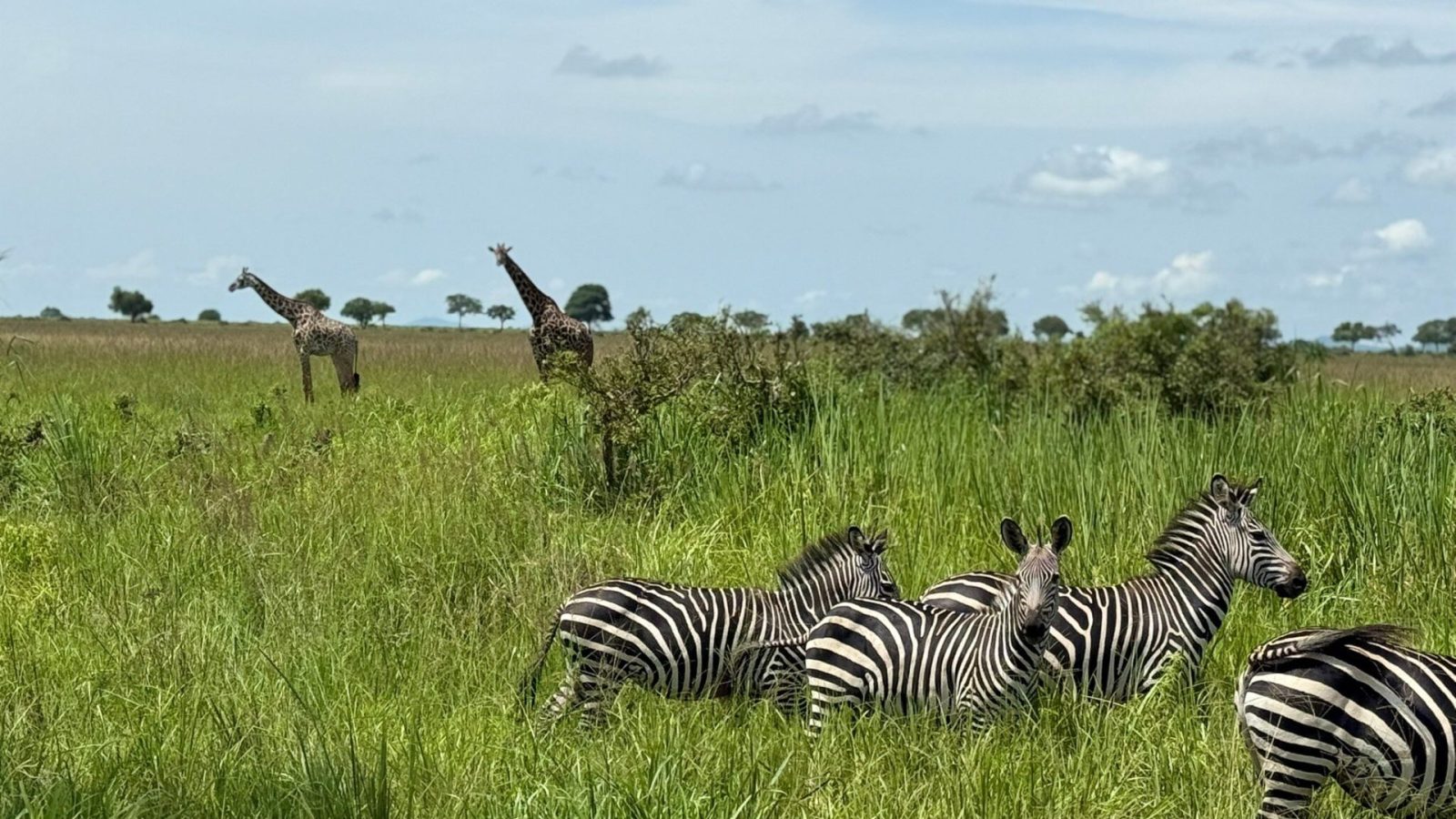
The giraffe and zebra plains in Burigi-Chato National Park are the open grassland stretches on the valley slopes and the floodplain margins, where the wooded savannah thins and plains game gathers within sight. These areas sit between the ridges and the water, and they carry the park’s best general game viewing. Burigi-Chato covers 4,707 square kilometres of northwestern Tanzania, most of it wooded rather than open.
Plains here means clearings and slopes rather than the horizon-to-horizon grassland of the Serengeti. The difference matters.
Where the Open Plains Sit on a Burigi-Chato Safari
Finding the open ground is the first task of any plains game safari here, because it is not where a map would lead you.
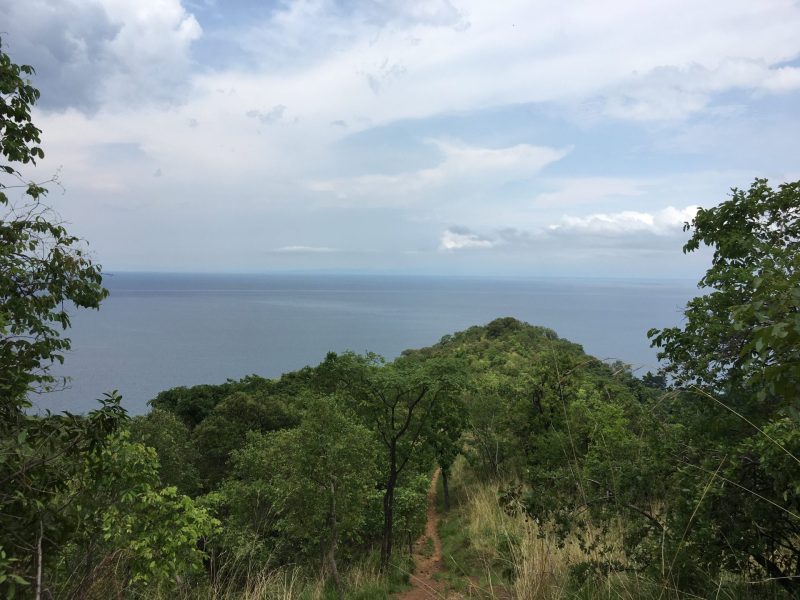
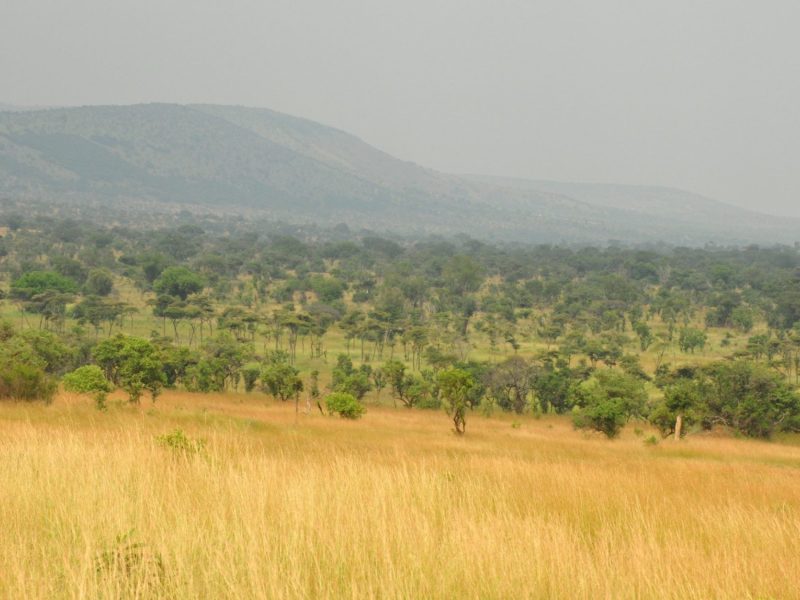
The park is built on a series of long north to south ridges separated by drainage lines flowing north. On the slopes between ridge crest and valley floor there are considerable stretches of open grassland where the woodland thins out. Down in the valleys sit floodplains that flood after each rainfall peak and drain through the dry months.
These two, slope grassland and floodplain, are the plains of this park. Between them the wooded savannah takes over, hundreds of square kilometres of medium and tall grass beneath open deciduous canopy, and that is not plains game country in any useful sense.
Ask your guide to route between clearings rather than through woodland. The transit is unavoidable; spending the productive hours in it is not.
Look for the grass line. Where the canopy opens and the grass shortens, you are on the ground that holds zebra and topi. Where the trees close and the grass stands tall, keep driving.
Giraffe Watching Across the Woodland and Grassland Edge
Giraffe are the easiest large animal to find in this park, and the reason is simple geometry.
In a park where medium and tall grass hides most species for much of the year, an animal that browses at four or five metres stands above the problem. Giraffe are visible from a considerable distance across both the open slopes and the wooded ground, which makes them one of the more consistently reported species here.
They browse the woodland edge rather than grazing the open ground, so the productive place to look is the boundary between clearing and trees. Acacia and Combretum are the browse. In the fever tree stands east of the ridges, where large tracts of Acacia xanthophloea grow on the poorer soils sloping toward Lake Victoria, giraffe are particularly at home.
Watch the neck angle. A giraffe with its head up and turned toward one point is often looking at something on the ground you have not seen, and their alarm posture is a useful predator indicator.
Zebra Watching on the Open Grassland Slopes
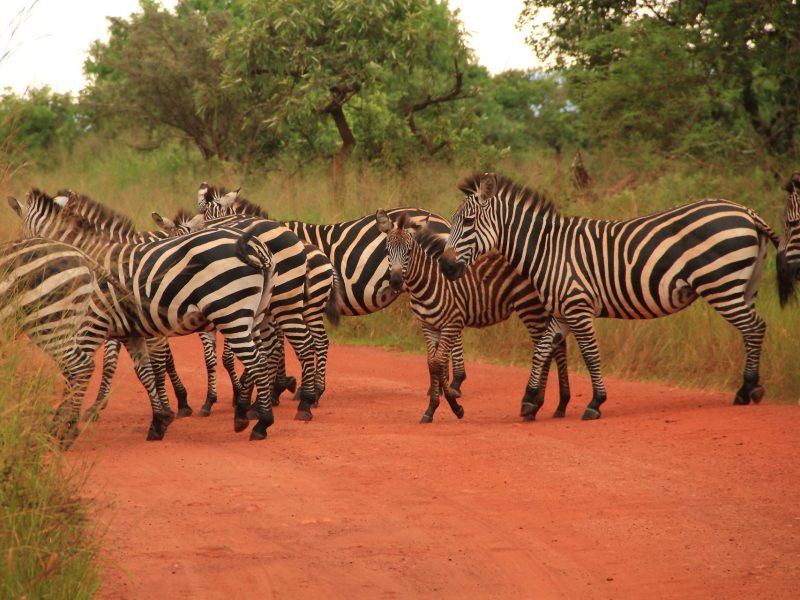
Plains zebra occur across the open grassland stretches on the slopes and come to water through the dry months. Park literature describes zebra among the species becoming more numerous across the park.
They are grazers rather than browsers, so unlike giraffe they need the open ground rather than the woodland edge. Short grass after the dry season grazing and burning is what suits them, which is why the June to September window improves zebra sightings more than most.
Herds here are modest. This is not migration country and nothing on the scale of the Serengeti happens in this park, which sits in a separate system roughly 200 kilometres away from the western corridor.
Wildebeest also occur in the park, again with no connection to the Serengeti migration.
These are resident herds using clearings and floodplain, not a migratory system. Judge the plains game here on quality of viewing rather than on numbers.
The Wider Plains Game Community on a Game Drive Safari
Giraffe and zebra share this ground with a broader set of species, and a good session usually turns up several of them.
Topi: Using the open grassland and floodplain edges, often standing on termite mounds where they are easy to pick out at distance.
Impala: Widespread across the open ground in herds, and among the most consistently reported animals in the park.
Eland: The largest antelope in Africa, recorded through the park and using both clearings and woodland, though in smaller numbers than the mid-sized species.
Defassa waterbuck and reedbuck: Favouring the wetter floodplain margins, with waterbuck among the more dependable large antelope near water.
Buffalo move through in sizeable herds, particularly on the floodplain margins as the dry season progresses. Warthog are common across the open ground, and oribi are described in park literature as commonly found, small and pale, often in pairs rather than herds.
Roan and sable antelope belong to the wooded sectors rather than the plains, so ask for them separately.
Predator Watching Where the Plains Game Concentrates
Grazing concentrations attract carnivores, and the open ground is the best place in the park to look for them.
Lion favour the open floodplain edges where they can watch herds, which makes these margins the strongest lion ground available. Spotted hyena work the same drainage lines. Serval hunt the long grass at the wetland margins after dark, and leopard use the riverine cover along the watercourses bordering the plains.
Densities are recovering from severe losses in the mid-1990s and sightings are not guaranteed. What the plains give you is the best odds the park offers, not a likelihood.
Giraffe and zebra alarm behaviour is worth reading. A herd that has stopped grazing, turned as one and is staring fixedly at a patch of cover is telling you something is there.
How the Plains Change Through the Safari Seasons
The floodplain component of this ground runs on an annual cycle that changes the game viewing completely.
June to September: Floodwater has drained, grass is grazed down and burned back, and animals concentrate on the permanent water at Lake Burigi and the rivers. The best plains game viewing of the year, with August and September strongest.
October to December: First rains fill the floodplains and grass grows fast. Herds disperse across fresh grazing over a very large area and sightings drop off sharply.
January to February: Grass high from the November rains and animals widely spread. The open slopes still give sightlines that the woodland does not.
March to May: Floodplains genuinely flood, grass reaches maximum height, and the plains become the least accessible rather than the most productive ground.
Photography Safaris for Giraffe and Zebra on the Open Ground
The open stretches solve the technical problems the woodland creates and introduce different ones.
Backgrounds go clean, which is the main gain. The difficulty becomes distance, so reach matters here in a way it does not on a boat. Shoot from a vehicle window rather than a raised roof hatch to get lower, and use a beanbag on the sill.
The ridges behind give something the flat parks cannot: a receding line of high ground to place animals against, which builds depth into a frame rather than leaving an empty horizon.
Dawn on the floodplain edge, with mist on the grass and the tree line behind, is the image most people come away with. Late afternoon in the dry season gives backlit dust that separates a subject from its background.
Drones are prohibited in every Tanzanian national park.
Guided Walking Safaris Across the Grassland
Walking the open ground is permitted with an armed ranger and gives a different sense of scale from a vehicle.
Walks are split into short ones of one to four hours and long ones above four hours, with a lower rate for children aged twelve and over. On the open slopes the ground is visible enough to walk safely, which is not true everywhere in this park.
On foot you read what the herds leave: grazing lawns where zebra have cropped short, dung and its freshness, tracks converging on a water crossing, and the termite mounds that topi use as vantage points. Guides use these to build a picture of overnight movement.
Buffalo are the main concern rather than the plains game itself. Follow the ranger’s instructions exactly, walk in single file and keep talk quiet.
Frequently Asked Questions About a Plains Game Safari Here
What does it cost to visit the plains areas?
There is no separate charge for any particular part of the park. The conservation fee is currently US$30 per person per day for non-East African adults aged sixteen and above and US$10 for children aged five to fifteen, with US$15 and US$5 for expatriates and Tanzanian residents and TZS 5,000 and TZS 2,000 for East African Community citizens. Vehicle entry starts at TZS 20,000 per day for a Tanzanian registered vehicle up to 2,000 kilograms, and a park guide is US$20 per group per day. Add 18 percent VAT to all TANAPA charges.
Are there open plains like the Serengeti here?
No, and it is worth being clear about that. Burigi-Chato is largely wooded savannah, hundreds of square kilometres of medium and tall grass beneath open deciduous canopy. What passes for plains here are the open grassland stretches on the valley slopes between the ridges and the seasonal floodplains along the drainage lines. They give you sightlines and gathering points, but nothing on the scale or openness of the Serengeti.
Does the wildebeest migration reach this park?
No. The Serengeti migration runs in a separate system roughly 200 kilometres away and does not enter Burigi-Chato. Wildebeest do occur here as resident animals, unconnected to that movement. If you want to combine the two, the western Serengeti corridor is accessible from Mwanza with the Ndabaka Gate around 145 kilometres from the city, which makes a joint trip workable while keeping the two experiences quite separate.
Why are giraffe easier to see than other species?
Height. In a park where medium and tall grass hides most animals for much of the year, a giraffe browsing at four or five metres stands above the problem and is visible across both open slopes and wooded ground. They browse the woodland edge rather than grazing open ground, so look at the boundary between clearing and trees, and particularly in the fever tree stands east of the ridges.
When is the best time for plains game viewing?
June through September, with August and September strongest. The floodwater has drained, grass has been grazed down and burned back, sightlines open up, and animals concentrate on the permanent water at Lake Burigi and along the rivers. In the wet months the floodplains flood, grass reaches full height and the herds disperse across a very large area, which makes viewing considerably harder.
Can I walk on the grassland?
Yes, on a guided walking safari with an armed ranger, which is the only permitted way. Short walks of one to four hours are currently US$20 per adult and US$10 for children aged twelve and over, with long walks above four hours at US$25 and US$15. The open slopes are among the safer ground to walk in this park because visibility is good. Buffalo are the main concern rather than the plains game.
Are the herds large?
Modest rather than large. This is a resident population recovering from losses of around sixty percent in large mammals across these reserves between 1994 and 1996 during the refugee period, and park literature describes zebra, giraffe, topi, impala and eland among the species becoming more numerous rather than abundant. Buffalo occur in the most substantial herds. Judge the plains game here on quality of viewing and solitude rather than on numbers.
Booking Your Burigi-Chato Trip
The safari companies and tour operators listed on this website put trips like this together for a living and know which camps, guides and routes actually deliver. We are an independent guide to Burigi-Chato; we do not book or sell tours ourselves.
When you are ready, arrange your safari, tour or holiday with one of the recognised operators listed here. Tell them your dates and what matters most, and a real person, not a form, will handle the itinerary, park bookings and logistics for you.