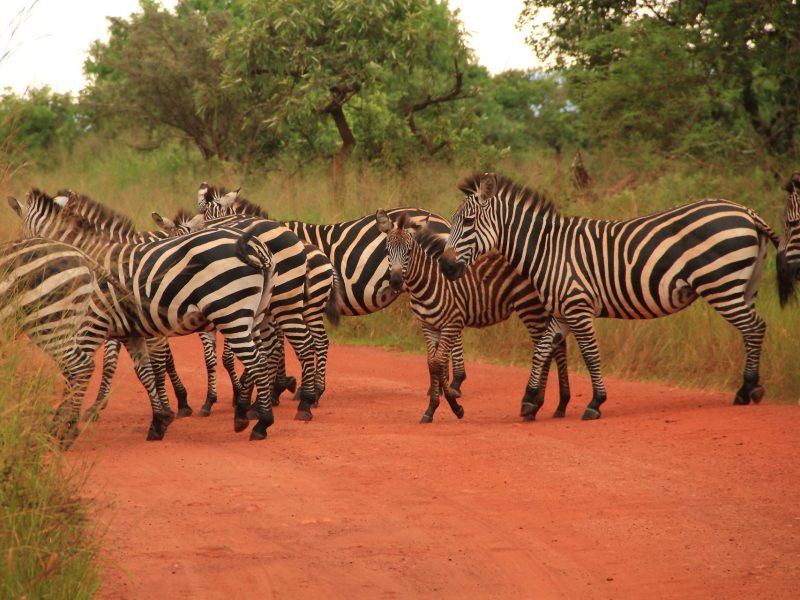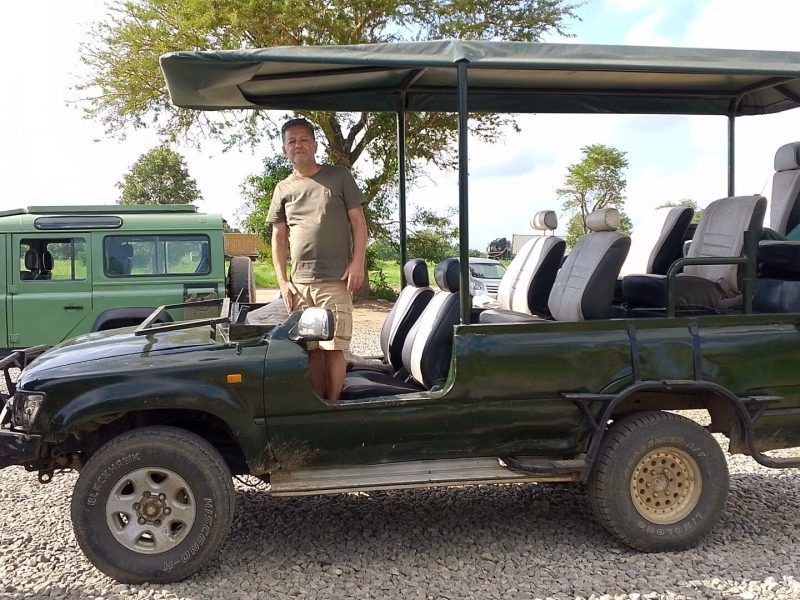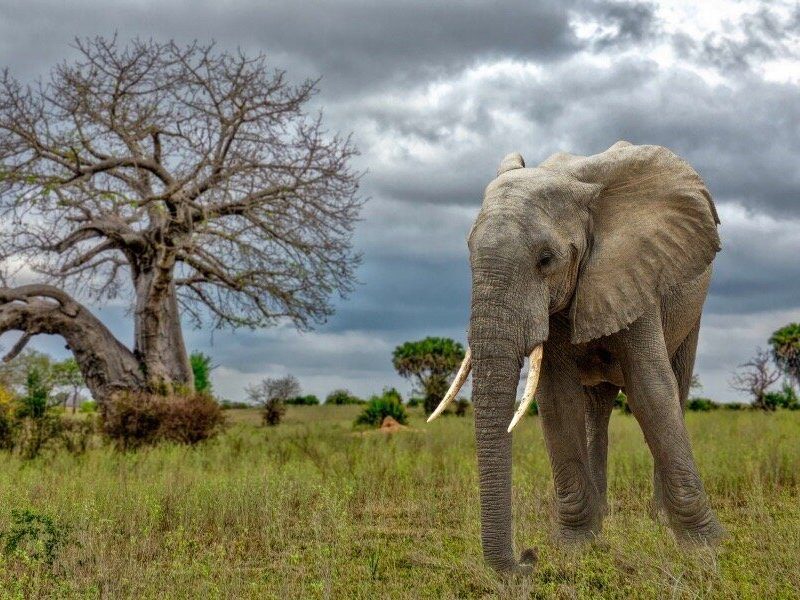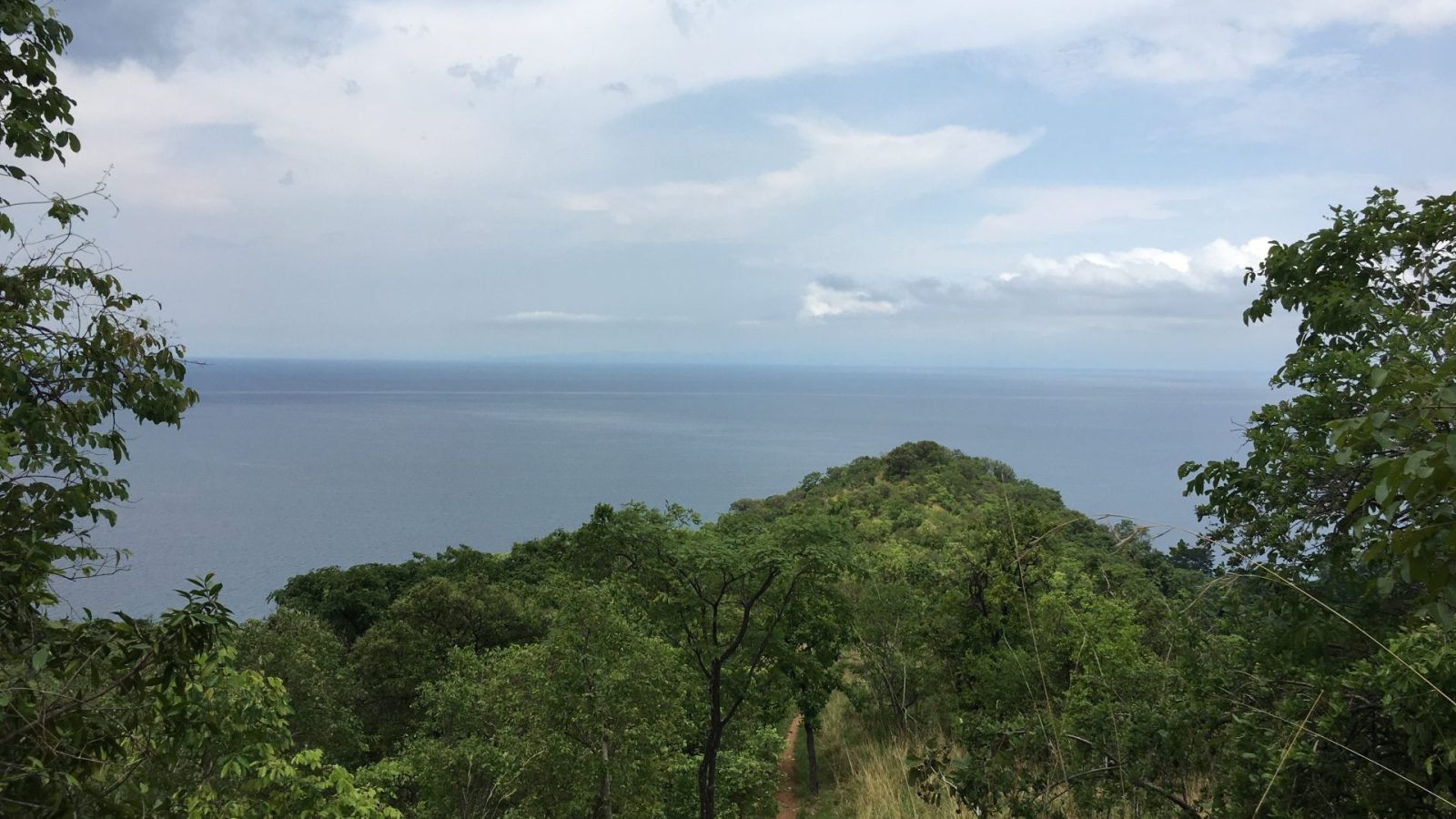
Guided nature walks in Burigi-Chato National Park are conducted with an armed ranger and split into short walks of one to four hours and long walks above four hours, with night walks also offered. They cover ridge and escarpment ground, valley forest and the drier margins of the wetlands. Burigi-Chato covers 4,707 square kilometres of northwestern Tanzania, and walking reveals parts of it that no vehicle track reaches.
On foot this park makes sense in a way it does not from a seat. The scale stops being abstract.
How Walking Safaris Work in Burigi-Chato
A walking safari here follows the standard TANAPA structure, with two duration bands and a lower rate for children aged twelve and over.
Every walk goes out with an armed ranger. That is not optional and it is what makes the activity permissible in a park holding buffalo, elephant, lion and leopard. Group sizes are small, pace is slow, and you walk in single file.
Walks are arranged through the park or your operator and need booking rather than being available on demand, since ranger availability is limited and the visitor infrastructure here remains minimal.
Night nature walks are offered in applicable parks and are worth asking about by name, since they give a completely different sense of the same ground.
Take the long walk option if you are fit for it. Four hours gets you properly onto a ridge or into a valley system, while a short walk often circles within sight of where the vehicle parked.
Ridge and Escarpment Walking Safaris
The high ground is where walking gives most, and it is also where vehicles struggle.
The park is built on a series of long north to south ridges with rocky crags exposed along the escarpment edges where the gradient has stripped the soil. On foot you notice the geology directly: exposed rock faces, boulder fields, and the way soil depth changes as you climb with the vegetation changing alongside it.
Sign on this ground is different from the valleys. Hyrax middens accumulate on rock ledges over years. Klipspringer droppings mark territory boundaries at specific points. Raptor pellets gather beneath favoured perching sites, and picking one apart tells you what has been hunted.
The views justify the climb on their own. The valley walls above Lake Burigi look down a lake running roughly 30 kilometres long and about 4 kilometres wide, taking in the islands, the papyrus inlets and the shoreline tree line.
Stony slopes in equatorial sun are harder work than the distance suggests. Carry more water than you think you need.
Valley Forest and Gully Walking Tours
The most interesting vegetation in the park is in the places hardest to reach, and walking is the practical way in.
In the steeper valleys and gullies there are surviving patches of Guinea-Congo forest, remnants of a forest type that once extended much further east, with relict sclerophyll forest in sheltered pockets. Vehicle tracks rarely drop that far, so these fragments go unseen by most visitors.
Walking into a gully, the change is immediate. Temperature drops, bird calls change, the light goes green and dim, and leaf litter replaces grass underfoot. Guides read tracks in damp ground beside the stream, which in these valleys often means something walked through overnight that you would never otherwise know about.
Riverine forest along the watercourses is easier walking and holds bushbuck, baboon, vervet monkey, kingfishers and herons.
Wear closed boots with ankle support. Footing under leaf litter is uneven and thorny vines are everywhere.
Tracking and Sign Reading on a Nature Walk
The core skill a good ranger brings is reading what has passed, and this is where walking outperforms driving completely.
Prints hold in dust on the tracks and in damp ground at water crossings. Rangers distinguish the round, clawless pugmarks of cats from the more oval, claw-marked prints of hyena and jackal, and read direction, gait and rough size from the pattern.
Dung tells you species, diet and freshness. Hyena droppings turn white from bone content. Elephant leave stripped bark on Combretum and Terminalia trunks, branches broken at browsing height and paths pushed through grass. Termite mounds carry the vegetation that grows only on their disturbed soil.
None of this substitutes for a sighting, and it should not be sold as one. What it does is give you a real sense that the animals are present and moving, which changes how the park reads even on a morning you see nothing large.
A drive tells you what was there at the moment you passed. A walk tells you what has been there all night, which in a park with recovering wildlife numbers is often the more satisfying answer.
Birdwatching Safaris on Foot in the Miombo and Riverine Forest
Walking is the better way to bird the woodland, and the reason is pace.
Miombo birding is slow and often quiet for long stretches, then suddenly busy when you hit a mixed feeding party moving through the canopy. From a vehicle you drive past those parties. On foot you stop and work them.
Recorded species across the park include red-necked francolin on the open ground, with guineafowl, hornbills and marabou stork through the woodland. African grey parrots, introduced into the wider Lake Victoria region, occur in parts of the forested ground. The gully forest fragments hold species absent from the miombo a few hundred metres above.
Hearing matters more than seeing in woodland birding, and walking lets you locate a call rather than losing it as the vehicle moves on.
Bring binoculars with good low-light performance, since canopy shade costs you more light than you expect.
Wetland Margin Walking Tours Near Lake Burigi
Walking near the lake is possible on the drier ground behind the swamp, though there are firm limits.
You cannot walk into papyrus. It grows on floating mats that will not carry a person’s weight, over water holding hippo pods and large Nile crocodiles. Anything that looks like solid vegetation at the water’s edge is not.
What the drier margins give you is the transition zone: bushbuck in the thicker cover, Defassa waterbuck on the wetter grass, tracks converging on drinking points, and the papyrus specialist birds calling from the reed beds you are standing beside rather than floating past.
Hippo move out at night to graze the shoreline grassland and return at dawn, so paths through the grass leading down to water are usually theirs. Rangers keep groups well clear of those routes early in the morning.
Strong insect repellent matters here more than anywhere else in the park.
Night Nature Walking Tours in the Park
Night walks are offered in applicable Tanzanian parks and carry their own fee, lower than a night game drive.
What they give you is a different sensory experience rather than a species list. Sound dominates: hyena calling across the valleys, hippo out of the water and grazing, nightjars, owls, insects. Torchlight picks up eyeshine, and rangers can identify species from the colour and spacing of a pair of eyes at distance.
Genets, civets, bushbabies and the smaller nocturnal carnivores are the realistic mammal targets, along with the chance of something larger moving through.
Safety rules tighten after dark. Stay in the group, keep torches low rather than sweeping them, and do not wander from the line for any reason.
Book in advance rather than raising it on the evening.
Fitness, Safety and What to Wear on a Walking Safari
Walking here is not technically demanding but it is genuinely warm work.
Moderate fitness covers a short walk of one to four hours. A long walk above four hours on ridge ground in equatorial sun asks more, and if you have knee trouble, poles help and it is worth telling the ranger before you set out so they can route differently.
Buffalo and elephant present more risk to a walking group than the carnivores do, since both are easier to walk into unseen in medium and tall grass. Follow the ranger’s instructions exactly, walk in single file, keep talk quiet, and do not run under any circumstances.
Footwear: Closed boots with ankle support, worn in beforehand. Stony ridge ground and leaf litter in the gullies both punish light shoes.
Clothing: Long trousers and long sleeves in muted khaki, olive or grey. Avoid blue and black, which attract tsetse flies, and camouflage, which is restricted for civilians in Tanzania.
Protection: Strong insect repellent, high-factor sunscreen and a wide-brimmed hat. Malaria prophylaxis for the whole trip.
Carry: More water than you expect, since there is none available inside the park, plus binoculars and a headtorch for night walks.
Best Season for Guided Walking Safaris in Burigi-Chato
June to September: The best walking of the year. Grass falls back so visibility improves, which matters for safety as much as for sightings, and stony ridge ground is firm underfoot. Cool mornings.
October to December: Rains return and grass grows fast. Walking remains workable but visibility drops, and gully forest is at its most alive for birding.
January to February: Grass high and humidity moderate. Workable, quiet, with the park almost empty of other visitors.
March to May: Grass at maximum height, which reduces the visibility that keeps a walking group safe, and slippery gradients on the ridges. The weakest season for walking.
Frequently Asked Questions About Guided Walking Safaris
How much do guided walks cost?
Short walks of one to four hours are currently US$20 per adult and US$10 for children aged twelve and over, with TZS 5,000 and TZS 2,500 for East African Community citizens. Long walks above four hours are US$25 and US$15, or TZS 10,000 and TZS 5,000 for EAC citizens. Night nature walks are US$10 per adult. All sit on top of the daily conservation fee of US$30 per non-East African adult, and a park guide is US$20 per group per day. Add 18 percent VAT to all TANAPA charges.
Is an armed ranger required?
Yes, on every walk. It is what makes the activity permissible in a park holding buffalo, elephant, lion and leopard, and walking unaccompanied anywhere inside the park is not allowed. Group sizes are small and you walk in single file at a slow pace. Follow the ranger’s instructions exactly, particularly around buffalo and elephant, which present more risk to a walking group than the carnivores do.
What is the minimum age for walking safaris?
The TANAPA fee structure sets a rate for children aged twelve and over on both short and long walks, which indicates the working minimum. Younger children are not catered for on walking activities. Confirm with the park or your operator when booking, since specific guidelines apply and ranger discretion matters on the day, particularly for a long walk on ridge ground in heat.
How fit do I need to be?
Moderately fit for a short walk of one to four hours. A long walk above four hours on stony ridge ground in equatorial sun asks more, and the heat rather than the distance is usually the limiting factor. If you have knee trouble, bring poles and tell the ranger before setting out so they can route differently. Start early, since by ten in the morning open slopes become hard work.
Will I see wildlife on foot?
Some, though usually less than from a vehicle, and that is not really the point. Walking gives you the sign a drive passes at speed: tracks in damp ground at water crossings, dung and its freshness, stripped bark, feeding remains and raptor pellets. On the ridges you find klipspringer and rock hyrax more readily than from a track. In the gully forest you get birds and habitat that no vehicle reaches at all.
Can I walk beside Lake Burigi?
On the drier ground behind the swamp, yes, with a ranger. You cannot walk into the papyrus itself, since it grows on floating mats that will not carry a person’s weight over water holding hippo and large Nile crocodiles. Rangers also keep groups clear of the paths hippo use returning from overnight grazing at dawn. Bring strong insect repellent, since the wetland margins hold mosquitoes.
Are night walks worth doing?
They give a genuinely different sense of the park, dominated by sound rather than sight: hyena calling across the valleys, hippo out grazing, nightjars and owls. Torchlight picks up eyeshine and rangers identify species from eye colour and spacing. Genets, civets and bushbabies are the realistic mammal targets. At US$10 per adult they are considerably cheaper than a night game drive, though a drive covers far more ground.
Booking Your Burigi-Chato Trip
The safari companies and tour operators listed on this website put trips like this together for a living and know which camps, guides and routes actually deliver. We are an independent guide to Burigi-Chato; we do not book or sell tours ourselves.
When you are ready, arrange your safari, tour or holiday with one of the recognised operators listed here. Tell them your dates and what matters most, and a real person, not a form, will handle the itinerary, park bookings and logistics for you.