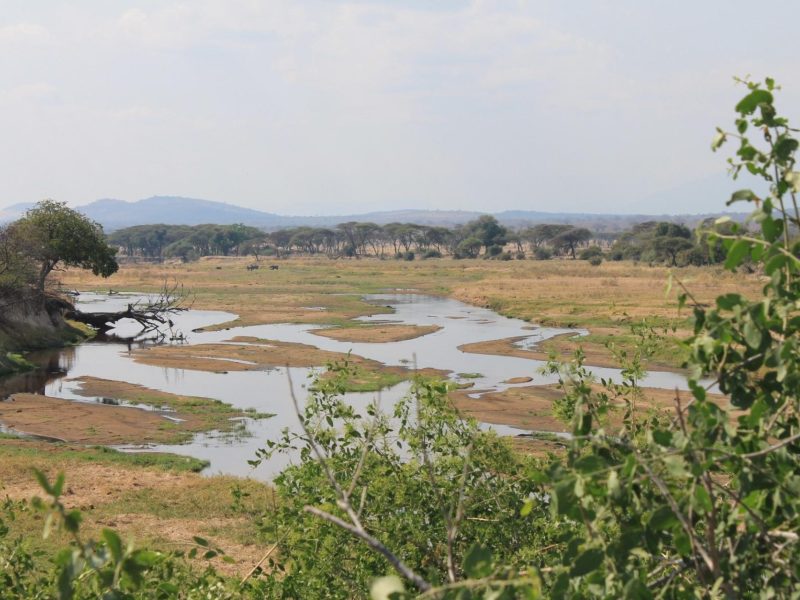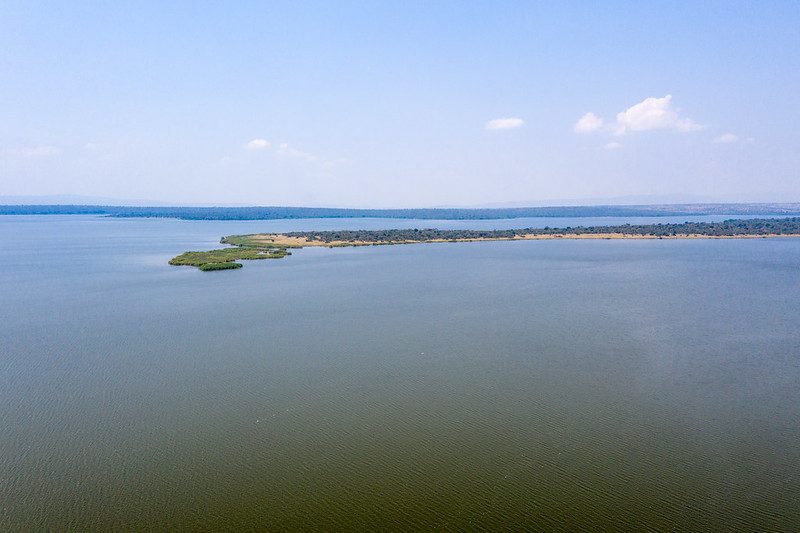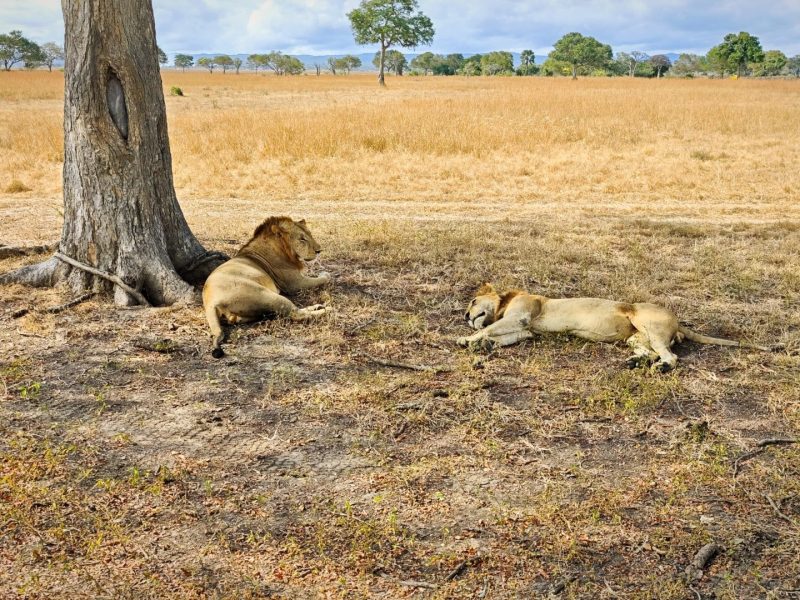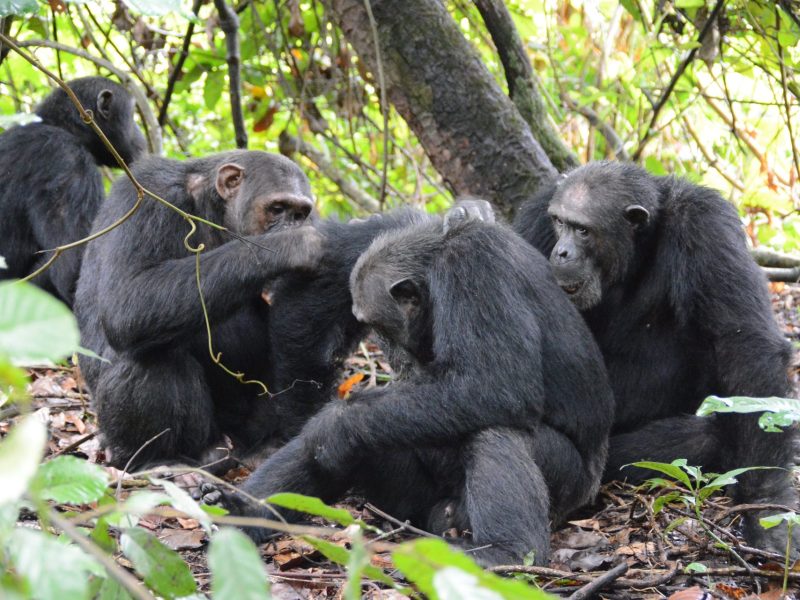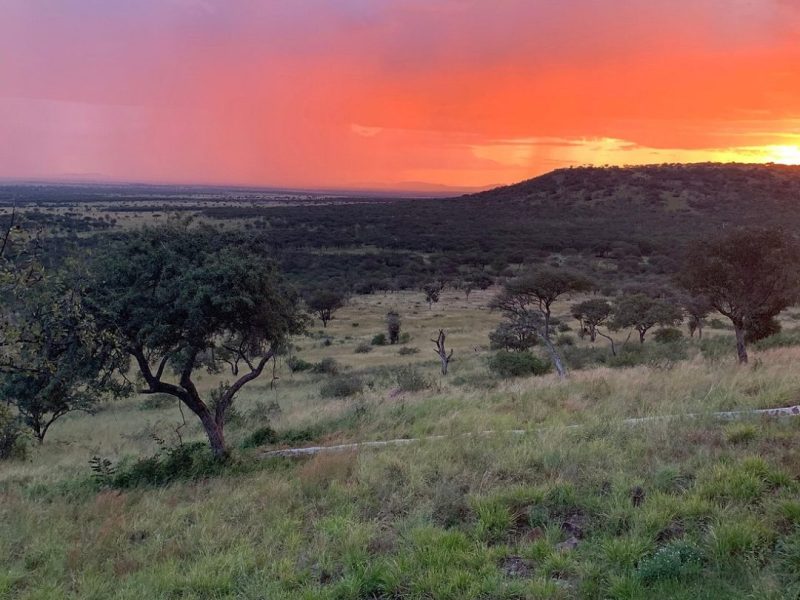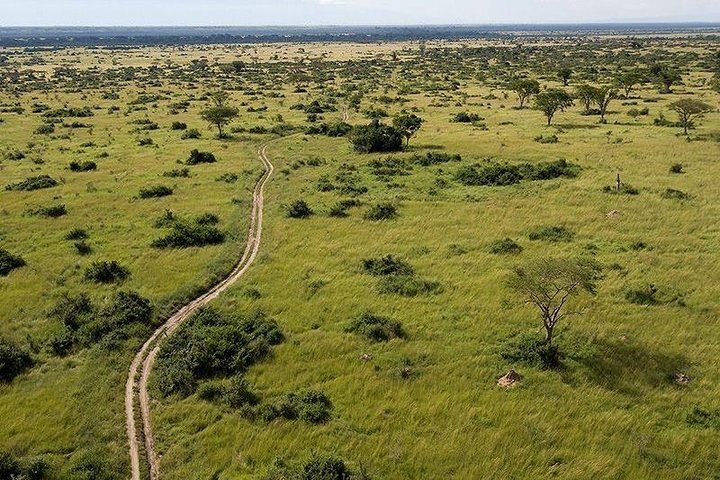
Getting to Burigi-Chato National Park means either a domestic flight to Chato or Bukoba followed by a road transfer, a charter straight to an airstrip inside the park, or a drive of three to five hours from Mwanza. There is no scheduled service into the park itself, so every route ends with a vehicle. Burigi-Chato sits in northwestern Tanzania across the Kagera and Geita regions, between Lake Victoria and the Rwandan border.
How you arrive shapes the trip more than at most parks, because the sectors are far apart and the drive between them is long.
The Three Ways In on a Burigi-Chato Safari
Every Burigi-Chato safari arrives by one of three methods, and the choice comes down to budget against days.
By road, using Mwanza, Bukoba or Chato as your starting point, is the cheapest and by far the most common. By scheduled flight into Chato or Bukoba, then a transfer, cuts hours off a long run in without the cost of a charter. By private charter directly to an airstrip inside or beside the park is the fastest and most expensive, and it is how fly-in mobile camping trips are run.
There is also a fourth possibility that most people never consider, which is arriving by water. The park makes a workable start or end point for a boat or yacht circuit of the southern shoreline and islands of Lake Victoria.
Whichever route you choose, the last leg is a vehicle on unsurfaced roads. Budget for a 4×4 with a driver rather than assuming a taxi will do it. Ordinary saloon cars will not manage the park tracks in any season.
Flying to Chato and Bukoba for Your Safari
Two airports serve the park with scheduled domestic services, and neither is inside it.
Chato has an airport on the Lake Victoria shore, the nearer of the two, sitting around 40 kilometres from the Katete Gate. Services run from Dar es Salaam and Mwanza depending on schedule. It is the shortest transfer of any air option using scheduled flights.
Bukoba, north on the western lake shore in Kagera Region, receives scheduled flights and is the larger town. The road transfer from there runs two to three hours depending on conditions, which is longer than from Chato but gives you a better choice of accommodation the night before.
Mwanza is the region’s main airport, connecting to Dar es Salaam, Arusha, Kigali and the Serengeti airstrips. It is the busiest and easiest to book into, at the cost of the longest onward drive.
Check schedules close to travel. Domestic routings in this part of Tanzania change with demand and seasons, and a route that ran last year may not run this one.
Charter Flights and Airstrips for a Fly-In Safari
Private charters open two landing options that scheduled flights do not.
An airstrip sits near the Nkonje ranger post beside Lake Burigi, in the western sector. Landing there puts you within reach of the lake, the papyrus inlets and the boat activities immediately, without a long drive across the park. For anyone whose priority is sitatunga, birding or boat safaris, this is the routing that saves the most time.
The Biharamulo airstrip serves the southern ground and is the alternative.
Landing fees are payable per aircraft on top of your park charges, and they vary by aircraft size and whether the plane is locally or foreign registered. Charters can be arranged from Arusha, Dar es Salaam, Mwanza or Kigali.
Light aircraft on these routes typically cap baggage at around 15 kilograms in soft bags. Hard suitcases are usually refused.
Driving to the Park From Mwanza, Bukoba and Chato on a Road Safari
Road is how most visitors actually arrive, and the three main starting points give very different drives.
From Mwanza: Roughly 150 kilometres, three to five hours depending on route and season. The busiest route, passing through rural settlements and farmland before the country opens out. Mwanza has the widest choice of vehicle hire and operators.
From Bukoba: Around two to three hours, the shortest of the road options from a town with an airport. Road condition and season affect this more than distance does.
From Chato: About 40 kilometres to the Katete Gate. This is a short hop rather than a drive, and it is the reason people base in Chato even with its limited accommodation.
From Dar es Salaam: More than 1,000 kilometres and the better part of two days. Not advisable unless the drive itself is the point of the trip.
Road surfaces vary. Tarmac covers parts of the main routes, with gravel and unsurfaced sections closer to the park. In the wet months, drive times stretch considerably and some sections become difficult.
Driving From Serengeti and the Northern Circuit on a Combined Safari
Coming from the Serengeti is a genuine option and one that turns Burigi-Chato from an obscure detour into a logical extension.
The western corridor of Serengeti is accessible from Mwanza, with the Ndabaka Gate roughly 145 kilometres from the city on a three to four hour drive. From there you continue west to Burigi-Chato through Mwanza. The whole routing works best if you fly into Mwanza at the start rather than Arusha.
Coming from Arusha and the classic northern circuit by road is a very long haul, and most people fly that leg. An internal flight from the Serengeti airstrips or Arusha into Mwanza or Chato is the sensible way to bridge the two halves of the country.
Arriving here from Serengeti is the routing that makes most sense on paper and catches people out in practice. The wildlife densities are not comparable, and going straight from one to the other flatters neither park.
Crossing From Rwanda for a Cross-Border Safari
The park’s western boundary follows the Kagera River, which forms much of Tanzania’s border with Rwanda, so an overland arrival from the west is straightforward in principle.
Rusumo Falls is the main crossing point, sitting directly on the Kagera where it drops roughly 15 metres over a 40 metre width. Kigali is around a half day’s drive from the crossing. This routing lets you pair Akagera National Park in Rwanda, which protects the opposite bank of the same drainage, with the Tanzanian parks on this side.
Visa arrangements need checking before you commit. The East Africa Tourist Visa covers Rwanda, Uganda and Kenya but does not include Tanzania, so you will need a separate Tanzanian visa. Vehicle paperwork for a cross-border self-drive is a further layer, and foreign-registered vehicles pay substantially higher park entry fees than locally registered ones.
Yellow fever certification is required for arrivals from countries with risk of transmission, which includes Rwanda.
Arriving by Boat on a Lake Victoria Tour
The lake is a transport network in its own right, and it is underused by visitors.
Ferries operate between Mwanza, Bukoba and the island ports, and this is the slow, cheap and interesting way to move along the shoreline. Private boat charters are available on the Tanzanian side.
Burigi-Chato works well as the start or end point of a boat circuit along the southern shore and islands of Lake Victoria. Such a route can take in Saanane Island National Park off Mwanza and Rubondo Island National Park in the southwest corner of the lake, and it can begin or finish at Musoma on the eastern shore.
You will still need a vehicle at the lakeside to reach the gate. The water gets you close, not in.
Park Gates and Entry Formalities for a Game Drive Safari
The Katete Gate on the eastern side is the main entry point, about 40 kilometres from Chato town. The Nkonje ranger post beside Lake Burigi is the operational base in the western sector.
Payment is the detail that catches self-drivers out. TANAPA charges go through the government electronic payment gateway, made online via the TANAPA reservation system, at banks using electronic cards, or by mobile money. Cash at the gate will not work. Arrange this in advance, and do not rely on connectivity at the gate to sort it out on arrival.
Proof of identity is mandatory. East African citizens need passports to claim the EAC rate, and residents need a residence permit, exemption certificate or diplomatic identification.
Two multiple entry permits exist: a day-trip permit valid for twelve daylight hours, and a sleep-over permit valid for twenty-four hours. Both allow re-entry within the window. Ask which you are being issued if you are basing outside the park.
What Vehicle You Need for a Game Drive Safari, and the Park Rules
A high-clearance 4×4 is necessary rather than advisable. The internal tracks are unsurfaced, the terrain includes steep stony ridge routes, and valley crossings become difficult when wet.
Park driving hours run from six in the morning to six in the evening, with a 50 kilometre per hour speed limit and a requirement to keep to authorised tracks. Night game drives are permitted here with the appropriate fee and a guide, which is an exception to the standard hours.
Drones are prohibited in all Tanzanian national parks. Feeding animals is prohibited. Removing anything of biological interest is prohibited.
Take a park guide. The area is very large, tracks are unsignposted in places, and a guide is charged per group per day rather than per person. Fuel up in Chato, Biharamulo, Bukoba or Mwanza, because there is none inside.
Planning Your Arrival Around the Safari Seasons
June to September: The most reliable access of the year. Unsurfaced roads are firm, drive times hold to the shorter end of the estimates, and every sector is reachable.
October to December: The lighter rainfall peak. Roads mostly workable, though ridge routes can turn slippery after a storm and drive times stretch.
January to February: A drier interval between the peaks. Access is usually fine and the park is very quiet.
March to May: The heavier rains. Access becomes the limiting factor on the whole trip. Flying in becomes considerably more attractive, and moving between sectors may not be possible at all.
Frequently Asked Questions About Reaching Burigi-Chato for a Safari
What does it cost to get to and enter Burigi-Chato?
Park charges are modest. The conservation fee is currently US$30 per person per day for non-East African adults, US$10 for children aged five to fifteen, US$15 and US$5 for expatriates and Tanzanian residents, and TZS 5,000 and TZS 2,000 for East African Community citizens, with under-fives free and 18 percent VAT on top. Vehicle entry runs from TZS 20,000 per day for a Tanzanian registered vehicle up to 2,000 kilograms, rising to TZS 35,000 and TZS 60,000 for heavier bands, while commercial East African and foreign registered vehicles pay US$40, US$150 and US$200 across those bands. Getting there is where the real money goes: a Mwanza vehicle and driver for a two-day trip typically pushes the per-person total into the hundreds.
What are the aircraft landing fees?
Landing fees in national parks other than Ugalla River and Kigosi currently run at US$50 for a private foreign aircraft of up to four seats and US$120 commercial, US$120 and US$170 for five to twelve seats, and US$170 and US$320 for over thirteen seats. Locally registered aircraft pay in shillings at much lower rates, from TZS 10,000 for a private plane of up to four seats. There is also an airstrip charge per person landing in a park but staying outside it, currently TZS 10,000 for East African citizens and US$10 for others.
Can I get to the park by public transport?
You can reach the surrounding towns by bus and the lake ports by ferry, but not the park itself. There is no public service into Burigi-Chato and no vehicles for hire at the gate. Buses run to Chato, Biharamulo and Bukoba, and lake ferries connect Mwanza and Bukoba. From any of those you would need to arrange a 4×4 and driver, which is best organised before you arrive rather than on the spot.
How long does the drive from Mwanza actually take?
Three to five hours for roughly 150 kilometres, and the spread is real rather than cautious estimating. Route choice, road surface and season all move the figure. In the dry months the shorter end is realistic. During the March to May rains, plan for the longer end and accept that some sections may slow you further. Leave early enough that you are not arriving at a gate near closing time.
Do I need a 4×4?
Yes. The internal tracks are unsurfaced, the park includes steep stony ridge and escarpment routes, and valley crossings flood in the wet season. A high-clearance 4×4 with low range is the right vehicle in every month. A saloon car will not manage the park in any season, and hiring one to reach the gate leaves you unable to do anything once you arrive.
Can I pay park fees in cash on arrival?
No. TANAPA payments go through the government electronic payment gateway, either online through the reservation system, at a bank using an electronic card, or by mobile money. Carrying US dollars will not get you through the gate. Sort this out before you travel, and do not count on mobile signal at the gate to fix it on the day. Fees once paid are non-refundable.
Is it better to fly in or drive?
Drive if you are already in the Lake Zone or building a wider Mwanza and Serengeti route, since the cost difference is large and the roads are manageable in the dry season. Fly if you are short on days, travelling in the March to May rains, or want to land at the Nkonje airstrip beside Lake Burigi and start with a boat safari the same afternoon. A charter into Nkonje saves the better part of a day at each end compared with driving across the park.
Booking Your Burigi-Chato Trip
The safari companies and tour operators listed on this website put trips like this together for a living and know which camps, guides and routes actually deliver. We are an independent guide to Burigi-Chato; we do not book or sell tours ourselves.
When you are ready, arrange your safari, tour or holiday with one of the recognised operators listed here. Tell them your dates and what matters most, and a real person, not a form, will handle the itinerary, park bookings and logistics for you.