Wetland and grassland exploration in Burigi-Chato National Park works the transition zones where papyrus swamp meets floodplain and open grass meets woodland, using a combination of boat, vehicle and guided walk to cover ground no single method reaches. These edges hold more wildlife than either habitat alone. Burigi-Chato covers 4,707 square kilometres of northwestern Tanzania, with Lake Burigi and its drainage at the centre.
The edge is the thing. Everything worth seeing here gathers where one habitat becomes another.
Why the Edges Matter on a Burigi-Chato Safari
The most useful idea to carry into a Burigi-Chato safari is that habitat boundaries outperform habitat interiors, and here that principle is unusually strong.
Three things make it so. Wildlife densities are recovering rather than high, so there is a lot of ground per animal and you need to narrow the search. The wooded savannah interior is medium and tall grass beneath open canopy, where visibility is poor for much of the year. And the water is permanent while everything around it is seasonal.
Put those together and the productive ground becomes obvious: papyrus to open water, swamp to floodplain, floodplain to grassland, grassland to woodland. Each of those lines concentrates animals and lets you see them.
Plan a day that crosses at least two habitat boundaries rather than staying inside one. It is the single easiest change you can make to what a session produces here.
The Papyrus and Open Water Boundary on a Boat Safari
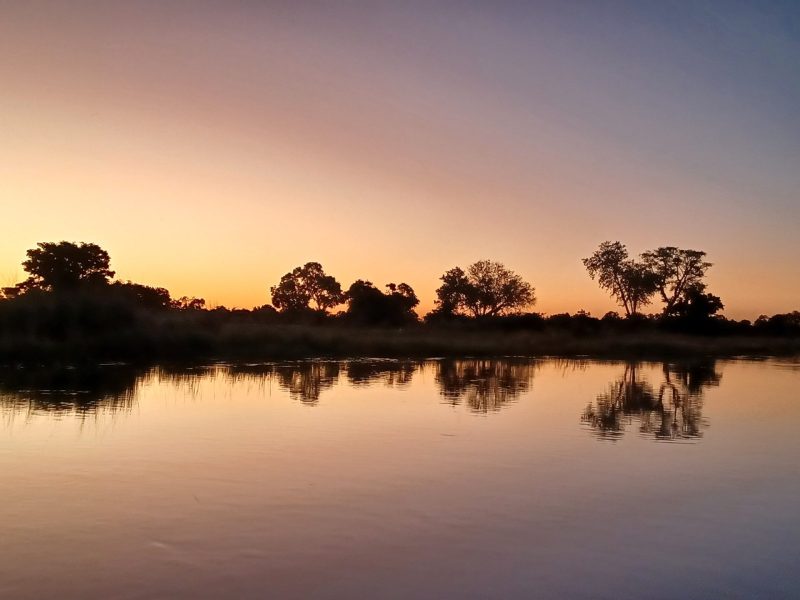
The first and most productive edge is where reed meets water, and it is reached only by boat or canoe.
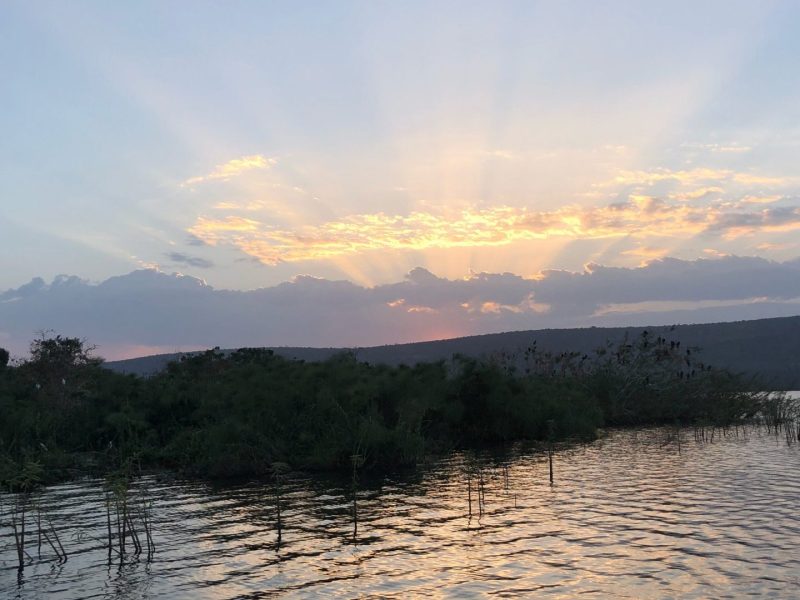
Lake Burigi runs roughly 30 kilometres long and about 4 kilometres wide along a valley floor, with a scatter of islands and a great many inlets and bays branching off the main body. Park literature describes some of these side arms as swampy and identifies them as home to the rare sitatunga.
Along this margin you get the semi-aquatic species that use neither habitat exclusively. Sitatunga feed at the reed edge at dawn and dusk and withdraw into the papyrus through the day. Papyrus specialist birds including the papyrus gonolek call from the reed beds. Herons, egrets and kingfishers work the boundary itself.
A canoe outperforms a motorised boat here, since silence along a reed line is worth more than range. Canoeing is capped at three hours per session in this park.
Floodplain Game Drive Safaris and the Annual Flooding Cycle
The second edge is seasonal, which makes it more interesting than a fixed boundary.
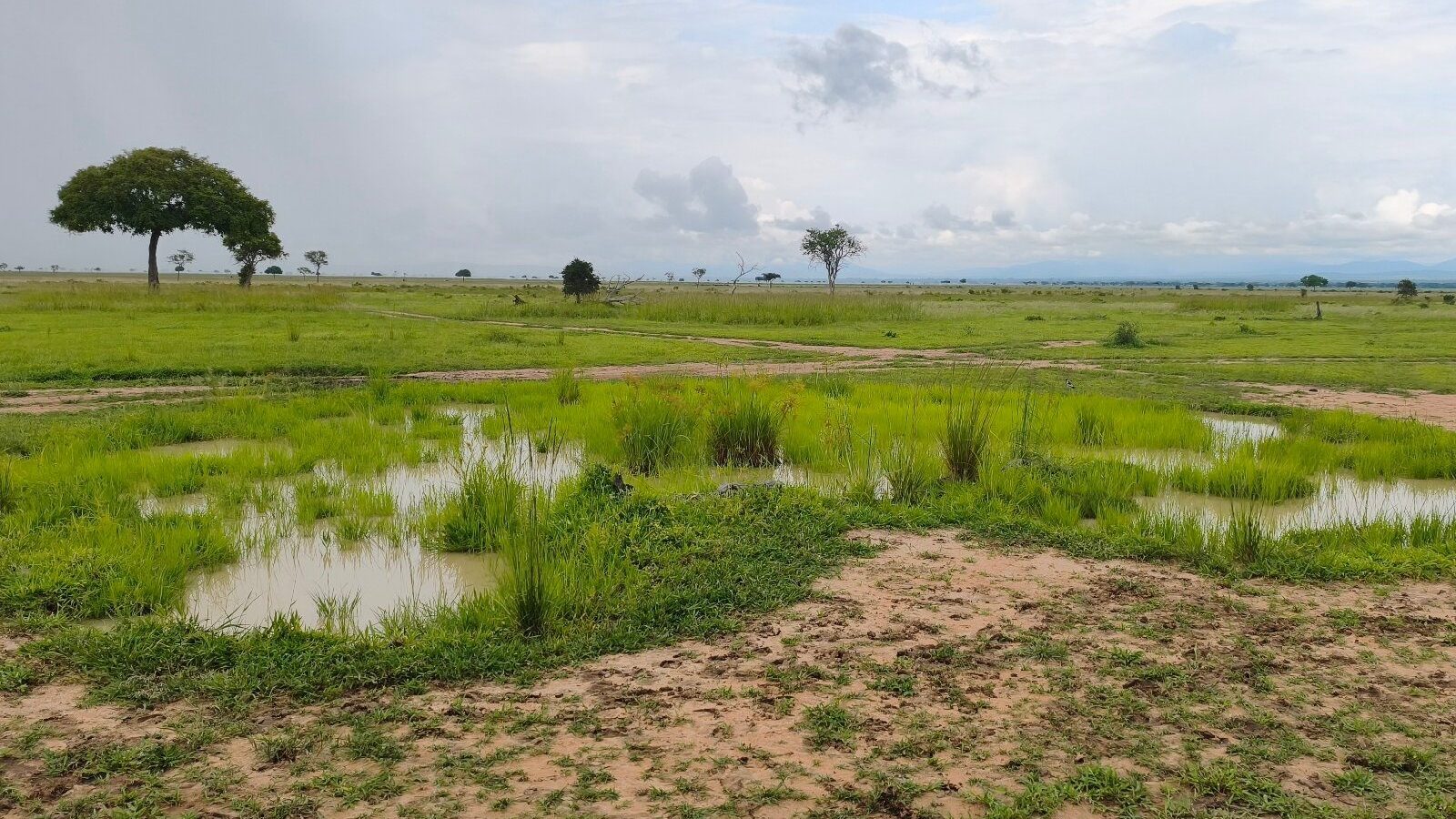
Floodplains along the drainage lines fill after each of the two rainfall peaks, around November and December and again in March and April, then drain through the dry months from June to September. That cycle moves the boundary between wet and dry ground back and forth across a wide band each year.
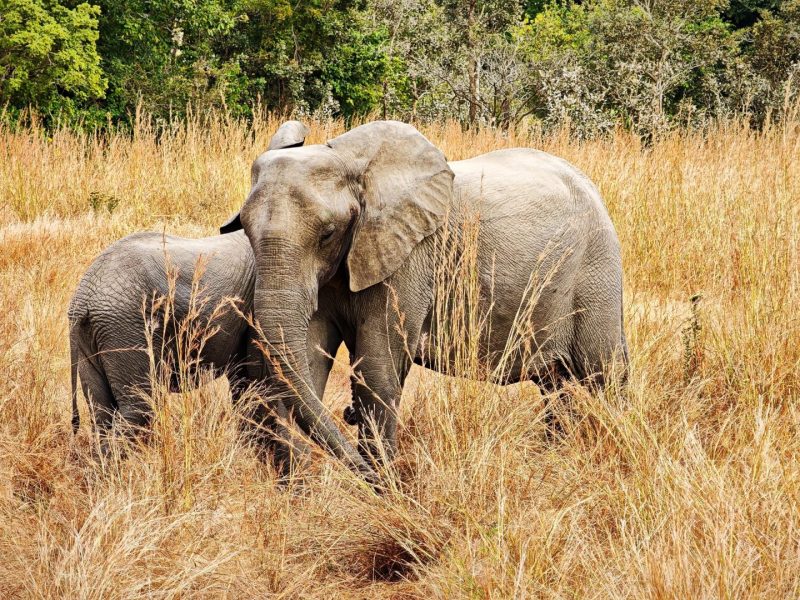
Grazers follow it. After flooding, grass grows fast and green and the herds move out to use it: buffalo, zebra, topi, impala, eland and common reedbuck. As the water retreats and the grass is grazed down, they pull back toward the permanent water at Lake Burigi and the rivers.
Defassa waterbuck favour the wetter margins throughout and are among the more dependable large antelope on this ground. Elephant use these low corridors to move between areas.
By August and September the floodplain edges are the most productive ground in the entire park.
The floodplain is not one place, it is a boundary that moves several kilometres each year. Knowing where it sits this month is worth more than knowing the park.
Grassland Slope Tours Between Woodland and Valley
The third edge runs up the sides of the valleys.
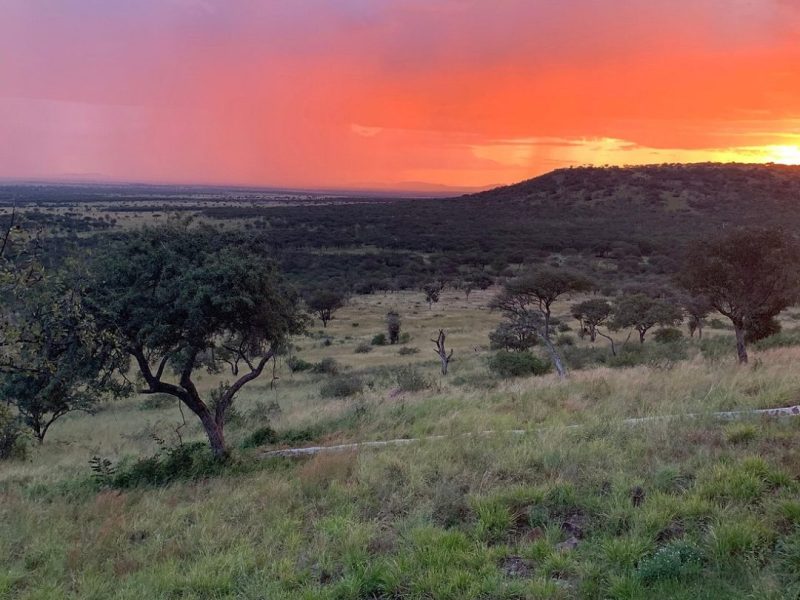
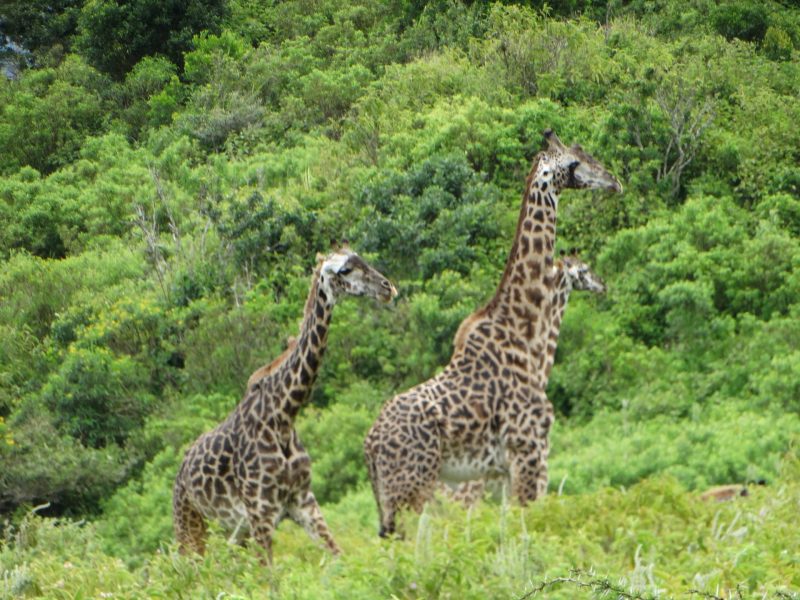
Between ridge crest and valley floor there are considerable stretches of open grassland where the woodland thins. These slopes give the sightlines that the wooded interior does not, and they hold the plains game community: zebra grazing the short grass, topi standing on termite mounds, impala in herds, with giraffe browsing the woodland edge above.
Where grassland meets trees, browsers and grazers overlap and predators have cover to work from. Lion favour these open margins where they can watch herds, though sightings anywhere in this park are a good day rather than a plan.
Ask your guide to route between clearings rather than through woodland. The transit is unavoidable; spending your productive hours in it is not.
Combining Boat, Game Drive and Walking Safaris to Cover Both
No single method covers this ground, which is why the best days here mix them.
A boat reaches the papyrus margins and gives you eye-level views of a shoreline no vehicle track approaches. A vehicle covers the floodplain edges and grassland slopes and gets you between sectors. A guided walk with an armed ranger takes you into the gully forest and onto the ridge ground where no track goes, and lets you read the sign that both the others pass at speed.
A workable day: dawn boat session on the lake margins, mid-morning walk on the drier ground behind the swamp, midday rest or a ridge route for views, late afternoon drive along the floodplain edges, and a night drive if you have booked one.
Walking safaris are split into short walks of one to four hours and long walks above four hours. Night game drives are permitted here, which is unusual across the Tanzanian park system.
Wildlife Watching Across the Wetland and Grassland Transition
What lives on these edges is a different set from either habitat’s core.
On the water side: hippo pods and large Nile crocodiles, close to certain year round, with African fish eagles at unusually high density along the shoreline. Saddle-billed stork work the shallows, and wattled crane, wattled lapwing and Senegal lapwing use the wet open ground.
On the grass side: buffalo in sizeable herds, zebra, topi, impala, eland, warthog and oribi, with Defassa waterbuck and reedbuck on the wetter margins and bushbuck in the thicker cover behind.
Between them: sitatunga in the papyrus, and the carnivores working the boundary. Serval hunt the long grass at wetland margins after dark, spotted hyena work the drainage lines, and leopard use the riverine cover along the watercourses.
Cattle egret follow the grazing herds, which is itself a useful indicator of where the animals are.
Birdwatching Safaris on the Wetland and Grassland Edges
Edge habitat is why the bird list here runs into the hundreds, and a birdwatching safari that works the boundaries beats one that stays in a single habitat.
Papyrus and reed hold the specialists. Open water holds pelicans, herons, egrets and several kingfisher species. Floodplain grassland holds crakes, storks, lapwings and the open-country raptors hunting over them. Woodland edge holds weaver colonies, white-browed coucal and red-necked francolin. Marabou stork, hornbills, guineafowl and ducks occur through the park.
From around November, Eurasian migrants arrive through the Lake Victoria basin and the floodplains fill, which makes the wet months the strongest of the year for birds even as mammal viewing gets harder.
Conservation assessments have flagged that the lakeside swamps may hold breeding shoebill, which is a genuine possibility rather than a target you can book.
How the Safari Seasons Move the Edges
June to September: Edges tighten. Floodwater drains, grass is grazed down, the swamp margin narrows and everything concentrates on permanent water. The best exploration of the year.
October to December: First rains push the floodplain boundary outward. Grazers disperse across fresh grass, birds arrive, and the wetland margins spread through flooded vegetation.
January to February: A drier gap between the peaks. Edges are indistinct, grass is high, and the lake margins remain the reliable ground.
March to May: Floodplains genuinely flood and the boundaries dissolve. Boats still work the lake margins, but land access on unsurfaced tracks becomes the limiting factor.
Practical Notes for a Safari Across These Habitats
A few things are worth sorting before you go out.
You cannot walk into papyrus, which grows on floating mats over water holding hippo and crocodile. Swimming is not an option anywhere on this water, including at launch points, and bilharzia is a further risk in still freshwater across the region.
Boat and canoe trips need booking in advance, since capacity is limited and visitor infrastructure here is young. Park fee payment goes through the government electronic payment gateway rather than cash at the gate.
Staying on the lake shore, at the Nkonje ranger post bandas and tented camp or one of the shoreline campsites, is what makes dawn access to the wetland edges possible at all.
Carry your own drinking water. Strong insect repellent matters most at the wetland margins, and this is a malaria area throughout.
Frequently Asked Questions About a Wetland and Grassland Safari
What does exploring these habitats cost?
The conservation fee is currently US$30 per person per day for non-East African adults aged sixteen and above and US$10 for children aged five to fifteen, with US$15 and US$5 for expatriates and Tanzanian residents and TZS 5,000 and TZS 2,000 for East African Community citizens. Boat safaris add US$20 per person and canoeing US$10 for up to three hours. Walking safaris are US$20 per adult for short walks and US$25 for long ones. Night game drives are US$50 per adult. A park guide is US$20 per group per day. Add 18 percent VAT to all TANAPA charges.
Why are the habitat edges better than the interiors?
Because wildlife densities here are recovering rather than high, the wooded interior has poor visibility in medium and tall grass, and the permanent water is what everything comes to when the seasonal water goes. Boundaries concentrate animals and give you sightlines at the same time. In a park of 4,707 square kilometres, working the edges narrows the search from impossible to manageable.
Which edge should I prioritise?
The papyrus and open water margin on Lake Burigi at dawn, reached by boat or canoe. It gives near-certain hippo, Nile crocodile and African fish eagles, the park’s only realistic shot at sitatunga, and the papyrus specialist birds. After that, the floodplain margins in the late dry season, which by August and September are the most productive ground in the whole park for plains game and the predators following them.
Can I walk in the wetlands?
Only on the drier ground behind the swamp, and only with an armed ranger. Papyrus grows on floating mats that will not carry a person’s weight over water holding hippo pods and large Nile crocodiles, so walking into it is not possible. Rangers also keep groups clear of the paths hippo use returning from overnight grazing at dawn. Bring strong insect repellent for the margins.
How do the seasons change what I can explore?
Considerably. From June to September the floodwater drains, grass is grazed down and every boundary tightens, which concentrates wildlife and makes this the best window. From October the rains push the floodplain edge outward and grazers disperse across fresh grass while bird numbers rise with arriving migrants. During the heavier March to May peak the floodplains genuinely flood and land access on unsurfaced tracks becomes the constraint.
Do I need to do all three activities?
To cover this ground properly, yes, because no single method reaches it all. A boat gets you to the papyrus margins, a vehicle covers the floodplain edges and grassland slopes, and a guided walk takes you into the gully forest and onto ridge ground with no track. Two nights at the lake is enough to fit a dawn boat session, a walk, an afternoon drive and a night drive without rushing any of them.
Where should I stay to reach the edges early?
On the lake shore. The Nkonje ranger post area has bandas and a tented camp with basic amenities, with public and special campsites nearby. TANAPA’s rest house, cottages and park-provided tents at Burigi-Chato currently run at around US$35 per adult per night for cottages and rest house and US$30 for park tents, with public campsites at US$30 per adult and special campsites at US$50. Basing in Chato or Bukoba puts the dawn window out of reach.
Booking Your Burigi-Chato Trip
The safari companies and tour operators listed on this website put trips like this together for a living and know which camps, guides and routes actually deliver. We are an independent guide to Burigi-Chato; we do not book or sell tours ourselves.
When you are ready, arrange your safari, tour or holiday with one of the recognised operators listed here. Tell them your dates and what matters most, and a real person, not a form, will handle the itinerary, park bookings and logistics for you.