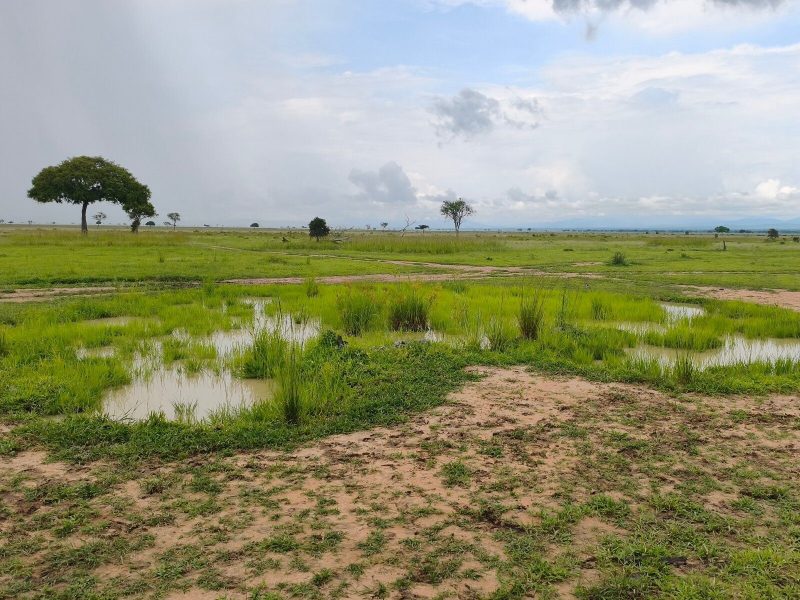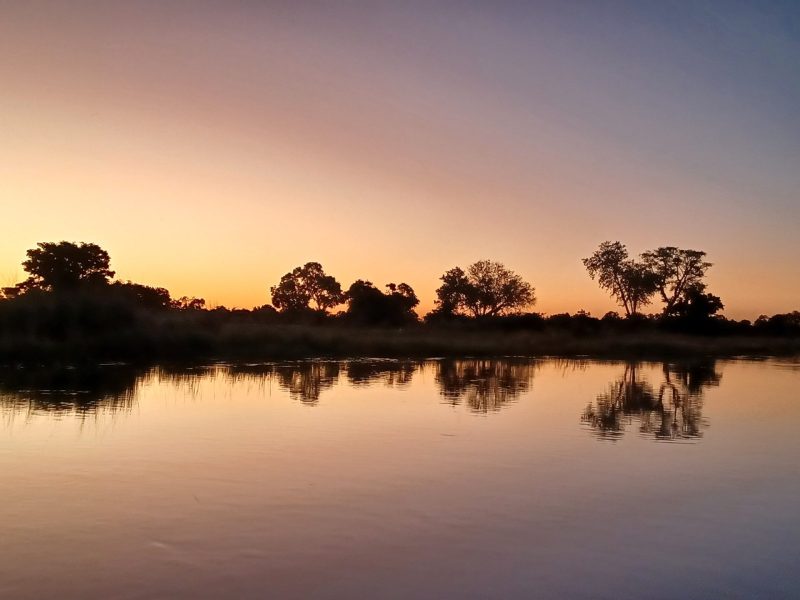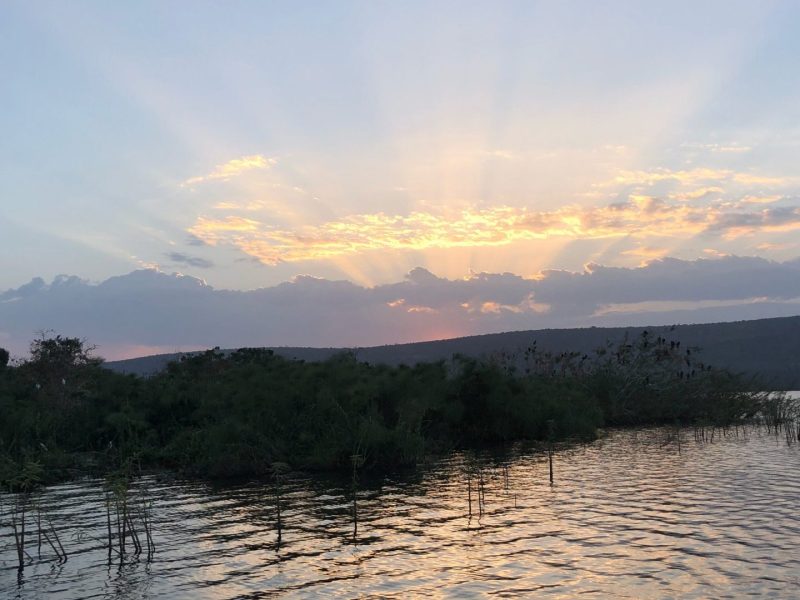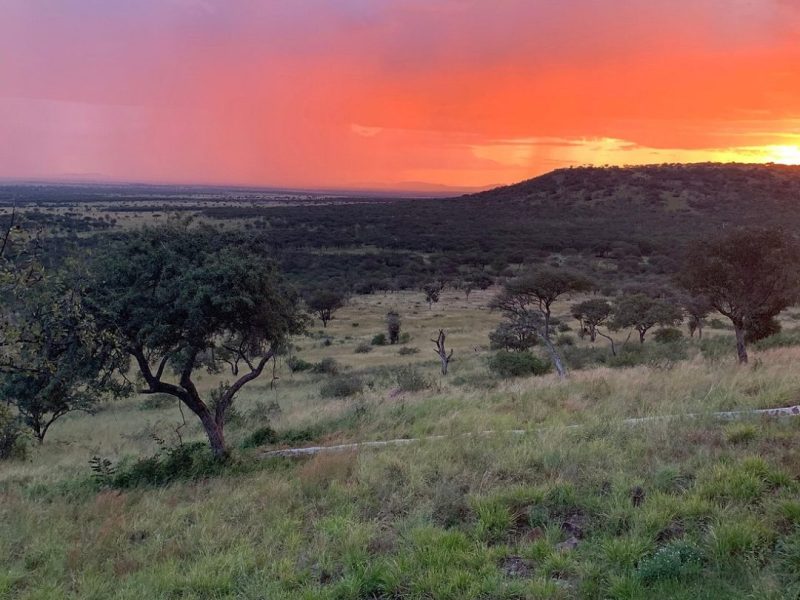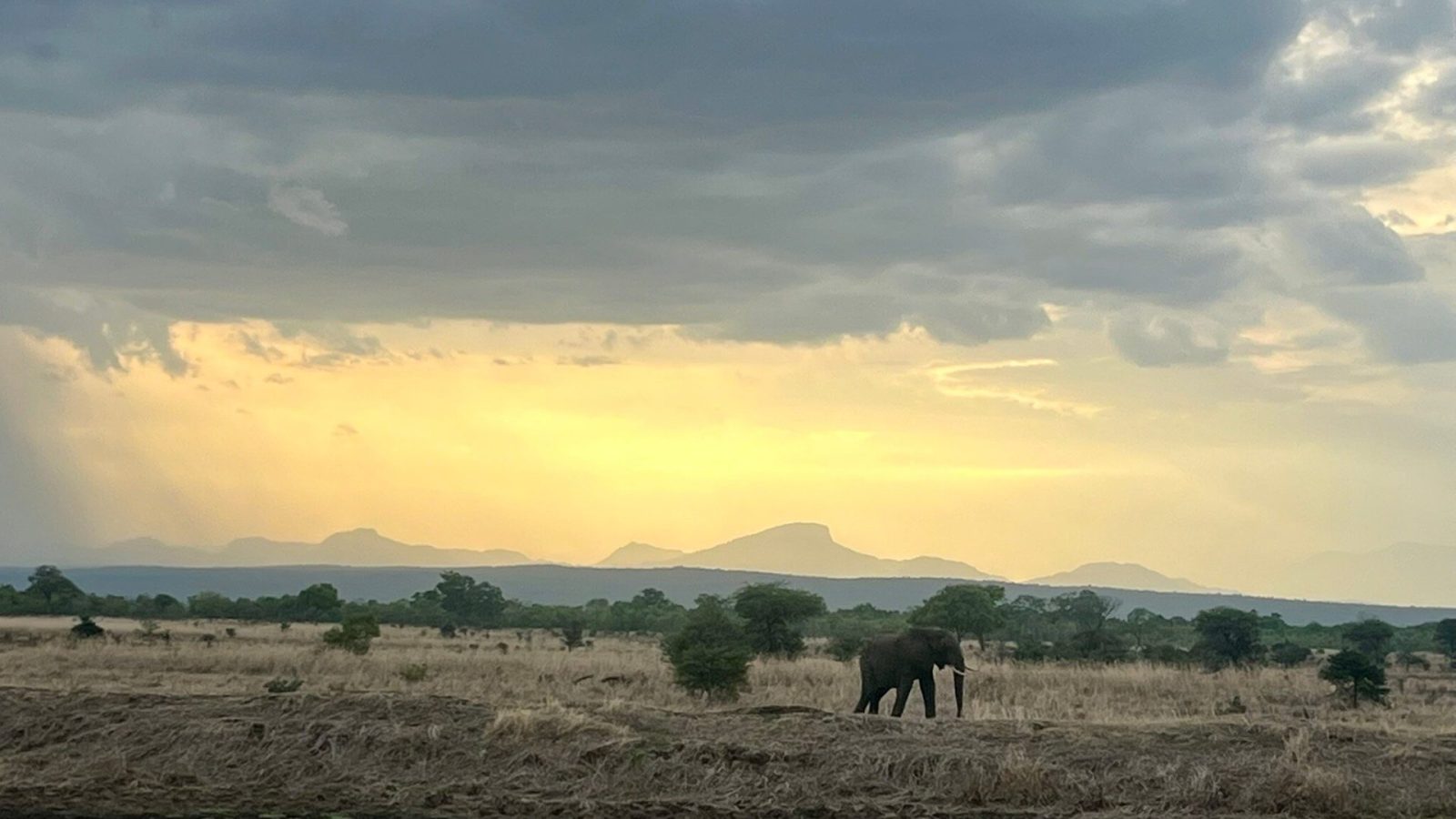
Sunset wildlife viewing in Burigi-Chato National Park takes place in the last two hours before the gates close at six, when hippo move out of the water, predators begin to stir and grazing herds return to the floodplain edges. Sundowners are permitted in designated areas and night drives extend the session. Burigi-Chato covers 4,707 square kilometres of northwestern Tanzania, and the light drops fast this close to the equator.
The last hour is the busiest of the day here. Planning around it is worth more than an extra morning.
What Happens at Dusk on a Burigi-Chato Safari
Knowing how the shift from day to night works explains why the final session of a Burigi-Chato safari outperforms the middle of the day so completely.
Through the heat, animals lie up in shade and become all but invisible in medium and tall grass beneath open woodland canopy. As the temperature eases from about four in the afternoon, that reverses. Grazers move back onto the open ground. Browsers come out from cover. Water traffic builds as everything that has waited comes down to drink.
The predators follow. Lion that spent the day flat in shade begin to move toward the open floodplain edges where they can watch herds. Leopard, which are largely nocturnal, become active toward dusk. Spotted hyena start calling across the valleys.
All of that happens inside about ninety minutes, and it is over by dark.
Be positioned rather than driving. Pick a floodplain edge or a stretch of lake shore by four o’clock and stay with it, because animals will come to you during this window in a way they will not at any other hour.
Hippo Watching as They Leave the Water
The most dependable dusk sighting in the park is one many visitors miss because they have already turned for camp.
Hippo hold in the deeper sections of Lake Burigi and the connected rivers in pods through the heat of the day, surfacing to breathe and little more. As the light drops they begin to shift, and after dark they move out onto the shoreline grassland to graze, returning around dawn.
Catching that transition means being on or beside the water in the last hour. From a boat you see animals half out rather than a row of ears and nostrils. From the bank you see the paths they use, worn up from the water through the grass.
Keep well clear of those paths at dusk. A hippo between you and the water is the single most dangerous situation on this lake, and they are considerably faster on land than people expect.
Predator Watching in the Last Hour of Light
Dusk gives the best odds on carnivores that any daylight session offers, though the bar remains modest.
Predator densities here are recovering from severe losses in the mid-1990s, when large mammal populations across these reserves reportedly fell by around sixty percent between 1994 and 1996. Lion, leopard and spotted hyena are present, with serval and jackal recorded, but no sighting is guaranteed.
Where to be: the open floodplain margins for lion, since they position where they can watch grazing herds. The riverine forest corridors along the watercourses for leopard, scanning the tree line slowly and looking up, not just along, for a horizontal limb. The drainage lines for hyena, which become vocal as the light goes.
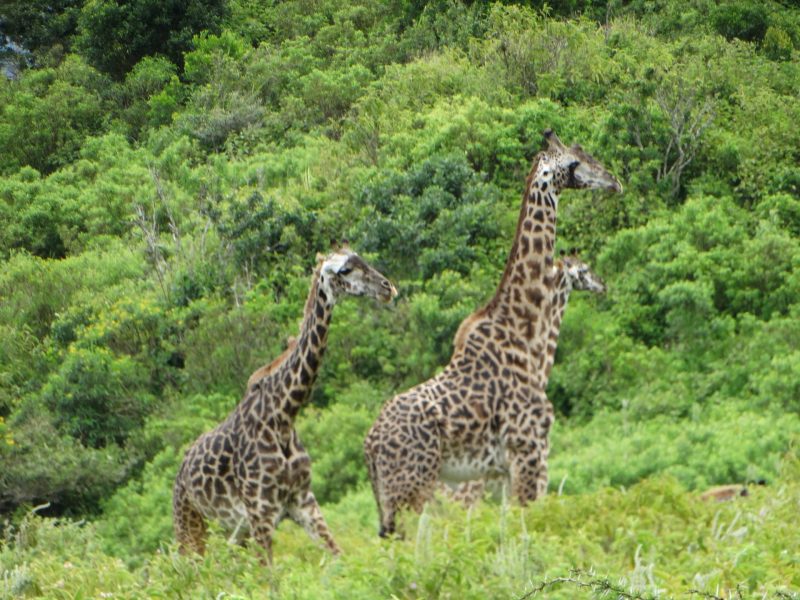
Watch the prey rather than searching for the predator. Giraffe and zebra that have stopped feeding and are staring fixedly at one patch of cover are telling you something.
Sunset Boat Safaris on Lake Burigi
The evening water session is the strongest dusk activity in the park, and it is underused.
TANAPA charges a boating safari fee for Burigi-Chato, and trips launch from near the ranger posts. Canoeing is offered separately and capped at three hours per session here.
What the evening gives you that the morning does not is the hippo transition, drinking traffic along the shore, and light coming across the water rather than through haze. In the dry months from June through September, elephant, buffalo, zebra, giraffe, waterbuck and topi all come down to the shoreline as the heat eases.
Sitatunga feed at the papyrus margins at dusk too, not just at dawn, so an evening session in a swampy inlet is a legitimate second attempt if the morning failed.
Take a fleece. Once the sun is down the temperature on open water falls quickly.
Most visitors treat dawn as the serious session and dusk as the wind-down. On this lake that is the wrong way round at least half the time.
Sundowner Stops in Designated Areas on a Safari
Sundowners are permitted in designated areas across Tanzanian national parks for a modest per-person fee, with a reduced rate for children aged five to fifteen and free entry for under-fives.
This is the mechanism under which you stop, get out of the vehicle and stand somewhere with a view as the light goes. Getting out anywhere else is regulated, and the designated areas exist because they have been assessed.
The western-facing viewpoints on the valley walls above Lake Burigi are the spots to ask about by name, since the sun drops behind the ridges beyond the water. From up there you take in the whole shape of a lake running roughly 30 kilometres long and about 4 kilometres wide, with its islands and papyrus inlets.
Light fades fast at this latitude, so be in position well before you want to be rather than arriving as it goes.
Photographing Sunset Wildlife on Safari
The last hour produces the best light of the day and the hardest technical conditions.
In the dry season from June through September, dust in the air catches low sun and separates a backlit subject from its background, which is the effect that makes savannah images work. Position so the sun is behind or across your subject rather than over your shoulder, and expose for the highlights.
From a boat, the water gives reflection and a clean foreground, with hippo and drinking animals lit from the side. The ridges behind provide a receding line of high ground that builds depth into a frame.
Light levels fall fast. Expect to be pushing ISO hard within twenty minutes of the sun touching the ridge, and accept a falling keeper rate rather than fighting it.
Drones are prohibited in every Tanzanian national park.
Extending Into a Night Game Drive Safari
Burigi-Chato permits night driving, which is prohibited across much of the Tanzanian park system and available in only a handful of parks including Katavi, Ruaha, Mikumi, Tarangire, Lake Manyara, Nyerere and Ibanda-Kyerwa.
That turns dusk from an endpoint into a transition. Rather than the session finishing at six, a booked night drive carries straight on into the hours when serval hunt the long grass at wetland margins, genet and civet work the tracks, hyena are on the move and leopard become findable.
Specific guidelines apply, a guide is required, and it carries a supplement on top of the daily conservation fee. Book in advance rather than raising it on the evening.
Night nature walks are also offered in applicable parks and give a quieter version of the same hours, dominated by sound rather than sight.
Timing Your Safari Around Gate Hours and the Equatorial Sunset
Two practical points govern how you plan the evening.
Park driving hours run from six in the morning to six in the evening, with a 50 kilometre per hour speed limit and a requirement to keep to authorised tracks. Unless you have booked a night drive, you need to be at your accommodation by six rather than still driving toward it, so work the return leg backwards from that.
The park sits a little over two degrees south of the equator, which means sunrise and sunset vary by only minutes across the year and there is very little twilight. The light does not linger the way it does further from the equator; it goes. Plan for a shorter usable window than you might expect and do not count on shooting after the sun has dropped.
Staying inside the park, at a campsite, the rest house or the Nkonje ranger post bandas, is what makes a full dusk session possible without a rushed drive out.
Best Safari Season for Sunset Wildlife Viewing
June to September: The strongest window. Animals concentrate on Lake Burigi and the permanent rivers, grass is low, and dust in the late afternoon gives the best light of the year. August and September are best.
October to December: Afternoon and evening storms can cut the session short, though storm light after a downpour is exceptional. Wildlife disperses across fresh grazing as the rains arrive.
January to February: Grass high and game scattered, but conditions are usually settled and the park is almost empty of other visitors.
March to May: The heavier rains. Evening storms are frequent and access on unsurfaced tracks becomes the constraint on where you can position for dusk.
Frequently Asked Questions About Sunset Wildlife Watching
What does a sunset session cost?
An evening game drive carries no separate charge beyond your park entry, which is currently US$30 per person per day for non-East African adults aged sixteen and above and US$10 for children aged five to fifteen. A sunset boat safari adds US$20 per person, canoeing US$10 for up to three hours, and sundowners in designated areas US$5 per adult and US$2 per child. A night game drive is US$50 per adult and US$25 per child, and a park guide US$20 per group per day. Add 18 percent VAT to all TANAPA charges.
What time do the gates close?
Six in the evening, with driving hours running from six in the morning. Unless you have booked a night game drive, which Burigi-Chato permits with a guide and the appropriate fee, you need to be at your accommodation by six rather than still driving toward it. Work your return leg backwards from that, and remember there is very little twilight at this latitude.
Is dusk better than dawn for wildlife?
For some things, yes. Dusk is when hippo begin moving out of the water to graze, when leopard become active, and when hyena start calling. Dawn catches the overlap between nocturnal animals not yet settled and diurnal ones already active, which is a shorter but very productive window. Do both rather than choosing, and use the middle of the day for a ridge route or a rest.
Where should I be for the last hour?
Positioned rather than driving. A floodplain edge where grazing herds return as the heat eases, or a stretch of Lake Burigi shoreline where drinking traffic builds. On the water, a boat gives you the hippo transition and light coming across the surface. For a view rather than wildlife, the western-facing designated sundowner spots on the valley walls above the lake.
Can I stay out after sunset?
Only with a booked night game drive and a guide. Burigi-Chato is one of a small group of Tanzanian parks permitting night driving, alongside Katavi, Ruaha, Mikumi, Tarangire, Lake Manyara, Nyerere and Ibanda-Kyerwa, and specific guidelines apply. Night nature walks are also offered in applicable parks at a lower fee. Without one of these booked, the six o’clock gate hour applies.
How quickly does the light go?
Fast. The park sits a little over two degrees south of the equator, so there is very little twilight and the usable window after the sun touches the ridge is short. Sunrise and sunset also vary by only minutes across the year, so your timings stay fixed season to season. Be in position well ahead rather than arriving as the light goes, and expect to be pushing ISO hard within twenty minutes.
Is it safe to be near the lake at dusk?
With normal caution and a guide, yes, but keep well clear of the paths hippo use coming out of the water to graze. A hippo between you and the lake is the most dangerous situation on this water, and they are far faster on land than people expect. Large Nile crocodiles are also abundant. Stay in the vehicle or the boat, and only get out at designated sundowner areas.
Booking Your Burigi-Chato Trip
The safari companies and tour operators listed on this website put trips like this together for a living and know which camps, guides and routes actually deliver. We are an independent guide to Burigi-Chato; we do not book or sell tours ourselves.
When you are ready, arrange your safari, tour or holiday with one of the recognised operators listed here. Tell them your dates and what matters most, and a real person, not a form, will handle the itinerary, park bookings and logistics for you.