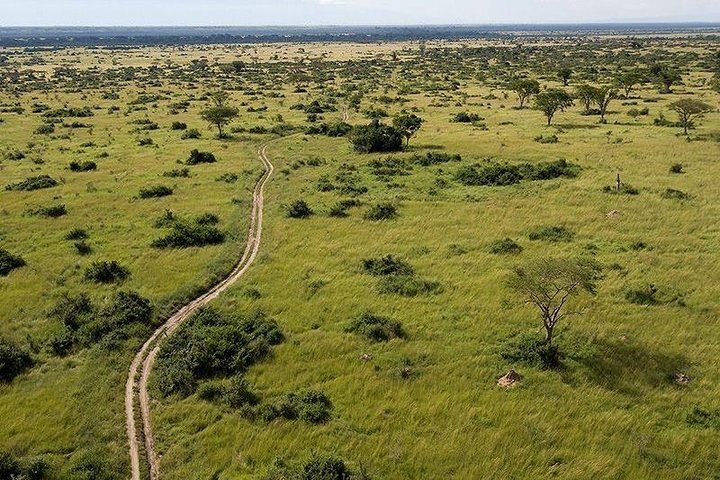
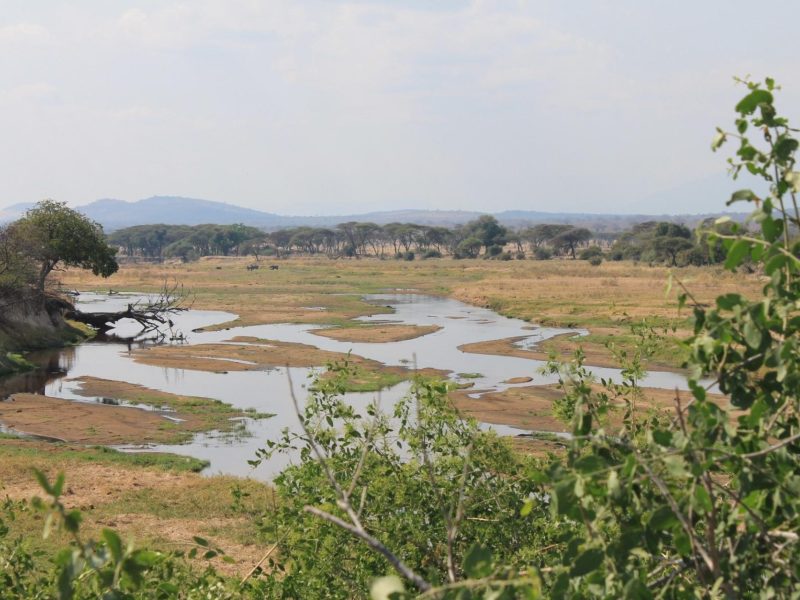
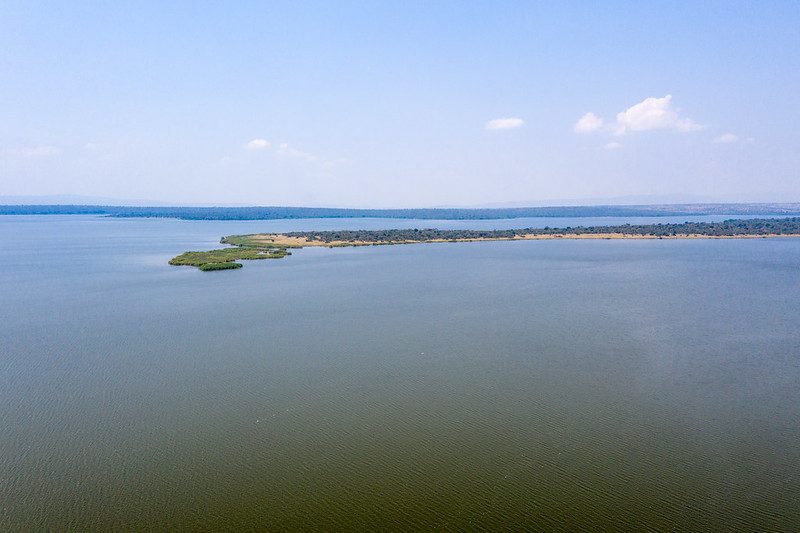
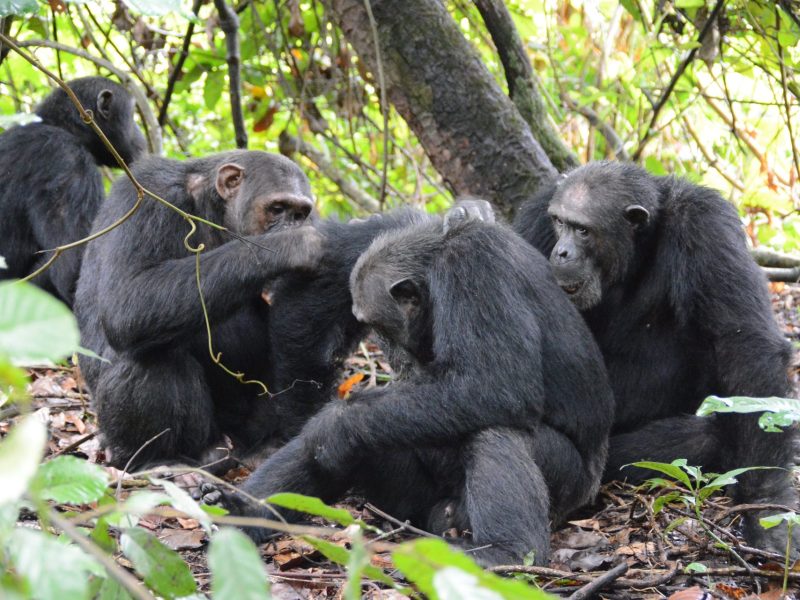
The cost to visit Burigi-Chato National Park is among the lowest of any comparable Tanzanian park, because its conservation fee sits in TANAPA’s cheaper tier and there are no premium lodges inside the boundary to inflate nightly rates. Most of a visitor’s budget goes on transport and vehicle hire rather than on park entry, with the full fee breakdown set out below. Burigi-Chato is a 4,707 square kilometre park in northwestern Tanzania, gazetted in 2019, sitting between Lake Victoria and the Rwandan border.
Getting there is the expensive part. The park itself is cheap.
What You Actually Pay For on a Burigi-Chato Safari
A Burigi-Chato safari bill is assembled from separate line items rather than one number, and knowing the parts is what lets you control the total. Six things go into it. There is the daily conservation fee per person, a vehicle entry fee charged per day per vehicle, accommodation, a guide fee if you take one, supplements for specific activities, and the cost of physically reaching northwestern Tanzania from wherever you start.
Two of those six dominate. Transport and accommodation almost always account for the bulk, while the park’s own charges make up a surprisingly small share by the end. That ratio is the opposite of what people expect, and it is why the park rewards travellers who are already in the Lake Victoria region for other reasons.
Every TANAPA charge is quoted exclusive of 18 percent VAT. When you are building a rough budget, add that on top of every park figure you see published, including the ones further down this page.
Conservation Fees and Park Entry for a Burigi-Chato Safari
The conservation fee is the core charge for any Burigi-Chato game drive safari, levied per person per day rather than per visit. Burigi-Chato sits in the same fee band as Katavi, Ruaha, Mikumi, Rubondo Island, Saadani, Mkomazi, Kitulo, Udzungwa, Ibanda-Kyerwa, Rumanyika-Karagwe and Saanane Island, which is TANAPA’s mid-lower tier. It is substantially cheaper per day than Serengeti or Nyerere, and cheaper again than Gombe.
Rates split four ways: non-East African visitors, expatriates and Tanzanian residents, East African Community citizens, and children. Children under five enter free everywhere in the TANAPA system. Children between five and fifteen pay a reduced rate. Anyone sixteen and over pays the adult rate, which catches families with teenagers off guard fairly often.
There is one detail worth knowing about validity. TANAPA operates two multiple entry permits: a day-trip permit valid for twelve daylight hours, and a sleep-over permit valid for a full twenty-four hours. Both allow you to come and go within the validity window rather than paying again at each gate crossing. If you are staying outside the park and driving in each morning, ask which of the two permits you are being issued.
Fees are non-refundable once paid, and proof of identity is mandatory at the gate. East African citizens need passports to claim the EAC rate, and residents need a residence permit, exemption certificate or diplomatic identification.
Vehicle Entry and Guide Fees on a Burigi-Chato Game Drive Safari
Every vehicle entering the park pays a daily fee, scaled by tare weight, and the difference between a Tanzanian-registered private vehicle and a foreign-registered or commercial one is enormous. This single line item is the reason self-driving in a locally registered car is dramatically cheaper than bringing a vehicle across a border.
Open-sided game viewing vehicles carry a fifty percent surcharge over the standard vehicle rate, which is worth knowing if an operator is quoting you an open vehicle as an upgrade.
Park guides are optional in Burigi-Chato for driving, but genuinely useful here in a way they are not everywhere. The park is enormous, the tracks are unsignposted in places, and wildlife densities are patchy compared with the northern circuit. A guide is charged per group per day, not per person, which makes the cost per head trivial across four people.
Take the guide. This is not a park where you will do better on your own.
Accommodation Costs for a Burigi-Chato Safari, Inside and Outside the Park
Sleeping arrangements are where the biggest spread appears, and Burigi-Chato is unusual in Tanzania for having no luxury tier at all inside its boundary. That absence caps your spending whether you want it capped or not.
Public campsites: The cheapest option, priced per person per night, with basic ablutions and fire pits. Bring everything, including water. Sites sit near the lakeshore and around the ranger posts.
Special and fly campsites: Higher per-person nightly rate, prior booking required, but you get an unserviced site to yourselves. This is the route mobile operators use when building a trip around your own dates.
Park rest house, cottages and tents: TANAPA runs its own accommodation at Burigi-Chato, including tents provided by the park. Modest, functional, and priced per head per night with a lower children’s rate.
Town guesthouses and hotels: Chato, Biharamulo and Kayanga have budget and mid-range options outside the park. You pay no park accommodation fee at all, only the daily entry when you drive in.
The Nkonje ranger post area offers bandas and a tented camp with basic amenities. Anything more comfortable means basing yourself in a nearby town and accepting a drive each morning.
Activity Supplements on a Burigi-Chato Boat Safari or Walking Trip
Several of the best things to do here carry a fee on top of the daily conservation charge, and none of them are included by default. Plan for these separately.
The Burigi-Chato boating safari fee applies per person to trips on Lake Burigi and the park’s waterways. Canoeing is charged separately and more cheaply, allowed for a maximum of three hours per session in this park. Walking safaris are split into short walks of one to four hours and long walks above four hours, at different rates, with a lower charge for children aged twelve and over.
Night game drives are permitted in Burigi-Chato, which is not true of every Tanzanian park, and they carry a per-person supplement that is one of the higher activity charges. Sport fishing is allowed between seven in the morning and five in the afternoon under specific guidelines, charged per person per day, with rod hire available separately.
Sundowners in designated areas carry a small per-person fee. Bush meals are charged nominally. Balloon operations are technically permitted in Burigi-Chato at a lower rate than Serengeti, though no operator currently flies here.
Flight and Road Transfer Costs for a Burigi-Chato Trip
This is the line item that decides whether your trip is cheap or expensive, and it has very little to do with the park.
Driving is by far the least costly way in. Mwanza sits roughly 150 kilometres away by the shortest routing, taking three to five hours depending on road condition and which gate you head for, and Chato town is only about 40 kilometres from the Katete Gate. Bukoba is closer still, at around two to three hours. Coming from Dar es Salaam by road means more than 1,000 kilometres and is not sensible unless the drive is the point.
Flying changes the arithmetic completely. Chato has an airport receiving domestic services, and Bukoba receives scheduled flights, both requiring a road transfer at the far end. Private charters can land at an airstrip near the Nkonje ranger post beside Lake Burigi, or at the Biharamulo airstrip. Landing fees are payable per aircraft on top of everything else.
The honest position is this. If you are already in Mwanza, Bukoba or the western Serengeti, a Burigi-Chato add-on costs very little. If you are flying in specially from Arusha or Dar es Salaam, the transport will outweigh every other element of the trip combined.
Burigi-Chato is one of the few Tanzanian parks where the smart budgeting question is not which lodge you choose, but what else you were already doing in the region.
How Season Affects Burigi-Chato Safari Pricing
Burigi-Chato does not carry the peak and low season split that Serengeti, Nyerere, Tarangire, Lake Manyara and Arusha do. Its conservation fee is a single flat rate charged from July through June, with no seasonal variation whatsoever, which simplifies budgeting considerably.
June to September, dry: No park fee premium, but vehicle hire and lodging in Mwanza and Bukoba are at their most expensive, since this overlaps the northern circuit high season. Best game viewing of the year.
October to December: Rain returns in November and December. Regional accommodation softens in price. Roads inside the park become the limiting factor rather than money.
March to May: The heavier rainfall peak. Cheapest regional pricing by some margin, but genuine access problems on unsurfaced tracks and a real chance of losing days.
Hotel concession fees, which lodges pay to TANAPA and pass through in their rates, do carry a peak and low split in most parks. In Burigi-Chato’s band it is charged at a flat rate year-round.
Budget, Mid-Range and Fly-In Burigi-Chato Trips Compared
Three broad shapes of trip exist here, and they differ by an order of magnitude.
The budget version starts in Mwanza or Bukoba, uses a locally registered vehicle, sleeps at a public campsite or a town guesthouse, and takes a park guide but no activity supplements beyond one boat trip. It is genuinely inexpensive by Tanzanian safari standards.
The mid-range version books a driver-guide and a 4×4 from a Mwanza-based operator, stays at the park rest house or a Chato hotel, and adds boat and walking safaris. Most of the increase is the vehicle and driver, which are charged daily whether you are moving or not.
The fly-in version charters into the Nkonje or Biharamulo airstrip, runs a mobile camp on a special campsite, and treats Burigi-Chato as one leg of a wider western circuit taking in Rubondo Island or Rumanyika-Karagwe. This is a private-charter cost structure and prices accordingly.
How a Burigi-Chato Safari Compares on Cost With Tanzania’s Better Known Parks
Against Serengeti, the daily conservation fee here is less than half in peak season. Against Lake Manyara, Tarangire and Arusha, it is roughly two-thirds. Against Gombe, which sits at the top of TANAPA’s per-day scale, it is under a third.
The saving does not stop at the gate. Serengeti’s real cost driver is lodging, where camps and lodges run into the high hundreds or thousands per person per night. Burigi-Chato has no such tier, so a comparable number of days costs a fraction of what the northern circuit does once beds are counted.
What you give up is density and reliability of sightings. Serengeti delivers volume. Burigi-Chato delivers space, quiet and low prices, with a wildlife return that is improving since gazettement but still well behind the famous parks. That trade is the whole proposition, and whether it is worth it depends entirely on what you came for.
Frequently Asked Questions About Burigi-Chato Safari Costs
How much is the Burigi-Chato National Park entry fee?
The conservation fee currently sits at US$30 per person per day for non-East African visitors aged sixteen and above, and US$10 for children aged five to fifteen. Expatriates and Tanzanian residents pay US$15 for adults and US$5 for children. East African Community citizens pay TZS 5,000 for adults and TZS 2,000 for children. Children under five enter free. All of these are exclusive of 18 percent VAT, and there is no peak or low season variation in this park.
What does it cost to camp in Burigi-Chato?
Public campsites are charged at US$30 per adult per night for non-East African visitors and US$5 for children aged five to fifteen, with TZS 5,000 and TZS 2,500 for East African citizens. Special campsites, which need prior booking, run at US$50 per adult and US$10 per child. Seasonal campsites are also US$50 for adults. Fly campsites are US$50 per adult. The park’s own rest house, cottages and tents are charged at US$35 per adult per night and US$15 per child, with park-provided tents at US$30 and US$15.
How much are boat safaris, walking safaris and other activities?
The boating safari fee is US$20 per person, or TZS 10,000 for East African citizens. Canoeing, capped at three hours in this park, is US$10 per person. Short walking safaris of one to four hours cost US$20 per adult and US$10 for children twelve and over, while long walks above four hours are US$25 and US$15. Night game drives are US$50 per adult and US$25 per child. Sport fishing is US$25 per adult per day and US$10 per child, with rod hire at US$20 per rod per day. Sundowners are US$5 per adult. A park guide is US$20 per group per day.
What is the vehicle entry fee for Burigi-Chato?
For Tanzanian and non-commercial East African registered vehicles, entry is TZS 20,000 per day for a tare weight up to 2,000 kilograms, TZS 35,000 for 2,001 to 3,000 kilograms, and TZS 60,000 for 3,001 to 7,000 kilograms. Commercial East African and foreign-registered vehicles pay US$40, US$150 and US$200 across those same weight bands. Open vehicles are charged fifty percent extra. Aircraft landing fees range from US$50 for a private foreign aircraft up to four seats to US$320 for a commercial foreign aircraft over thirteen seats, with much lower rates for locally registered planes.
What should I budget in total for a two-day Burigi-Chato safari?
For two non-East African adults driving in from Mwanza in a hired local vehicle with a driver, staying one night at the park rest house, taking a guide and one boat safari, the park charges alone come to roughly US$180 before VAT. Add the vehicle and driver, which is where the real money sits, and a typical Mwanza operator quote for a two-day trip lands somewhere between US$400 and US$900 per person depending on group size. Splitting a vehicle across four people rather than two changes that figure more than any other decision you make.
Is it cheaper to stay inside the park or in Chato town?
Staying in town is usually cheaper on paper, since budget guesthouses in Chato and Biharamulo start around US$20 to US$50 per night and you pay no park accommodation fee. What you lose is time and fuel, because you re-enter each morning and drive back out each evening. If you are only visiting for a day, town is the sensible choice. For two nights or more, the park rest house often works out better once you count the driving.
Are park fees payable in cash at the gate?
No. TANAPA payments go through the government electronic payment gateway, made online via the TANAPA reservation system, at banks using electronic cards, or by mobile money. Carrying US dollars in cash will not get you through the gate. Arrange payment with your operator in advance, or set it up yourself before you travel, since connectivity at the gates is not something to rely on.
Do I need to pay extra for a photography or filming permit?
Ordinary personal photography carries no charge. Commercial filming in parks outside the top tier is charged at US$250 per person per day, which covers entrance, camping and filming together. Video shooting for your own creative work, for a group of two to twenty people, is US$100 per day on top of the conservation fee. Drones are not permitted in any Tanzanian national park.
Booking Your Burigi-Chato Trip
The safari companies and tour operators listed on this website put trips like this together for a living and know which camps, guides and routes actually deliver. We are an independent guide to Burigi-Chato; we do not book or sell tours ourselves.
When you are ready, arrange your safari, tour or holiday with one of the recognised operators listed here. Tell them your dates and what matters most, and a real person, not a form, will handle the itinerary, park bookings and logistics for you.