Conservation work in Burigi-Chato National Park is run by Tanzania National Parks and centres on ranger patrols and anti-poaching operations, habitat monitoring, community engagement in the surrounding districts, and the recovery of wildlife populations damaged in the 1990s. Visitor fees fund a share of it directly. Burigi-Chato covers 4,707 square kilometres of northwestern Tanzania and was gazetted as a national park in 2019, replacing three former game reserves.
The single largest conservation action here was the gazettement itself. Everything since has followed from it.
How Gazettement Changed Protection for the Burigi-Chato Safari Area
Before 2019, the ground a Burigi-Chato safari crosses was three separate game reserves: Burigi, Biharamulo and Kimisi, all gazetted in the 1970s and managed under the wildlife authority rather than the national parks body.
Game reserve status in Tanzania permits regulated hunting and certain extractive uses. Limited human activity such as fishing and honey gathering coexisted with wildlife across parts of the area. Ranger coverage was thinner, and the three reserves operated as separate management units with their own boundaries and staff.
The reserves were promoted in May 2018 and the park was formally commissioned on 9 July 2019, under the Wildlife Conservation Act of 2009, which empowers the minister responsible for natural resources to declare protected areas and regulate their status. Management transferred to Tanzania National Parks.
Three practical changes followed. Hunting ended across the whole area. Ranger presence increased. And the boundaries between three units disappeared, so wildlife moving along the drainage lines between ridges no longer crossed between three sets of rules.
If you are reading older conservation literature about this area, it will use the game reserve names and describe them as the Burigi-Biharamulo-Kimisi complex. That is the same ground you now buy a single national park permit for.
Anti-Poaching Patrols and Ranger Operations Across the Safari Area
Anti-poaching is the core of day-to-day conservation work here, and it is where most of the effort goes.
Rangers and patrol teams are stationed across the park to monitor wildlife, deter poaching and respond to illegal activity. In a protected area of 4,707 square kilometres with limited road access, that is a substantial logistical problem, and modern tools including GPS tracking and aerial monitoring have been brought into the work alongside foot and vehicle patrols.
National conservation policy has put continued emphasis on strengthening anti-poaching operations across the parks system, alongside upgrading tourism infrastructure such as park roads and strategic airstrips. Both matter here, since access limits how quickly patrols can reach remote sectors.
The ranger posts serve a double function. Nkonje, beside Lake Burigi, is both an operational base and the place visitors stay, which is common in young parks where conservation and tourism infrastructure develop together.
Recovering Wildlife Populations and What Safari Visitors See Now
Population recovery is the measurable goal here, and the starting point was unusually low.
After the Rwandan genocide of 1994, several hundred thousand refugees arrived in the surrounding districts, with the main camp sited on the very edge of Burigi Game Reserve. Wild meat hunting rose steeply, driven partly by food rations that did not supply enough protein, and in some cases carried out with military firearms. Estimates of animals killed across the reserves run to around a hundred a day at the peak.
Studies report large mammal populations falling by roughly sixty percent between 1994 and 1996. District reports from Ngara put the depletion of wildlife in Burigi and Kimisi at about two thirds. Woodland suffered too, with demand for building poles and fuel intense enough that tree stumps were being uprooted.
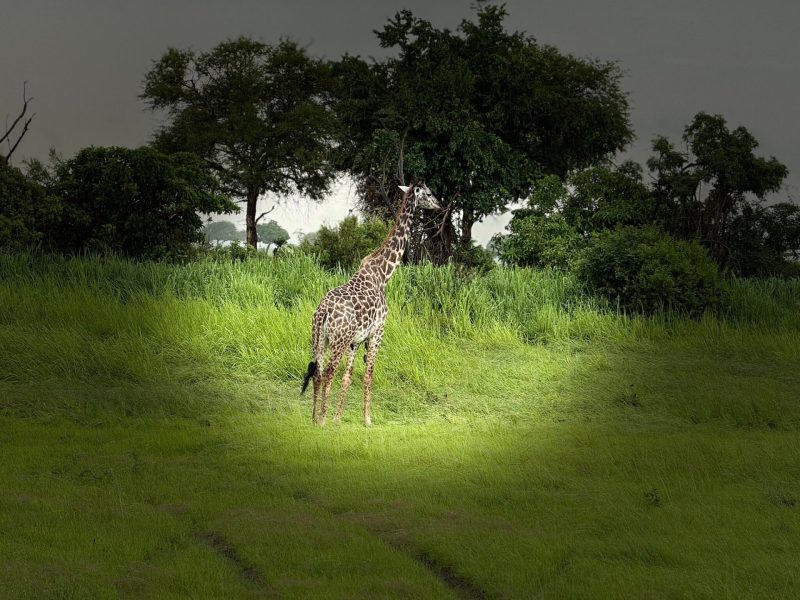
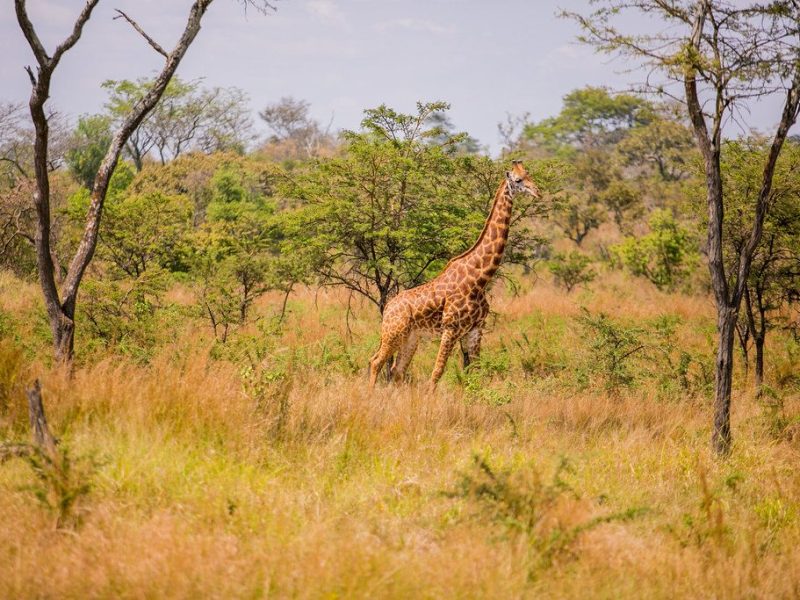
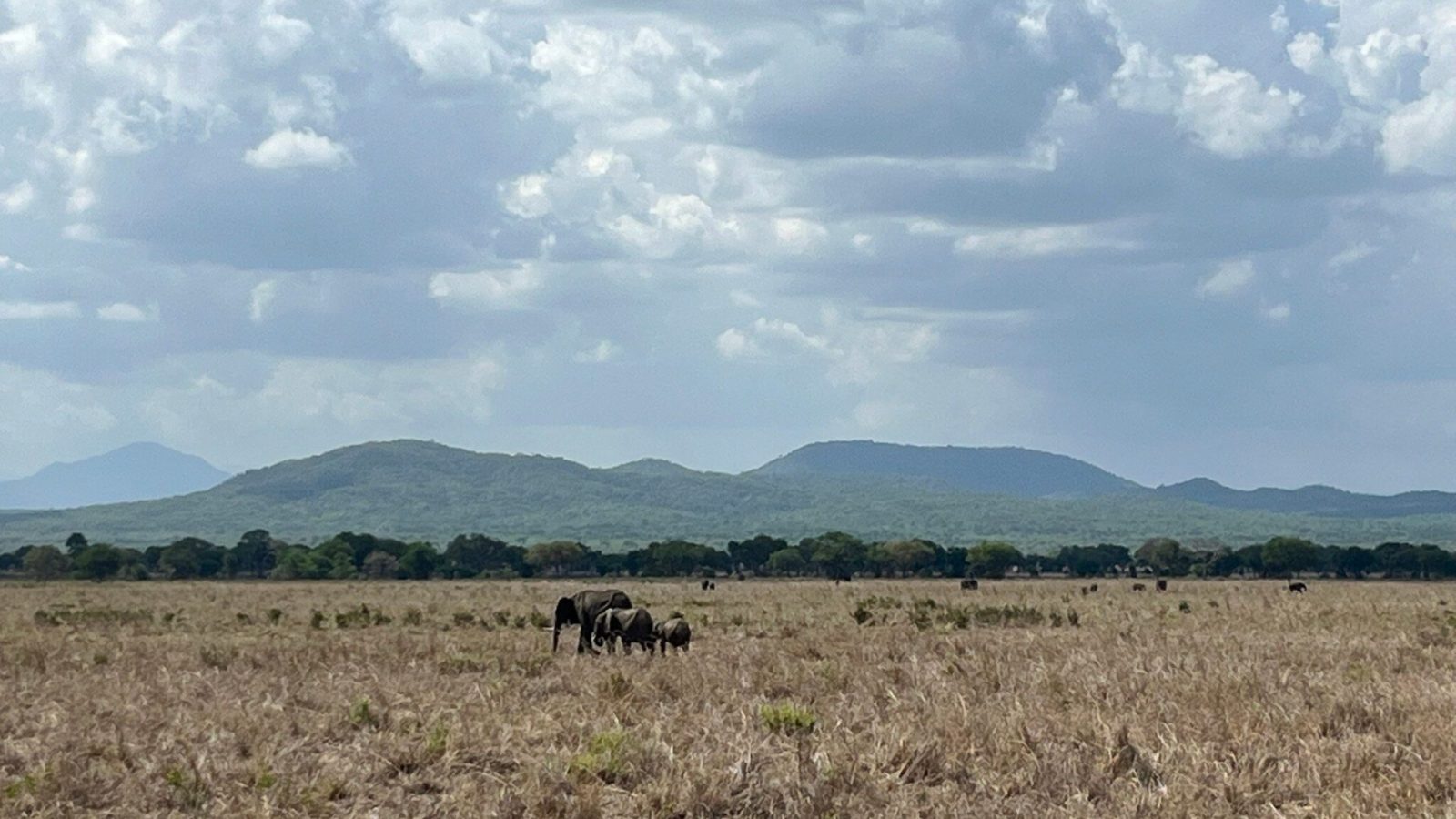
Most refugees returned to Rwanda from the late 1990s and the situation improved considerably. Park literature now describes elephant, buffalo, zebra, giraffe, waterbuck, eland, warthog, roan, topi, impala and sable as becoming more numerous across the park.
Recovery here is measured against a collapse that had nothing to do with the wildlife trade and everything to do with a humanitarian crisis on the reserve boundary.
Habitat Monitoring and Restoration Across the Safari Sectors
Alongside the animals, the habitat itself is monitored and managed.
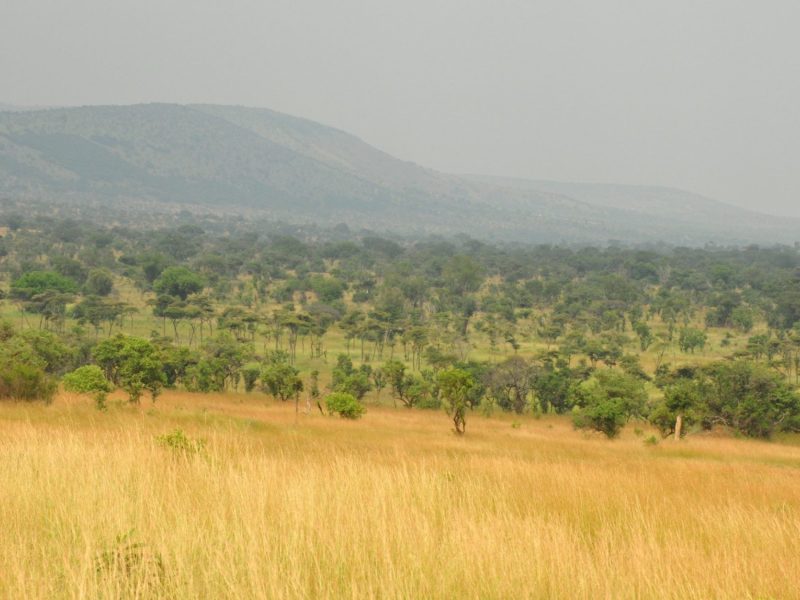
Park staff check the condition of water sources, vegetation and soils across the sectors. The park holds an unusual range of habitat within one boundary, including wooded savannah, papyrus swamp, riverine forest, floodplain and ridge grassland, and each responds differently to grazing pressure, fire and rainfall.
Some of the vegetation here is genuinely scarce. Surviving patches of Guinea-Congo forest hold on in the steeper gullies, with relict sclerophyll forest in sheltered pockets. These are small fragments of a forest type that once extended much further east, and they hold plants and birds absent from the surrounding country.
Recovery from the woodland cutting of the mid-1990s has been slower in some areas than others, which is one reason monitoring matters rather than assuming the habitat looks after itself.
Protecting Lake Burigi and the Wetlands Boat Safaris Depend On
The wetlands carry particular conservation weight, and they have been the subject of specific recommendations.
Assessments of this area have identified the lakeside habitats as a priority, recommending that a larger share of Lake Burigi be brought within protection and that the use of the lake and its resources be better controlled. The reasoning is habitat: the swampy margins support sitatunga, papyrus specialist birds and possibly breeding shoebill, and those margins sit at the edge of the protected area rather than safely inside it.
Putting the lake fishery on a longer-term footing has been flagged alongside this. Fishing pressure affects the same shoreline that wetland species depend on.
The wider picture reaches beyond the park. The Kagera River along the western boundary is the largest single tributary of Lake Victoria and carries water from the most distant headwater of the Nile, and the swamps and floodplains along that drainage filter sediment and nutrients before the water reaches the lake.
Cross-Border Corridors Linking Tanzania and Rwanda Safaris
Burigi-Chato is one piece of a system that crosses national boundaries, and its conservation value depends partly on the others.
Across the Kagera River, Akagera National Park in Rwanda protects the opposite bank of the same drainage. To the north the corridor runs toward Ugandan rangeland and, at a wider scale, toward the Lake Mburo country. Ibanda-Kyerwa and Rumanyika-Karagwe National Parks, gazetted in the same round as Burigi-Chato, fill the Tanzanian ground between.
Elephant movement between the Burigi area and the Moyowosi country to the south has been documented along connecting routes, which is a reminder that the animals use ground well outside any single park.
Merging three reserves into one protected area in 2019 was itself a connectivity measure. Managing a corridor as three units meant three sets of rules across ground animals crossed freely.
Community Programmes and Village Tours Around the Park
Conservation in the surrounding districts depends on the people living there, and this is recognised in how the park is run.
The park spans Karagwe, Biharamulo, Muleba and Ngara districts in Kagera Region and Chato district in Geita Region, with farming and fishing communities around most of its perimeter. National conservation policy has stressed deepening relations with communities living around protected areas, on the basis that grassroots participation is what makes enforcement hold over time.
Tanzania National Parks supports neighbouring communities through corporate social responsibility work alongside its core conservation role. Community and cultural visits to villages around the park and along the Lake Victoria shore can usually be arranged through operators working in the region, which channels some visitor spending locally.
The history here makes the community dimension unusually pointed. The mid-1990s losses were driven by desperation on the park boundary, not by organised commercial poaching, and the lesson has not been forgotten locally.
How Safari Fees Fund Conservation Work
Park revenue funds a share of the conservation programme directly, which is worth knowing in a park this lightly visited.
Conservation fees, vehicle entry, activity supplements and concession payments all flow to Tanzania National Parks and support ranger operations, monitoring and infrastructure. National parks generate revenue that also supports water catchment protection, scientific research and community support.
Payment goes through the government electronic payment gateway rather than cash at the gate, which is itself a transparency measure. Fees are non-refundable once paid, and proof of identity is required at entry.
In a park receiving very few visitors, individual fees represent a larger proportional contribution than they would in Serengeti. That is not a reason to visit by itself, but it is a real consequence of doing so.
Park Rules That Support Conservation on Safari
Visitor rules here are conservation measures rather than bureaucracy, and most are shared across the Tanzanian park system.
Drones are prohibited in all national parks. Driving hours run from six in the morning to six in the evening, with a 50 kilometre per hour speed limit and a requirement to keep to authorised tracks, which limits disturbance and habitat damage. Feeding animals is prohibited, since it changes diet and creates dependence on people. Removing anything of biological interest is prohibited. Camping is permitted only in designated areas.
Hunting ended with national park status. Sport fishing remains permitted under specific guidelines, restricted to daylight hours between seven in the morning and five in the afternoon.
Night game drives are allowed here with a guide and the appropriate fee, under specific guidelines, which is a controlled exception rather than an open permission.
What Conservation Success Would Look Like for This Safari Destination
Judged honestly, this park is in the middle of a long process rather than at the end of one.
Wildlife numbers are climbing but remain well below what the habitat could support, and predator recovery tends to lag prey recovery by some margin. Tourism infrastructure is minimal, which limits both revenue and the visitor presence that helps deter illegal activity. Lake Burigi’s margins are not fully protected.
What is working is the framework: single management, hunting ended, ranger presence increased, and a connected corridor recognised across three Tanzanian parks and into Rwanda.
The next measurable steps would be extending protection over more of the lake, building the tourism value chain so revenue rises, and sustaining the community relationships that keep pressure off the boundary.
Frequently Asked Questions About Conservation on a Burigi-Chato Safari
How do my park fees support conservation?
Conservation fees currently run at US$30 per person per day for non-East African adults aged sixteen and above and US$10 for children aged five to fifteen, with US$15 and US$5 for expatriates and Tanzanian residents and TZS 5,000 and TZS 2,000 for East African Community citizens. Vehicle entry adds from TZS 20,000 per day, and activity supplements such as the US$20 boating safari fee and US$50 night game drive apply on top. All of this flows to Tanzania National Parks and funds ranger operations, monitoring and infrastructure. Add 18 percent VAT to all TANAPA charges.
Is hunting still allowed in Burigi-Chato?
No. Game reserve status in Tanzania permits regulated hunting; national park status does not. That change took effect across the whole merged area with the 2019 gazettement, when management passed from the wildlife authority to Tanzania National Parks. Sport fishing remains permitted inside the park under specific guidelines, restricted to between seven in the morning and five in the afternoon and charged at US$25 per adult per day, but hunting has ended entirely.
What happened to the wildlife in the 1990s?
The area was severely affected by the refugee influx following the Rwandan genocide of 1994. Several hundred thousand people arrived in the surrounding districts, with the main camp on the edge of Burigi Game Reserve, and wild meat hunting rose steeply. Studies report large mammal populations across these reserves falling by around sixty percent between 1994 and 1996, with district reports putting depletion in Burigi and Kimisi at roughly two thirds. Woodland was also cut heavily for building poles and fuel.
Are wildlife numbers recovering now?
Reported trends are positive. Park literature describes elephant, buffalo, zebra, giraffe, waterbuck, eland, warthog, roan, topi, impala and sable as becoming more numerous across the park, and gazettement in 2019 ended hunting and increased ranger presence. That said, this is a population rebuilding from an unusually low base rather than one near capacity, and predator recovery tends to follow prey recovery rather than run alongside it. Expect improvement to be gradual.
Can I volunteer or contribute to conservation here?
There is no established volunteer programme at Burigi-Chato, which reflects how young the park is and how limited its visitor infrastructure remains. The most direct contribution a visitor makes is paying park fees, which fund ranger operations in a park that receives very few people. Booking community and cultural visits in the surrounding villages channels spending locally, and using a licensed operator that employs local guides keeps more of the money in the region.
Are there rhino or reintroduced lion here?
No rhino, and no documented reintroduction programme comparable to Akagera’s across the border in Rwanda. Some sources describe a more recent introduction of lions to the area, though numbers are not published in any reliable form. Akagera, which protects the opposite bank of the same Kagera drainage, has had more sustained conservation investment and now carries reintroduced lion and rhino. Burigi-Chato’s recovery so far has come from protection rather than restocking.
Why does the lake need extra protection?
Because the habitat that matters most sits at the edge of the protected area rather than inside it. The swampy margins of Lake Burigi support sitatunga, papyrus specialist birds and possibly breeding shoebill, and conservation assessments have recommended bringing a larger share of the lake and its lakeside swamps within protection while putting the fishery on a longer-term footing. Fishing pressure affects the same shoreline these species depend on.
Booking Your Burigi-Chato Trip
The safari companies and tour operators listed on this website put trips like this together for a living and know which camps, guides and routes actually deliver. We are an independent guide to Burigi-Chato; we do not book or sell tours ourselves.
When you are ready, arrange your safari, tour or holiday with one of the recognised operators listed here. Tell them your dates and what matters most, and a real person, not a form, will handle the itinerary, park bookings and logistics for you.