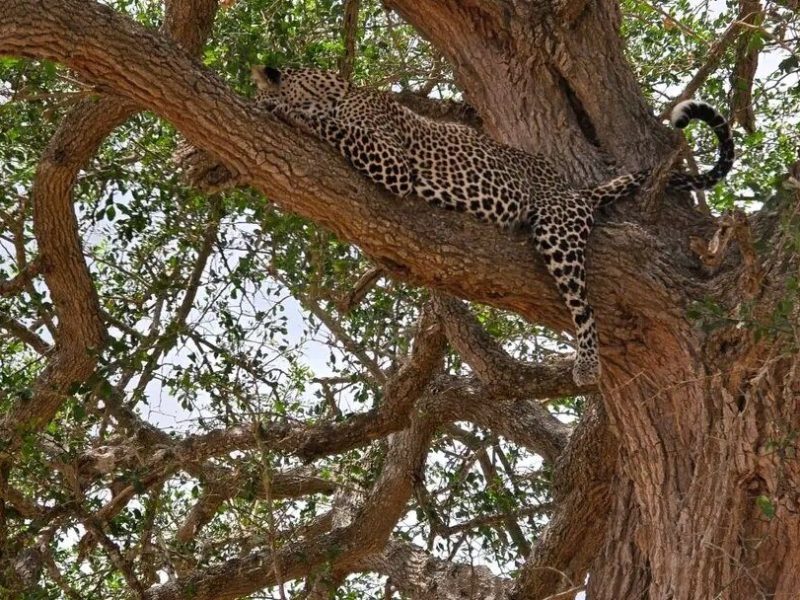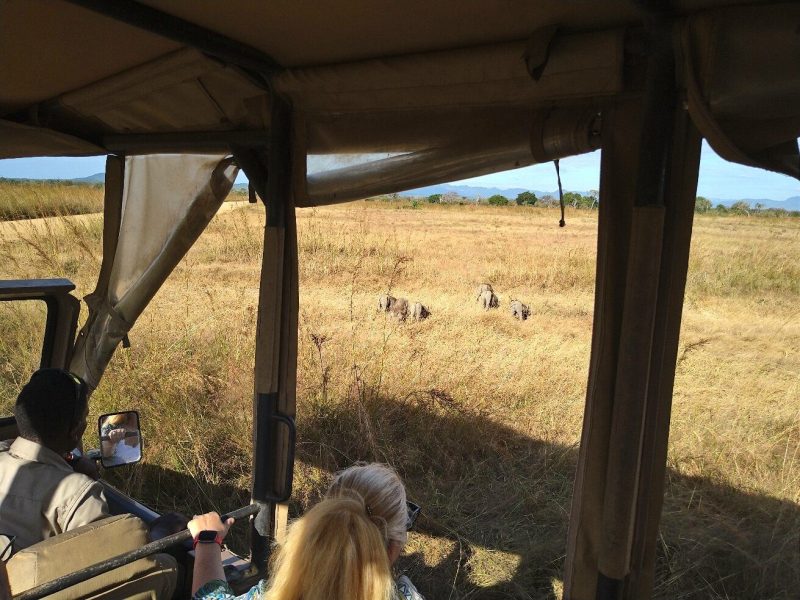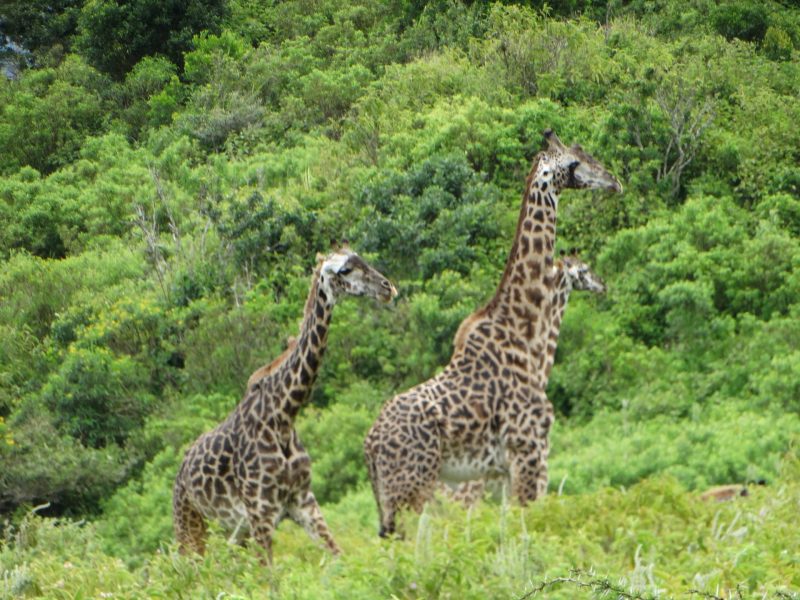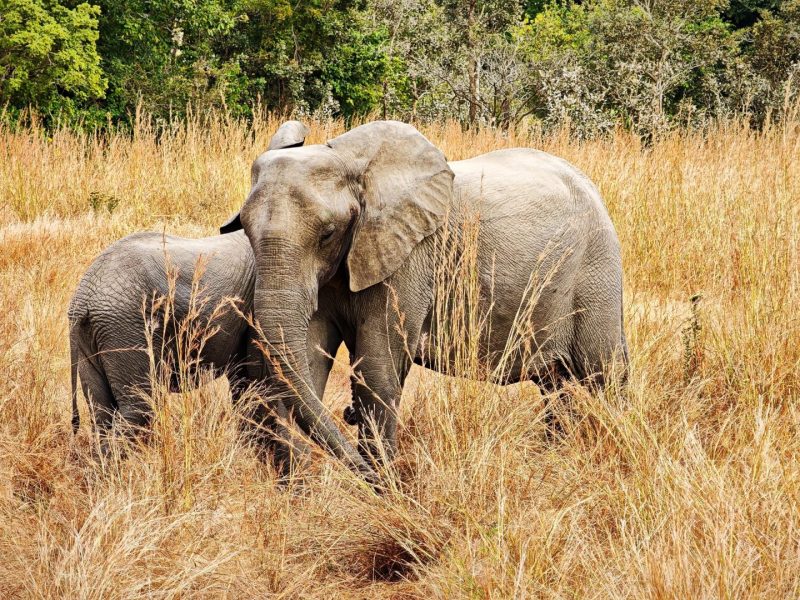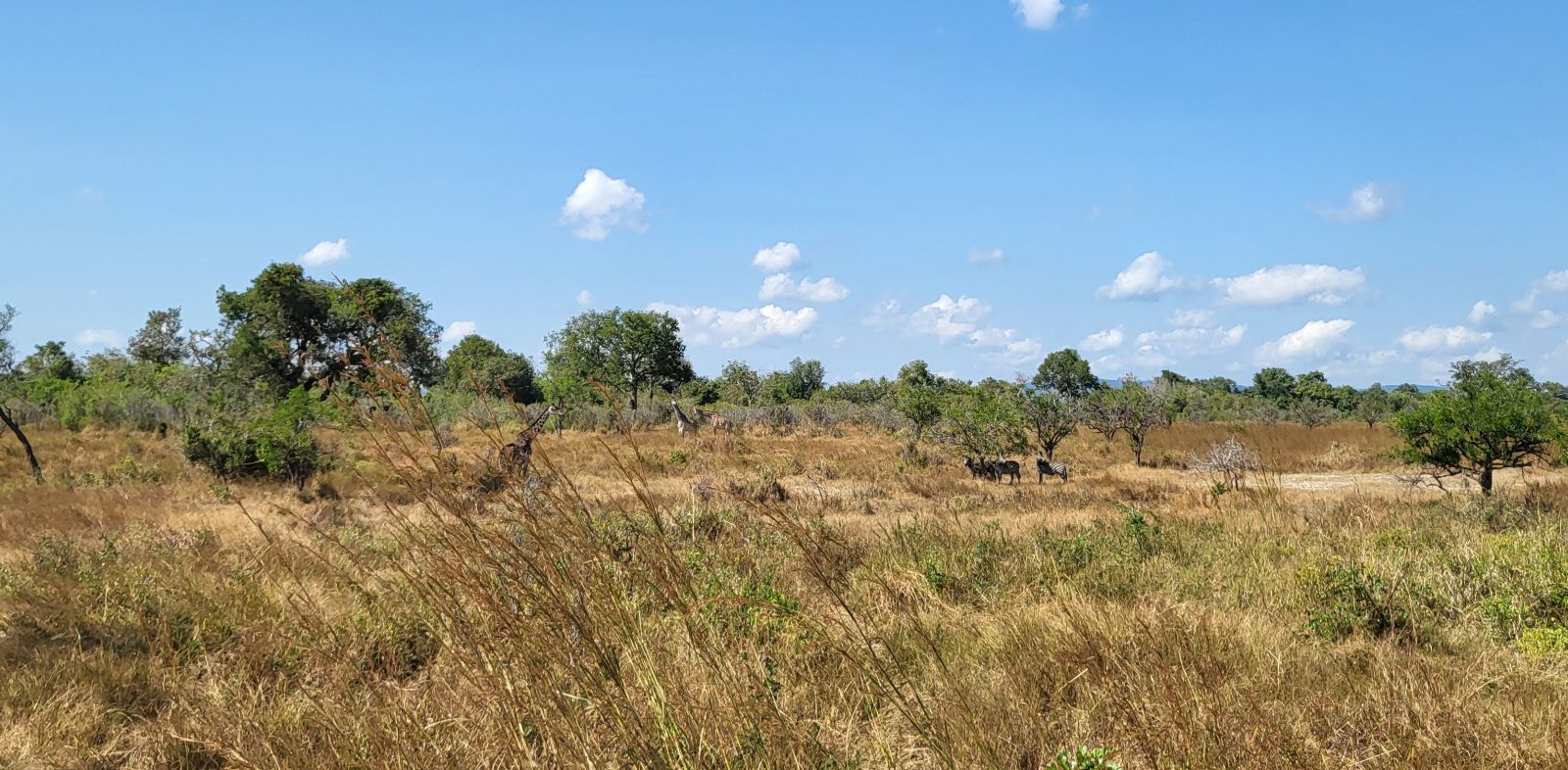
Animals you can see in Burigi-Chato National Park include elephant, buffalo, giraffe, zebra, hippo, crocodile, eland, topi, impala, waterbuck, roan and sable antelope, and the swamp-dwelling sitatunga, alongside lion, leopard and spotted hyena at recovering densities. Game drives, boat safaris and guided walks all produce different parts of that list. Burigi-Chato spans 4,707 square kilometres of northwestern Tanzania and was gazetted in 2019 from three former game reserves.
One correction before anything else. There are no gorillas here, and chimpanzees are not a Burigi-Chato species either, whatever some websites say.
Setting Expectations on a Burigi-Chato Wildlife Safari
The species list on a Burigi-Chato safari is long. The numbers behind it are not, and both facts need stating together.
This area lost a great deal of wildlife during the mid-1990s. After the Rwandan genocide of 1994, several hundred thousand refugees arrived in the surrounding districts, with the main camp on the very edge of what was then Burigi Game Reserve, and wild meat hunting rose sharply. Studies report large mammal populations across these reserves falling by around sixty percent between 1994 and 1996, with district reports putting depletion in Burigi and Kimisi at roughly two thirds.
Recovery has been running since the late 1990s and accelerated when national park status ended hunting in 2019. Populations are reported to be increasing across the park. They are still well below what the habitat could support.
Treat this as a park where the list is real but the sightings are earned. Concentrate on water in the dry season, take a park guide, go slowly, and judge a day by what you found rather than by how many species you ticked.
Elephant, Buffalo and the Large Herbivores
Elephant are present and use the drainage lines and floodplains heavily, moving along corridors that connect this area to the wider Moyowosi country to the south. Herds are not large by Tarangire standards, and sightings depend on being in the right valley at the right time of year.
Buffalo occur in substantial herds and are among the more reliable large animals here, particularly on the floodplain margins in the dry season. They also make walking safaris genuinely serious, which is why an armed ranger accompanies every walk.
Giraffe are recorded across the park and are easier to spot than most species simply because of height, standing above the medium and tall grass that hides everything else. Plains zebra occur across the open grassland stretches on the slopes.
Warthog are common through the woodland and open ground.
Antelope Species on a Burigi-Chato Game Drive Safari
The antelope list is the strongest part of the park’s mammal roster, and it spans several habitat types.
Miombo specialists: Roan antelope and sable antelope, both associated with wooded savannah across their range. Sable in particular are a reason to spend time in the woodland rather than pushing straight for the lake.
Open ground: Topi and impala across the grassland and floodplain margins, with eland, the largest antelope in Africa, recorded through the park.
Water margins: Defassa waterbuck favour the wetter edges and are among the more reliable large antelope near the lake and rivers. Common reedbuck use the floodplain grass.
Thicket and swamp: Bushbuck in the riverine vegetation, oribi commonly recorded on open ground, and sitatunga confined to the papyrus beds along the lake inlets.
Dik-dik have been photographed in the park. Suni are recorded in the thicker cover.
Wildebeest occur here, though this has nothing to do with the Serengeti migration, which does not enter Burigi-Chato and runs in a separate system roughly 200 kilometres away.
Sitatunga Watching in the Papyrus Swamps
If one animal defines this park, it is the sitatunga, and it deserves its own section rather than a line in a list.
This is a semi-aquatic antelope built entirely for papyrus. Its hooves are elongated and widely splayed, spreading weight across floating vegetation mats that would not carry a bushbuck of similar size. The coat is long, shaggy and water-repellent. Males are dark with spiral horns and a shaggy throat, females smaller and reddish. They swim readily, and when alarmed they submerge with only the nostrils above the surface rather than running.
Lake Burigi runs roughly 30 kilometres long and 4 kilometres wide with a scatter of islands and many swampy inlets, and those inlets are the habitat. Sitatunga feed at the reed margins at dawn and dusk and withdraw into the papyrus through the day.
Sightings are not guaranteed. A boat or canoe at first light, a guide who knows the specific bays, and two or three separate attempts across a stay is what gives you a realistic chance.
Hippo, Crocodile and Aquatic Species on a Boat Safari
The most certain wildlife viewing in the park is on the water, and it is why the boat safari is worth prioritising.
Hippo are abundant in the lakes and rivers, holding in the deeper sections through the heat of the day in pods and moving out at night to graze the surrounding grassland. A late afternoon boat trip often catches them beginning to stir.
Large Nile crocodiles are equally abundant, basking on mud banks and sandbars through the middle of the day. The bigger individuals in this system are substantial animals, and together with the hippos they are the reason swimming is not an option anywhere on this water.
Water monitor lizards work the banks. Pythons are recorded in the park. Yellow-spotted otters occur in the wider Lake Victoria system and are an occasional sighting along quieter channels. Tilapia are the mainstay of the fish caught by permitted anglers.
Primates and Smaller Mammals in the Woodland
Olive baboon troops are common through the woodland and along the rock faces, and vervet monkey are widespread. These are the two primates a visitor is most likely to see.
Some websites list chimpanzees and even gorillas among the park’s wildlife. Gorillas do not occur anywhere in Tanzania. The chimpanzee claim appears to be confusion with Rubondo Island National Park out in Lake Victoria, which does hold a chimpanzee population and runs a habituation programme. Do not book a Burigi-Chato trip expecting primates beyond baboon and vervet.
Smaller mammals include bush pig in the thicker cover, and rock hyrax colonising the boulder piles and exposed faces along the escarpment crags. Klipspringer, the rock-dwelling antelope that stands on tiptoe on boulder edges, are found on the same rocky ground.
Night drives and night nature walks, both permitted here, are the way to find the nocturnal species that daylight game drives simply miss.
Birdlife Alongside the Mammals on a Birdwatching Safari
The bird list is where this park genuinely competes with better known reserves, and it runs to several hundred species across the habitat mix.
African fish eagles occur at unusually high density along the lake and river margins. Saddle-billed stork work the shallows. Wattled crane, wattled lapwing, Senegal lapwing, white-browed coucal, village weaver, red-necked francolin and cattle egret are all recorded, alongside herons, egrets, pelicans, marabou stork, hornbills, guineafowl, ducks and several kingfisher species.
Papyrus specialists including the papyrus gonolek live in the swamp inlets. African grey parrots, introduced into the wider Lake Victoria region, occur in parts of the forested ground. Eurasian migrants arrive from around November and stay through the northern winter.
Conservation surveys have flagged that the lakeside swamps may hold breeding shoebill. Confirmed sightings are scarce and the area is barely surveyed, so treat this as a possibility rather than a target.
Come here for the birds and the wetland specialists and you will leave satisfied. Come for big cats and you are gambling.
Where to Look for Each Group on a Game Drive Safari
Habitat tells you where to spend your hours, and in a park this size that is the difference between a good day and an empty one.
The papyrus inlets of Lake Burigi hold sitatunga and the specialist swamp birds. The open water and shoreline hold hippo, crocodile and fish eagles. The floodplain margins hold buffalo, zebra, topi, impala, waterbuck and reedbuck, especially as the dry season progresses. The wooded savannah holds roan, sable, eland, giraffe and bushbuck. The rocky crags along the escarpments hold klipspringer, rock hyrax and the cliff-nesting raptors.
Cross at least two of these in a day rather than staying in one. It is the single easiest thing you can do to lengthen your list.
Best Time for Wildlife Watching in Burigi-Chato
June to September: The strongest window. Grass falls back, seasonal water dries up, and animals concentrate on Lake Burigi and the permanent rivers. Best sightlines and most reliable access.
October to December: Rains return and wildlife disperses across fresh grazing. Mammal viewing gets harder while birding improves sharply with arriving migrants.
January to February: A drier gap between the peaks. Grass is high and sightings patchy, but the park is almost empty of visitors.
March to May: The heavier rains. Grass at maximum height, animals at their most dispersed, and unsurfaced tracks becoming the constraint on where you can go.
Frequently Asked Questions About Burigi-Chato Wildlife
What does it cost to see the wildlife here?
The conservation fee currently runs at US$30 per person per day for non-East African adults aged sixteen and above and US$10 for children aged five to fifteen, with US$15 and US$5 for expatriates and Tanzanian residents and TZS 5,000 and TZS 2,000 for East African Community citizens. Under-fives are free. A park guide, which you will want, is US$20 per group per day. Boat safaris are US$20 per person, canoeing US$10, walking safaris US$20 for short walks and US$25 for long ones, and night game drives US$50 per adult. Add 18 percent VAT to all TANAPA charges.
Are there gorillas or chimpanzees in Burigi-Chato?
No to both, whatever several websites claim. Gorillas do not occur anywhere in Tanzania at all. The chimpanzee claim appears to be confusion with Rubondo Island National Park in Lake Victoria, which does hold chimpanzees and runs a habituation programme, and with Mahale Mountains and Gombe on Lake Tanganyika. The only primates you will see in Burigi-Chato are olive baboon and vervet monkey.
Can I see the Big Five?
Four of the five occur: elephant, buffalo, lion and leopard. There are no rhino in the park. Lion and leopard densities are recovering from severe mid-1990s losses and sightings are not guaranteed, so a Big Five focus is the wrong reason to come here. Buffalo are reasonably reliable, elephant depend on being in the right valley, and the cats are a good day rather than a plan.
How many bird species are there?
Figures quoted range from around 300 to over 400 species, and the higher end is plausible given the habitat mix of open water, papyrus swamp, wooded savannah, riverine forest and floodplain. The park has not been comprehensively surveyed, so treat any precise number with caution. What is not in doubt is that the birding is the strongest wildlife draw here, particularly for waterbirds, raptors and papyrus specialists.
What is the most likely animal to see?
Hippo and Nile crocodile, on a boat safari. Both are abundant in the lakes and rivers and neither is going anywhere. African fish eagles are close behind, occurring at high density along the shoreline. Among land mammals, buffalo, impala, warthog, waterbuck and baboon are the most consistently reported, with giraffe easy to spot simply because they stand above the grass.
Are wildlife numbers actually increasing?
Reported trends since gazettement are positive, and park literature describes elephant, buffalo, zebra, giraffe, waterbuck, eland, warthog, roan, topi, impala and sable as becoming more numerous. That recovery follows an unusually severe decline during the mid-1990s refugee period. National park status in 2019 ended hunting and increased ranger presence, which is the main driver. This remains a population rebuilding rather than one near capacity.
Do I need a guide to find wildlife here?
Practically, yes. The park runs to 4,707 square kilometres, tracks are unsignposted in places, and wildlife densities are patchy enough that knowing which drainage lines and which bays are productive changes your day completely. A guide is charged per group per day rather than per person, so the cost per head across four people is small. This is not a park where self-navigation will out-perform local knowledge.
Booking Your Burigi-Chato Trip
The safari companies and tour operators listed on this website put trips like this together for a living and know which camps, guides and routes actually deliver. We are an independent guide to Burigi-Chato; we do not book or sell tours ourselves.
When you are ready, arrange your safari, tour or holiday with one of the recognised operators listed here. Tell them your dates and what matters most, and a real person, not a form, will handle the itinerary, park bookings and logistics for you.