Photography in Burigi-Chato National Park centres on water-level shooting from boats on Lake Burigi, ridge and escarpment views that give real depth to scenics, backlit dust in the dry season, and hippo, crocodile and fish eagle subjects that hold still long enough to work properly. Night game drives are permitted, which is rare in Tanzania. Burigi-Chato covers 4,707 square kilometres of northwestern Tanzania, with no vehicle crowding at any sighting.
What this park lacks in animal density it partly makes up in the two things photographers usually complain about: light angles and other people’s vehicles in the frame.
What Kind of Photography a Burigi-Chato Safari Suits
Being clear about this early saves disappointment. A Burigi-Chato safari is not a portfolio-of-big-cats trip.
Predator densities are recovering from severe losses in the mid-1990s and sightings are not guaranteed. If your goal is a frame-filling lion portrait, this is the wrong park and no amount of technique will change that.
What it does suit is habitat and context photography, water-based work, wide scenics with real relief, and birds. It suits photographers who like building an image around setting rather than filling the frame with a subject, and who value having a sighting entirely to themselves.
It also suits anyone who has photographed the northern circuit already and wants something that does not look like everyone else’s Serengeti file.
Plan your days around one boat session at dawn and one ridge or floodplain session at last light, with the middle of the day for scouting rather than shooting. The productive windows here are narrow and the gap between them is long.
Boat Safari Photography on Lake Burigi
The boat is the strongest photographic tool in this park, and the reason is angle.
From a vehicle you shoot down at animals. From a boat you are at eye level with everything on the shoreline, with clean water in the foreground and an unbroken tree line behind. That perspective is difficult to get anywhere in the northern circuit and it is available here on any morning.
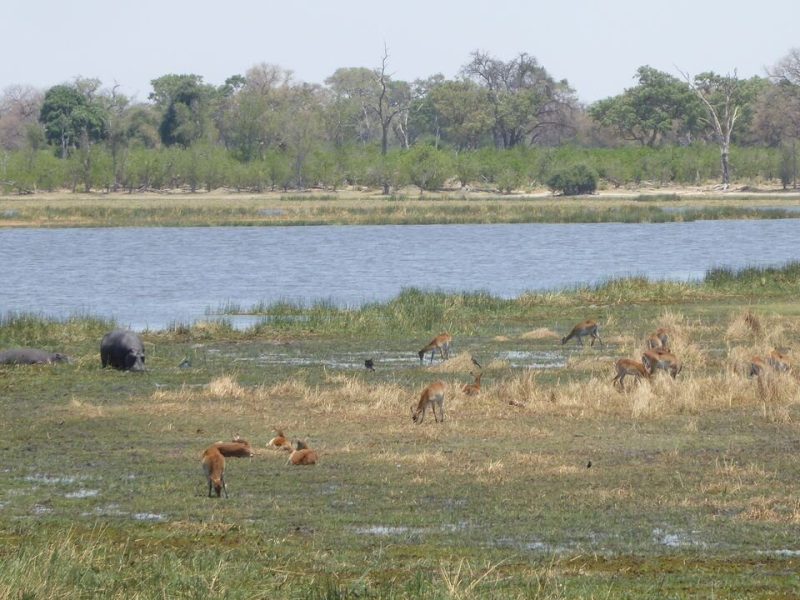
Subjects are dependable. Hippo pods surface repeatedly in predictable places. Large Nile crocodiles bask on mud banks and sandbars through the middle of the day and barely move. African fish eagles occur at unusually high density along this shoreline, perching on dead limbs above the water and calling, which gives you both portrait and behaviour opportunities.
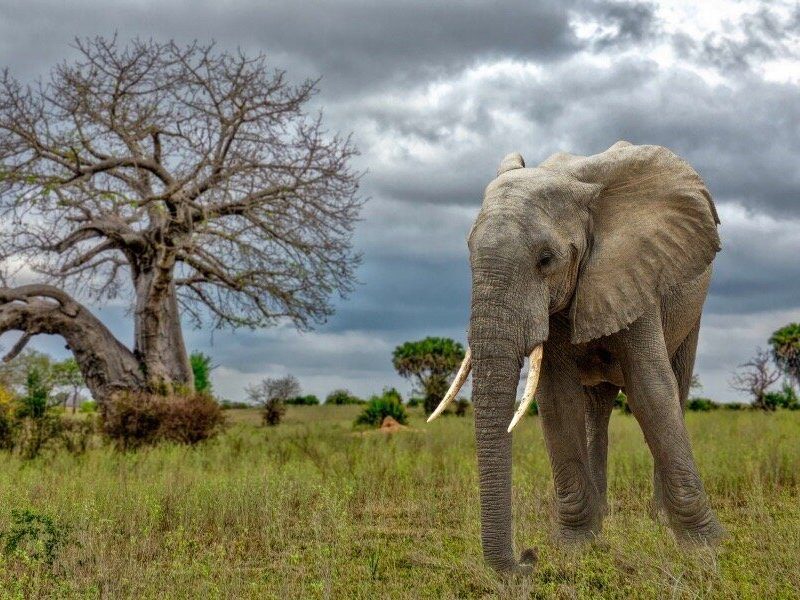
In the dry months, elephant, buffalo, zebra, waterbuck and topi come down to drink, and photographing them from the water rather than from a track produces a genuinely different image.
Ask the boatman to cut the engine and let the craft drift. Vibration at low shutter speeds is the main technical problem on the water, and a dead engine solves most of it.
Ridge and Escarpment Photography Tours
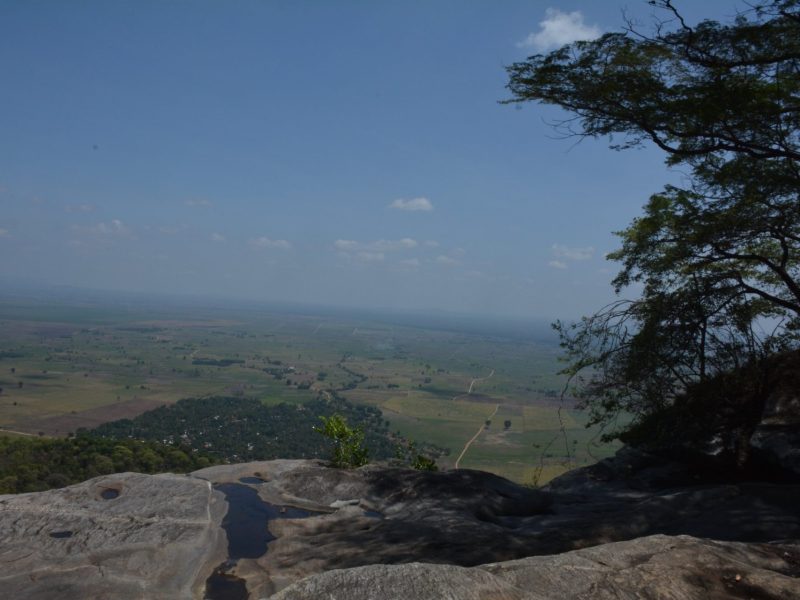
The park’s structure is a series of long north to south ridges separated by drainage lines, with rocky crags exposed along the escarpment edges. For a photographer, that relief is the single biggest advantage this park holds over the flat reserves.
Depth is the reason. Flat country gives you a subject and an empty horizon. Ridge lines receding into haze give you layers, escarpment edges give you foreground, and shooting from an elevated track down onto a valley floor lets you place animals in a setting rather than isolating them against nothing.
The valley walls above Lake Burigi look down the length of a lake running roughly 30 kilometres long and about 4 kilometres wide, taking in the islands, the papyrus inlets and the tree line following the shore.
The technical challenge is dynamic range. A sunlit ridge crest and a shaded valley floor in one frame will exceed a single exposure, so bracket, or expose for the highlights and lift the shadows in processing.
Dry Season Dust and Backlit Wildlife Photography on Safari
By August and September the park is genuinely dusty, and this is a gift rather than a nuisance if you plan for it.
Dust in the air catches low light and separates a backlit subject from its background, which is the effect that makes late-afternoon savannah images work. Position so the sun is behind or across your subject rather than over your shoulder, and expose for the highlights.
Water sites at dawn are the most reliable place to get this. Mist sitting on the floodplain with the tree line behind, animals moving out of cover, and the first light coming through low and warm.
Dust is hard on equipment. Change lenses as little as possible, carry a rocket blower, and keep bodies in a bag rather than on a seat. Sensor cleaning is far easier avoided than done in the field.
Photographing the Miombo Woodland and Fever Tree Country on Game Drives
The wooded sectors are the hardest ground to photograph and the most rewarding when they work.
Light comes through the open deciduous canopy in patches, so an animal half in sun and half in shade will beat most automatic metering. Faster lenses and a willingness to push ISO help more than reach does here. Backgrounds are busy with branches and grass, so isolating a subject takes wider apertures and careful angle rather than more focal length.
The compensations are structural. Terminalia trees have a distinctive layered, flat-topped branching pattern that frames better than an empty horizon. In the dry season the woodland goes bare and grey, and the flush of new leaf before the rains comes in coppers and reds, which is a narrow window most visitors miss.
East of the ridges, large stands of Acacia xanthophloea take over on the poorer soils sloping toward Lake Victoria. These fever trees have yellow-green bark that photographs unusually well in low light, with open canopy and clear ground beneath.
The fever tree stands are the most photogenic woodland in the park. Open enough to see into, distinctive enough to carry an image on their own.
Bird Photography Safaris in the Wetlands
Birds are where this park competes properly, and the habitat mix does the work.
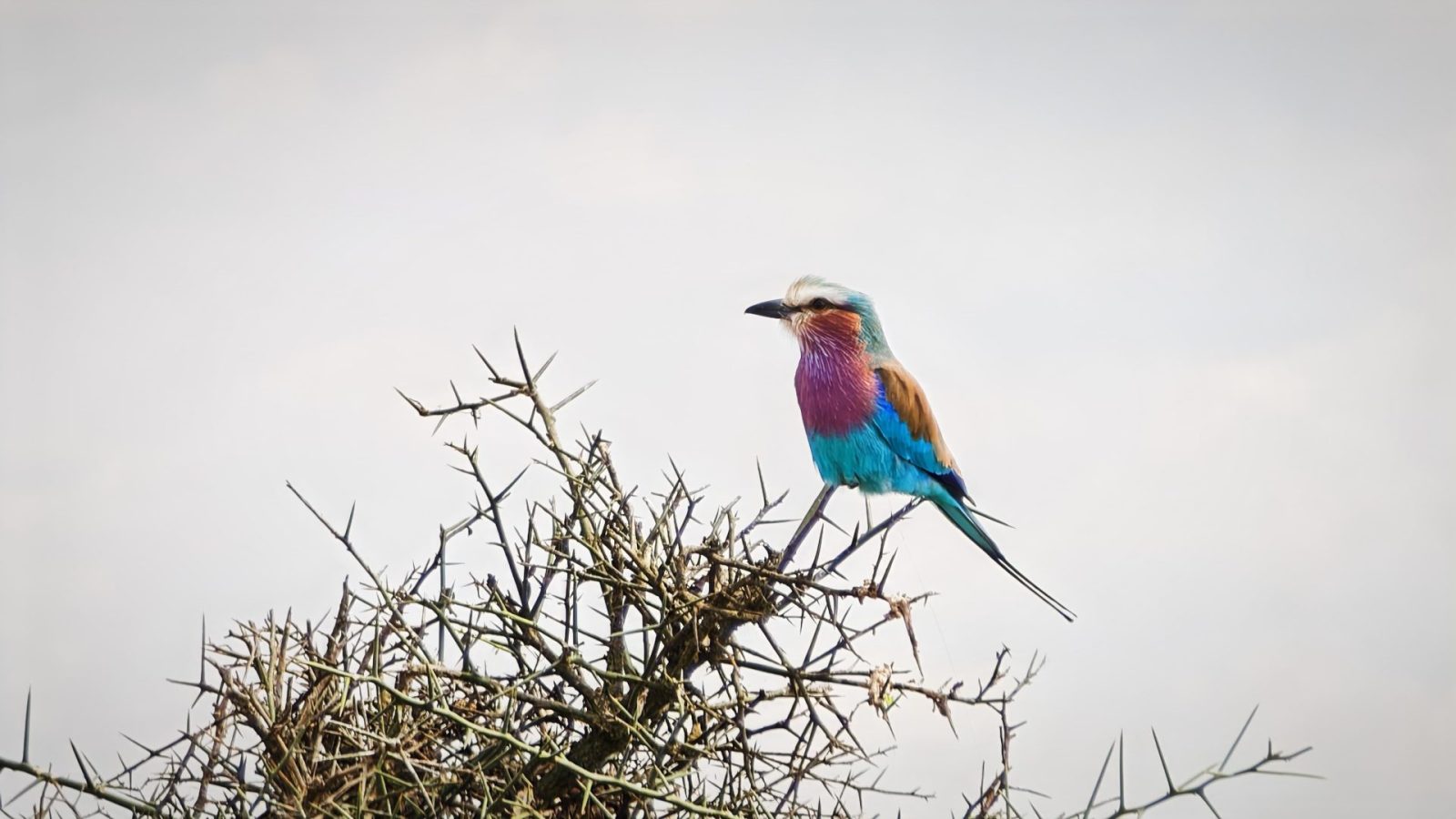
African fish eagles at high density give you the classic perched and calling shots along the shoreline. Saddle-billed stork work the shallows. Herons, egrets, pelicans and several kingfisher species occupy the water margins, and papyrus specialists including the papyrus gonolek live in the swamp inlets.
From around November, Eurasian migrants arrive and the wetlands fill, which makes the green season the strongest for bird photography even as mammal viewing gets harder.
On the escarpments, raptors work the thermals rising off warmed rock through the morning, which gives flight opportunities with a ridge line rather than blank sky behind.
Bring your longest lens and accept high ISO. Wetland birding here happens in poor light at distance.
Night Game Drive Safari Photography, Which Few Tanzanian Parks Allow
Night driving is prohibited across much of the Tanzanian park system. Burigi-Chato permits it, alongside Katavi, Ruaha, Mikumi, Tarangire, Lake Manyara, Nyerere and Ibanda-Kyerwa.
For a photographer this opens subjects that daylight simply does not offer: serval hunting the long grass at wetland margins, genet and civet along the tracks, spotted hyena on the move, and owls and nightjars.
Technically it is demanding. You are working with a spotlight, very high ISO, and wide apertures, usually handheld from a moving vehicle. Expect a low keeper rate and treat anything sharp as a win.
Night nature walks are also offered in applicable parks, which gives a different and quieter set of possibilities.
What You Cannot Do on Safari Here: Drones and Filming Rules
Two rules matter and both catch people out.
Drones are prohibited in every Tanzanian national park without exception. Bringing one is not worth the risk, and the aerial footage this terrain would produce is not available to you.
Commercial filming requires a permit arranged in advance through TANAPA. Filming fees in parks outside the top tier are charged per person per day and cover entrance, camping and filming together. Video shooting for your own creative work, for a group of two to twenty people, carries a separate daily charge on top of the conservation fee. Professional photography on antiquities sites has its own fee structure.
Ordinary personal photography carries no charge at all.
Best Season for Photography Safaris in the Park
June to September: Best for wildlife photography. Animals concentrated on water, grass low, sightlines open, and dust in the air giving backlit atmosphere. Bare grey woodland and clear early mornings.
October to December: Best for scenics. Storm light after downpours, the flush of new leaf in coppers and reds, and greener country. Migrant birds arrive. Mammal work becomes harder.
January to February: A quiet interval. High grass and scattered game, decent light, and almost no other visitors anywhere in the park.
March to May: Greenest country and fullest water, but access is the constraint. Ridge routes close first, which costs you the viewpoints that make this park photograph well.
Kit and Practical Preparation for a Photography Safari Here
Lenses: A fast telephoto for distant, partly hidden subjects in poor light, and something wide for the ridge scenics. Reach matters less here than speed, since much of the work is at dawn or under canopy.
Support: A beanbag for vehicle work rather than a tripod, which is impractical in a game vehicle. On boats, hold the camera rather than resting it on anything vibrating.
Power and storage: Spare batteries, a power bank and more memory cards than you expect. There is no reliable mains supply inside the park and nowhere to offload.
Protection: A dry bag for boat trips and dust protection for drives. Both hazards are real here and they arrive on the same day.
Light aircraft on charter routes into the Nkonje and Biharamulo airstrips typically cap baggage at around 15 kilograms in soft bags, which is a real constraint on how much glass you can bring.
Frequently Asked Questions About a Burigi-Chato Photography Safari
Are there extra fees for photography?
Not for personal photography, which carries no charge beyond your normal park fees. Commercial filming in parks outside the top tier is currently US$250 per person per day, covering entrance, camping and filming together. Video shooting for your own creative work, for a group of two to twenty people, is US$100 per day on top of the conservation fee. Professional photography for commercial purposes on antiquities sites is charged separately at US$1,000, dropping to US$500 for educational purposes and US$100 for personal collections.
What does a photography-focused trip cost?
Park charges are modest. The conservation fee is US$30 per person per day for non-East African adults and US$10 for children aged five to fifteen. The boat safari that gives the best angles is US$20 per person, canoeing US$10 for up to three hours, and night game drives US$50 per adult. A park guide, which is worth taking, is US$20 per group per day. Sundowners in designated areas, useful for last-light work, are US$5 per adult. Add 18 percent VAT throughout. The larger costs are vehicle hire and getting to the park.
Can I fly a drone here?
No. Drones are prohibited in every Tanzanian national park without exception, and Burigi-Chato is no different. The ridge and escarpment terrain would suit aerial work well, which makes it frustrating, but there is no permit route for recreational drone use. Do not travel with one intending to ask on arrival.
What is the best single photographic opportunity in the park?
A dawn boat safari on Lake Burigi. It gives you water-level perspective on a shoreline you cannot reach by vehicle, reliable subjects in hippo, crocodile and fish eagle, and animals coming down to drink in the dry months. The combination of eye-level angle, clean foreground and no other vehicles anywhere is not available in the better known parks at any price.
Will I get big cat photographs?
Possibly, but do not plan on it. Lion, leopard and spotted hyena are present at densities recovering from losses of around sixty percent across these reserves between 1994 and 1996, and sightings are a good day rather than an expectation. Photographers wanting predator portfolios should book Serengeti or Ruaha. The compensation here is that if you do find one, there will be no other vehicles competing for the angle.
What time of year gives the best light?
The dry months from June through September for wildlife work, when dust in the air produces backlit atmosphere and animals concentrate at water. October through December for scenics, when storm light after downpours and the flush of new woodland leaf in coppers and reds give the country its best appearance. The two are not the same season, which is worth deciding between before you book.
How much kit can I bring if I fly in?
Less than you want. Light aircraft on charter routes to the Nkonje and Biharamulo airstrips, and the smaller domestic services into Chato and Bukoba, typically cap baggage at around 15 kilograms in soft bags, and hard cases are usually refused. If you are driving in from Mwanza or Bukoba this constraint disappears entirely, which is one argument for the road option on a photography trip.
Booking Your Burigi-Chato Trip
The safari companies and tour operators listed on this website put trips like this together for a living and know which camps, guides and routes actually deliver. We are an independent guide to Burigi-Chato; we do not book or sell tours ourselves.
When you are ready, arrange your safari, tour or holiday with one of the recognised operators listed here. Tell them your dates and what matters most, and a real person, not a form, will handle the itinerary, park bookings and logistics for you.