The top reasons to visit Burigi-Chato National Park are boat safaris on Lake Burigi, a realistic chance at sitatunga in the papyrus swamps, ridge and escarpment scenery, night game drives that most Tanzanian parks do not permit, low park fees, and near-total absence of other visitors. Burigi-Chato covers 4,707 square kilometres of northwestern Tanzania between Lake Victoria and the Rwandan border, gazetted as a national park in 2019.
Notice what is missing from that list. Big cat sightings are not one of the reasons.
Lake Burigi Boat Safaris: The Strongest Reason to Come
If a Burigi-Chato safari has one headline attraction, this is it, and it is what visitors consistently remember.
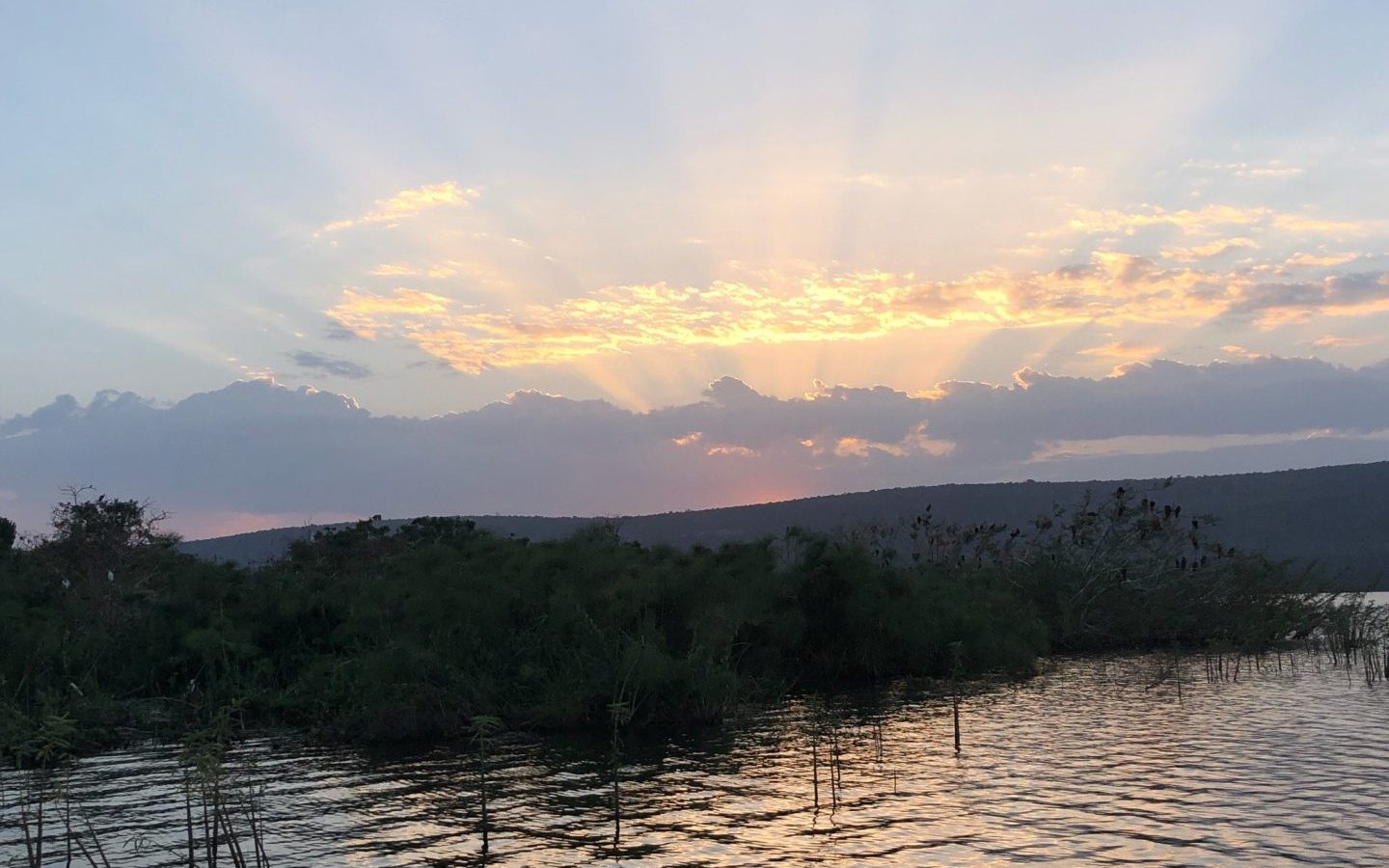
Lake Burigi runs roughly 30 kilometres long and about 4 kilometres wide along a valley floor, with islands, inlets and swampy bays branching off the main body. TANAPA charges a specific boating safari fee here, putting the park in a small group of water-based reserves alongside Nyerere, Rumanyika-Karagwe, Mahale Mountains, Rubondo Island, Gombe and Saadani.
What a boat gives you is angle. Game drives in this park fight tall grass and short sightlines through wooded savannah. From open water you are at eye level with an unbroken shoreline, hippo pods surfacing around you and large Nile crocodiles basking on the mud banks.
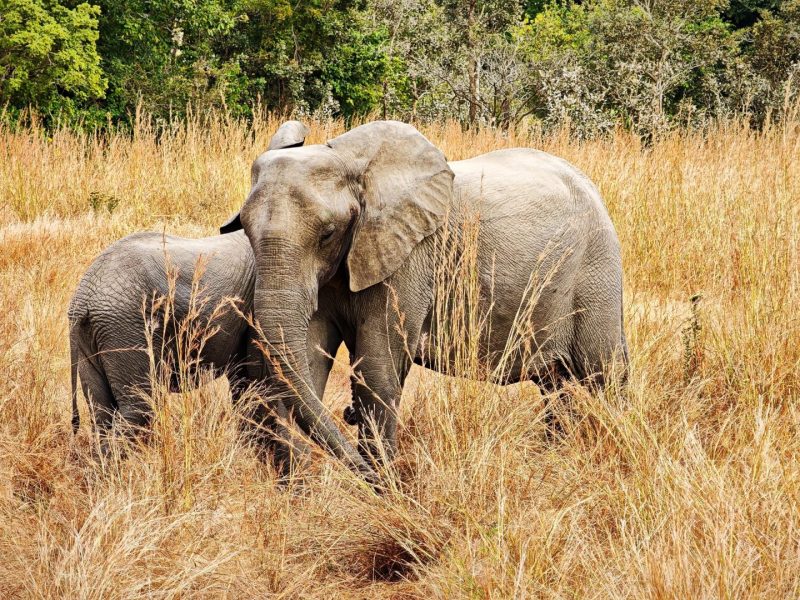
African fish eagles occur at unusually high density along this shoreline. In the dry months, elephant, buffalo, zebra, waterbuck and topi come down to drink, and watching them from the water rather than a track is a genuinely different experience.
Book the boat before anything else and take it at dawn. Everything that makes this park worth the drive happens on the water in the first two hours of light.
Sitatunga Watching in Protected Papyrus
The sitatunga is the species that gives this park a claim no neighbouring reserve can match.
This is a semi-aquatic antelope with elongated, splayed hooves that let it walk on floating papyrus mats where nothing else of its size can follow. It swims readily, feeds at the reed margins at dawn and dusk, and when alarmed submerges with only its nostrils above the surface rather than running.
Very few places in Tanzania offer a visitor protected access to extensive papyrus with boats and rangers on hand. Lake Burigi’s swampy inlets do exactly that, and park literature identifies them as home to the rare sitatunga.
Sightings are not guaranteed and should never be sold as such. With early starts, a canoe, and a guide who knows the specific bays, this is a realistic goal rather than a fluke, which is more than most parks can offer.
Ridge and Escarpment Scenery on a Game Drive Safari
Most East African savannah is flat. This park is not, and the difference is visible from the first hour.
The structure is a series of long north to south ridges separated by drainage lines flowing north, with rocky crags exposed along the escarpment edges where the gradient stripped the soil. Deeply set valleys carry ribbons of forest. Between them lie open grassland slopes and floodplains.
The result is elevated viewpoints, which flat reserves cannot offer. The valley walls above Lake Burigi look down the whole length of the water. Ridge crests look east to the ground falling toward Lake Victoria, or west across the Kagera drainage toward Rwanda.
For photographers this solves the biggest problem in savannah work, which is that flat country gives you no way to build depth. Ridge lines receding into haze give you layers a horizon never will.
Night Game Drive Safaris, Which Most Tanzanian Parks Prohibit
Night driving is not permitted across much of the Tanzanian park system. Burigi-Chato is one of the exceptions, alongside Katavi, Ruaha, Mikumi, Tarangire, Lake Manyara, Nyerere and Ibanda-Kyerwa.
In wooded country this matters more than it would on open plains. Serval hunt the long grass at wetland margins after dark. Genet, civet and the smaller nocturnal carnivores are far easier to find with a spotlight than in daylight, and several go entirely unseen on normal drives. Spotted hyena are on the move, and owls and nightjars come into play.
Night nature walks are also offered in applicable parks, which is rarer still and gives a completely different sense of the same ground.
Both need booking in advance with a guide rather than deciding on the evening.
Four Habitats Inside One Safari Area
Most parks are built around one dominant habitat. This one holds several, close enough together to cross in a morning.
Wooded savannah: Hundreds of square kilometres of medium and tall grass under open deciduous canopy, with Combretum and Terminalia dominant and Brachystegia on the higher ground. Home to roan and sable antelope.
Lakes and papyrus swamp: Permanent water with islands, inlets and reed beds, holding sitatunga, papyrus specialist birds, hippo and crocodile.
Ridges and rocky crags: Klipspringer, rock hyrax and cliff raptors, with Protea and Combretum on the drier western ridges.
Valleys and floodplains: Riverine forest, seasonally flooded grassland and surviving fragments of Guinea-Congo forest in the steepest gullies.
East of the ridges, large stands of Acacia xanthophloea fever trees take over on the poorer soils sloping toward Lake Victoria, adding a fifth character to the mix.
Birdwatching Safaris Across That Habitat Mix
Birds are where this park competes properly with better known reserves, and the habitat variety is the reason.
African fish eagles at high density along the water, saddle-billed stork in the shallows, wattled crane, wattled lapwing and Senegal lapwing on the wet ground, and herons, egrets, pelicans and several kingfisher species. White-browed coucal and village weaver work the swamp margins, red-necked francolin the open country, and marabou stork, hornbills, guineafowl and ducks occur through the park.
Papyrus specialists including the papyrus gonolek live in the reed beds. African grey parrots, introduced into the wider Lake Victoria region, occur in parts of the forested ground. Eurasian migrants arrive from around November and stay through the northern winter.
Conservation assessments have flagged that the lakeside swamps may hold breeding shoebill, which is a genuine possibility rather than a promise.
Low Safari Fees and Genuine Solitude
Two practical reasons that matter more than they sound.
Burigi-Chato sits in TANAPA’s lower fee band, alongside Katavi, Ruaha, Mikumi, Rubondo Island, Saadani, Mkomazi, Kitulo, Udzungwa, Ibanda-Kyerwa, Rumanyika-Karagwe and Saanane Island. It also has no peak and low season split, so the rate is flat across the year. With no luxury lodges inside the boundary, there is no premium accommodation tier to inflate a nightly rate either.
Solitude is the other. At 4,707 square kilometres this ranks among the four largest national parks in Tanzania, while receiving a tiny fraction of northern circuit visitor numbers. You can drive here all day and see nobody.
In Serengeti a good sighting attracts a queue of vehicles. Here there is no queue, because there is nobody else in the park.
Easy Pairing With the Wider Lake Zone Safari Circuit
Burigi-Chato works best as part of a route rather than alone, and its position makes that straightforward.
Rubondo Island National Park lies out in the southwest corner of Lake Victoria, around 240 square kilometres and the largest island national park in Africa, with chimpanzee trekking, sitatunga and a bird list running past four hundred species. It is roughly an hour by air from Mwanza.
The western corridor of Serengeti is accessible from the same hub, with the Ndabaka Gate around 145 kilometres from Mwanza on a three to four hour drive. Saanane Island, Tanzania’s smallest national park, sits in the lake within sight of the city. Ibanda-Kyerwa and Rumanyika-Karagwe run north along the Kagera corridor.
Across the border, Akagera National Park in Rwanda protects the opposite bank of the same drainage, reachable via the Rusumo Falls crossing.
A Safari Destination Still in Recovery, and Why That Is Interesting
This is the reason that will not appeal to everyone, and it is worth stating plainly.
The three reserves that became this park were badly damaged in the mid-1990s. After the Rwandan genocide of 1994, several hundred thousand refugees arrived in the surrounding districts, with the main camp on the very edge of Burigi Game Reserve. Studies report large mammal populations falling by around sixty percent between 1994 and 1996, with district reports putting depletion in Burigi and Kimisi at roughly two thirds.
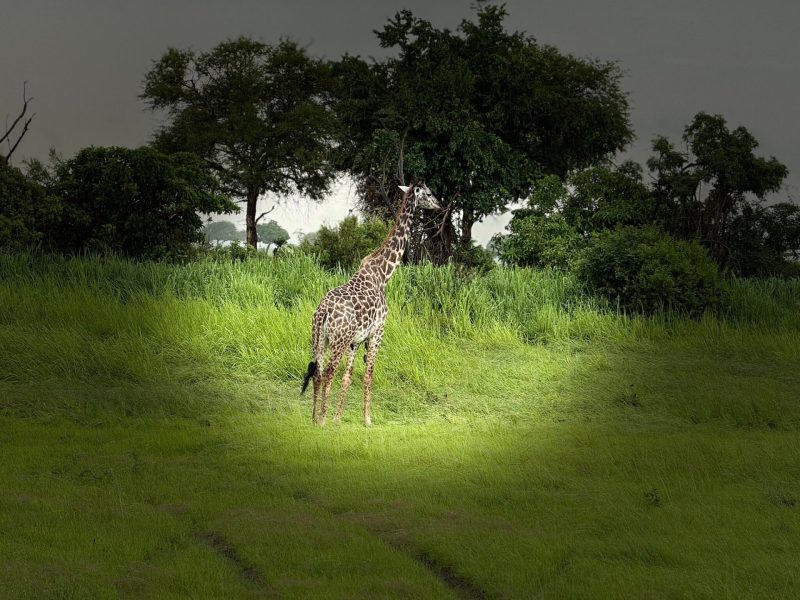
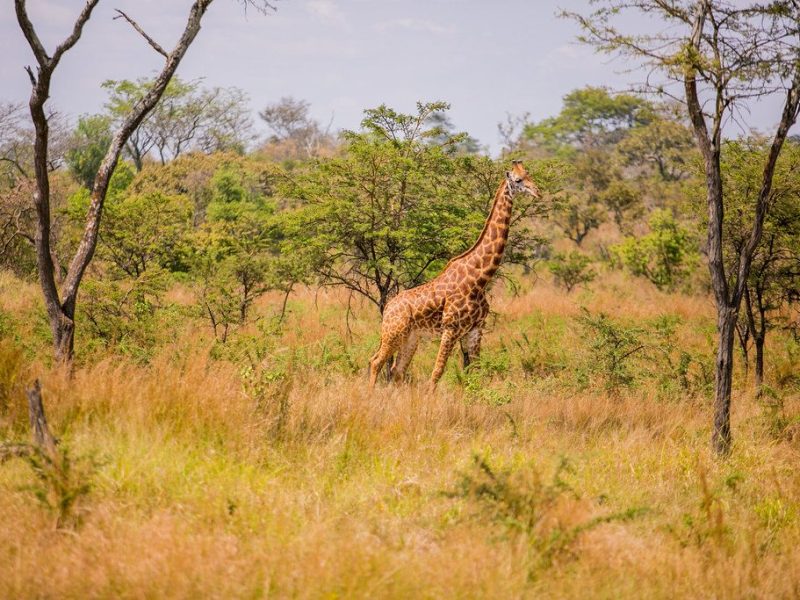
Recovery has been under way since the late 1990s and accelerated when national park status ended hunting in 2019. Park literature now describes elephant, buffalo, zebra, giraffe, waterbuck, eland, warthog, roan, topi, impala and sable as becoming more numerous.
Visiting a place mid-recovery is a different proposition from visiting a finished one. Your fees fund ranger work in a park that receives very few people, and you see a system rebuilding rather than one at capacity.
Who This Safari Suits, and Who Should Go Elsewhere
Honest matching serves you better than a list of superlatives.
This park suits birders, particularly anyone drawn to waterbirds and papyrus specialists. It suits travellers who value solitude over sighting volume. It suits people already in Mwanza, Bukoba or the western Serengeti, for whom adding it costs little. It suits photographers who want terrain and context rather than frame-filling portraits. It suits second and third-time Tanzania visitors.
It does not suit first-time safari travellers with limited days, who will get far more from the northern circuit. It does not suit anyone whose trip depends on big cats or on the Big Five, since there are no rhino and predator densities remain low. It does not suit travellers wanting comfortable lodges, because none exist inside the park.
Families with young children will find the long internal drives and basic facilities harder work than the wildlife justifies.
Frequently Asked Questions About a Burigi-Chato Safari
How much does a visit cost?
Less than most Tanzanian parks. The conservation fee is currently US$30 per person per day for non-East African adults aged sixteen and above and US$10 for children aged five to fifteen, against US$70 in peak season for Serengeti. Expatriates and Tanzanian residents pay US$15 and US$5, and East African Community citizens TZS 5,000 and TZS 2,000. Boat safaris add US$20 per person, canoeing US$10, night game drives US$50, and a park guide US$20 per group per day. Accommodation runs from US$30 per adult per night camping to around US$35 at the park rest house. Add 18 percent VAT to all TANAPA charges.
What is the single best reason to go?
The dawn boat safari on Lake Burigi. It gives water-level perspective on a shoreline no vehicle reaches, dependable subjects in hippo, crocodile and fish eagle, the park’s best shot at sitatunga in the papyrus inlets, and plains game coming down to drink in the dry months. Nothing else here matches it, and nothing quite like it is available in the better known Tanzanian parks.
Is it worth visiting on a first trip to Tanzania?
Usually not, if your days are limited. A first-time visitor with ten days will get more from the northern circuit or a Serengeti and Zanzibar pairing. This park makes most sense as a second or third Tanzania trip, or as two or three nights added to a route already anchored on Mwanza, Rubondo Island or the western Serengeti corridor. Judged against the famous parks on its own, it will disappoint.
Can I see the Big Five?
No. There are no rhino in the park. Elephant, buffalo, lion and leopard all occur, so four of the five are present, but lion and leopard densities are recovering from severe mid-1990s losses and sightings are not guaranteed. Building a trip around Big Five ticking is the wrong reason to come here. What is reliable is hippo, Nile crocodile, African fish eagle, and plains game concentrated near water during the dry season.
How many days should I allow?
Two to three, with two nights being the length most visitors should book. That gives you two dawn sessions, which is what turns a sitatunga attempt from a coin toss into a fair go, plus time for a boat safari and a guided walk. Four to five days lets you cover two sectors, though crossing from the eastern ground to the Lake Burigi valley takes most of a day. Beyond three days, adding a second park usually pays better than staying longer.
What is the best time of year to visit?
June through September, the dry season, when grass falls back, animals concentrate on Lake Burigi and the permanent rivers, and unsurfaced tracks stay passable. August and September are the strongest weeks for game viewing. For birds the pattern reverses, with Eurasian migrants arriving from around November and the wet months producing the longest lists. The March to May rains are best avoided, since access rather than weather becomes the constraint.
How does it compare with Akagera in Rwanda?
They protect opposite banks of the same Kagera drainage and share a similar recovery story from the 1990s. Akagera has had more sustained conservation investment and now carries reintroduced lion and rhino, better roads and established lodges. Burigi-Chato is larger, cheaper, considerably emptier and much less developed. The two combine well on an overland trip via the Rusumo Falls crossing, though Tanzania requires its own visa separate from the East Africa Tourist Visa.
Booking Your Burigi-Chato Trip
The safari companies and tour operators listed on this website put trips like this together for a living and know which camps, guides and routes actually deliver. We are an independent guide to Burigi-Chato; we do not book or sell tours ourselves.
When you are ready, arrange your safari, tour or holiday with one of the recognised operators listed here. Tell them your dates and what matters most, and a real person, not a form, will handle the itinerary, park bookings and logistics for you.