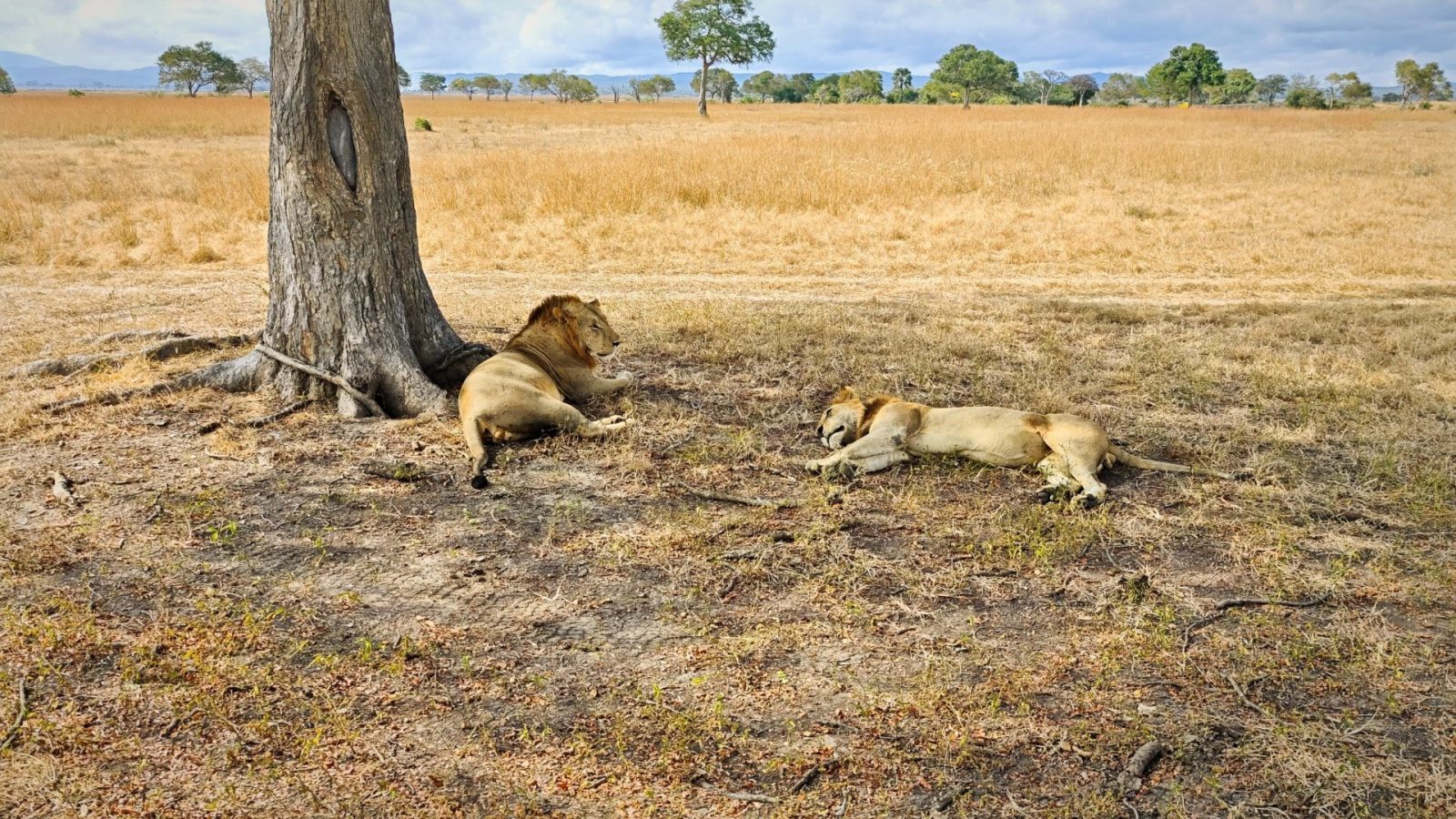
Lion and predator observation in Burigi-Chato National Park works through tracks, calls and prey movement rather than through direct sightings, since carnivore densities here are recovering from severe losses in the 1990s. Night game drives, permitted in this park and prohibited in much of Tanzania, give the best odds. Burigi-Chato covers 4,707 square kilometres of northwestern Tanzania and holds lion, leopard, spotted hyena, serval and jackal.
The word observation is doing useful work in that title. This is a park where you learn about predators more often than you watch them.
What Predator Observation Means on a Burigi-Chato Safari
Set expectations properly and a predator safari here becomes interesting rather than frustrating.
In Serengeti or the Mara, predator viewing means finding the animal and watching it. Here, sightings of lion and leopard are a good day rather than a plan, so the practice turns toward indirect observation: reading tracks in dust and damp ground, listening for calls at night, noting where vultures are dropping, and following prey concentrations to work out where the carnivores must be.
That is a slower and more absorbing kind of wildlife watching, and it is how guides actually operate in a park with low densities. It also builds toward sightings rather than depending on luck alone.
Ask your guide to work backwards from prey rather than searching for cats directly. Where buffalo, impala, waterbuck and topi are concentrated on water in September, predators are within a few kilometres. That narrows 4,707 square kilometres to something workable.
Why Carnivore Numbers Are Low on This Safari
The history explains the present, and it is worth knowing before you judge the park.
After the Rwandan genocide of 1994, several hundred thousand refugees arrived in the districts around what were then the Burigi, Biharamulo and Kimisi game reserves, with the main camp on the very edge of the Burigi reserve. Wild meat hunting rose steeply, driven partly by rations that did not supply enough protein and in some cases carried out with military firearms. Estimates of animals killed across the reserves run to around a hundred a day at the peak, and studies report large mammal populations falling by roughly sixty percent between 1994 and 1996.
Predators suffer twice in that situation. They are killed directly, and their prey base collapses beneath them. Carnivore recovery tends to lag prey recovery, sometimes by decades, because a population cannot rebuild faster than its food supply.
National park status in 2019 ended hunting and increased ranger presence. Reported trends across the park’s wildlife are positive, but this remains a system rebuilding from an unusually low base.
Lion Watching on the Floodplain Margins
Lion are present, and some sources describe a more recent introduction of lions to the area, though no reliable population figure is published.
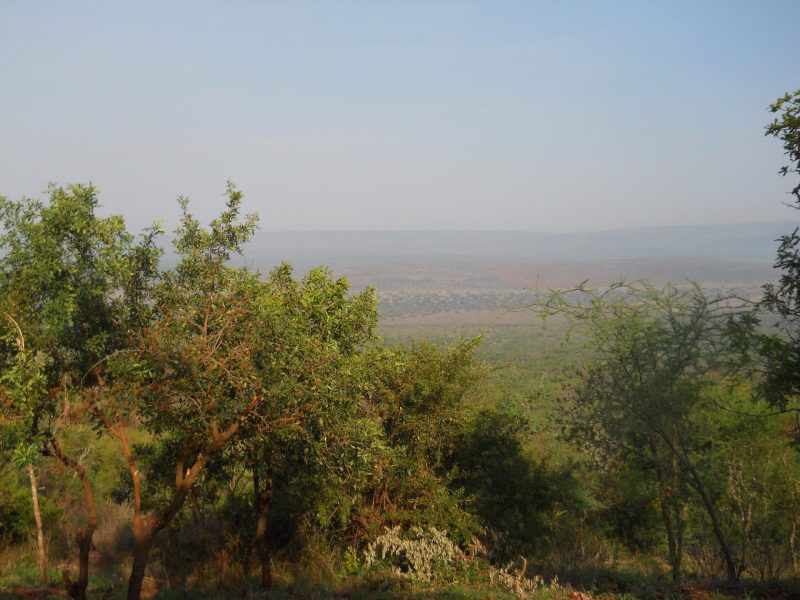
Where to work is the open floodplain edges and the boundaries where grassland meets woodland, particularly in the dry months when grazing herds pull in toward permanent water. Lion position themselves where they can watch prey, which in a park this wooded means the open margins rather than the interior.
Early morning and the last two hours before the gates close at six are the productive sessions. Through the heat of the day they lie up in shade and become all but invisible in medium and tall grass.
Listen at night. Lion calling carries several kilometres across these valleys, and a campsite on the lake shore will often hear what nobody sees. That tells your guide where to drive in the morning.
Leopard Tracking in the Riverine Forest and Crags
Leopard are the most habitat-flexible of the large carnivores here, which is one reason they persisted better than more visible species through the worst years.
Two types of ground repay attention. The riverine forest corridors along the watercourses give cover and movement routes, so scanning a tree line slowly along a drainage beats driving open ground. The rocky crags along the escarpment edges give lying-up sites and vantage points, with klipspringer and rock hyrax on the same ground as prey.
Look up rather than only along. A leopard draped along a horizontal limb in a fever tree is a common way to find one and an easy one to drive beneath without noticing.
They are largely nocturnal, which makes the night drive the single most useful thing you can book if leopard matter to you.
Book the night drive first and treat everything in daylight as a bonus. It is the one activity here most likely to put a carnivore in front of you.
Spotted Hyena Watching and Scavenger Sign
Spotted hyena are the most frequently detected large carnivore in the park, and usually the first one a visitor registers.
Detection is by sound before sight. Their whoops and cackles carry a long way across the valleys at night, and anyone camping near the lake will hear them. They work the floodplain margins and drainage lines both hunting and scavenging, and they are far more active from dusk through the night than in daylight.
Dens are typically in drainage banks and old burrows. Ask your guide whether any active dens are known, since a den gives you a reliable location rather than a chance meeting.
Hyena are among the more resilient large carnivores in disturbed systems, which is part of why they persist here in better numbers than the cats.
Watch for gatherings of marabou stork and vultures on the ground. Where scavengers are congregating, something has been killed, and that is worth investigating.
Serval, Jackal and Smaller Carnivores on Night Game Drive Safaris
This is where Burigi-Chato quietly outperforms expectations, and the reason is the night driving permission.
Serval hunt the long grass at floodplain and wetland margins, listening for rodents and pouncing through vegetation. They are crepuscular and nocturnal, and grassland with good cover beside water is exactly their habitat. This park has a great deal of it.
Jackal are recorded, working the open ground and scavenging alongside hyena. Genets, civets, mongoose species and honey badger occur across this kind of East African habitat and are precisely the animals a spotlight finds and a daylight drive never will.
Burigi-Chato is one of a small group of Tanzanian parks permitting night drives, alongside Katavi, Ruaha, Mikumi, Tarangire, Lake Manyara, Nyerere and Ibanda-Kyerwa. Specific guidelines apply, a guide is required, and the activity carries a supplement on top of the daily conservation fee.
Night nature walks are also offered in applicable parks and give a quieter version of the same hours.
Reading Tracks and Sign on a Guided Walking Safari
On foot with an armed ranger, predator sign becomes readable in a way it is not from a vehicle.
Walking safaris here are split into short walks of one to four hours and long walks above four hours. Damp ground at water crossings and dust on the tracks hold prints, and guides distinguish the round, clawless pugmarks of cats from the more oval, claw-marked prints of hyena and jackal.
Scat tells you diet and freshness. Hyena droppings turn white from bone content. Drag marks, feeding remains and vulture activity fill in what happened overnight.
None of this is a substitute for a sighting, and it is not sold as one. What it does is give you a genuine sense that the animals are present and moving, which changes how the park reads even on the mornings you find nothing.
Crocodile Watching: The Predator You Will Reliably See
Amid all the uncertainty about cats, one predator here is close to guaranteed.
Large Nile crocodiles are abundant throughout the lakes and rivers, and the larger individuals in this system are substantial animals. They bask openly on mud banks and sandbars through the middle of the day, precisely when the mammals have gone quiet, which makes them easy to find from a boat and simple to photograph.
Crocodile and hippo together are why swimming is not an option anywhere on this water, including at boat launch points.
Among aerial predators, African fish eagles occur at unusually high density along the shoreline, taking fish from the surface. Martial eagle, the largest eagle in Africa and a genuine predator of small antelope and gamebirds, is recorded in the park.
Best Season for Predator Observation Safaris
August and September: The strongest weeks. Grass at its lowest, prey concentrated on permanent water, and predators following. Best sightlines of the year in a park where sightlines are the main obstacle.
June and July: Conditions improving as the dry season establishes. Very good, slightly behind the late dry peak.
October to February: Grass growing, prey dispersing, daylight sightings becoming patchy. Night drives remain worthwhile throughout and become the better option.
March to May: Grass at maximum height and prey at its most scattered, with access limiting where you can go. Realistically the weakest months for carnivores here.
Ethics of Predator Watching in a Recovering Park
Conduct matters more here than in a park where the animals are habituated.
Carnivores in a system recovering from heavy hunting pressure are warier around vehicles than those in long-established tourist parks. Keep more distance, do not surround an animal, and do not press a sighting to the point where it moves off. A lion that abandons a kill because of a vehicle has lost a meal it needed.
Never leave authorised tracks to get a better angle, which is both a park rule and the fastest way to damage the ground you came to enjoy. Do not use calls, bait or playback of any kind.
On night drives, keep spotlight time on any one animal short and avoid shining directly into the eyes of hunting cats, which costs them their night vision at the moment they need it.
In a park receiving very few visitors, individual behaviour has a larger effect than it would in a crowded reserve.
Frequently Asked Questions About a Predator Watching Safari
What does a night game drive cost?
Currently US$50 per person aged sixteen and above and US$25 for children aged five to fifteen, with TZS 10,000 and TZS 5,000 for East African Community citizens. That sits on top of the daily conservation fee of US$30 per non-East African adult and the guide fee of US$20 per group per day. Night nature walks are a cheaper alternative at US$10 per adult. Specific park guidelines apply and both need booking in advance. Add 18 percent VAT to all TANAPA charges.
What are my chances of seeing a lion?
Modest, and best in August and September when grass is low and prey has concentrated on permanent water. Lion are present and some sources describe a more recent introduction to the area, but no reliable population figure is published and densities remain well below Tanzania’s better known parks after severe mid-1990s losses. Over two or three dry season days working the floodplain edges with a good guide, a lion sighting is a good outcome rather than a likely one.
Which predator will I most likely detect?
Spotted hyena, usually by call at night before anything else. Their whoops and cackles carry several kilometres across the valleys and a lakeside campsite will hear them. Large Nile crocodile is the predator you will most reliably see, basking openly on mud banks through the middle of the day and easily found from a boat safari. African fish eagles, at unusually high density along the shoreline, are the most visible aerial predator.
Is the night drive really worth booking?
For predators, more so here than at most parks. Leopard are largely nocturnal, serval hunt wetland margins after dark, and genet, civet and the smaller carnivores go entirely unseen on daylight drives. Burigi-Chato is one of only a handful of Tanzanian parks permitting night driving at all. Book it in advance rather than raising it on the evening, since a guide is required and guidelines apply.
Are there cheetah here?
Uncertain. Some wildlife listings for the park include cheetah while more careful sources describe them as reported rather than confirmed. The habitat argues against a substantial population, since cheetah need open country with long sightlines and this park is largely wooded savannah under medium and tall grass. The area has not been properly surveyed for carnivores, so treat cheetah as unlikely rather than impossible and be wary of any highlights list promising them.
How should I behave around a predator sighting?
Keep more distance than you would in a habituated park, since carnivores in a system recovering from heavy hunting are warier. Do not surround an animal or press a sighting until it moves off, and never leave authorised tracks for a better angle. On night drives keep spotlight time short and avoid shining into the eyes of hunting cats. Calls, bait and playback are not acceptable in any form.
Will predator numbers improve?
Probably, but slowly. Reported trends across the park’s wildlife are positive since gazettement in 2019 ended hunting and increased ranger presence, and park literature describes herbivore populations as increasing. Carnivore recovery tends to follow prey recovery rather than run alongside it, so improvement will lag. Anti-poaching capacity and community relations around the park boundary are the factors that will decide the pace.
Booking Your Burigi-Chato Trip
The safari companies and tour operators listed on this website put trips like this together for a living and know which camps, guides and routes actually deliver. We are an independent guide to Burigi-Chato; we do not book or sell tours ourselves.
When you are ready, arrange your safari, tour or holiday with one of the recognised operators listed here. Tell them your dates and what matters most, and a real person, not a form, will handle the itinerary, park bookings and logistics for you.