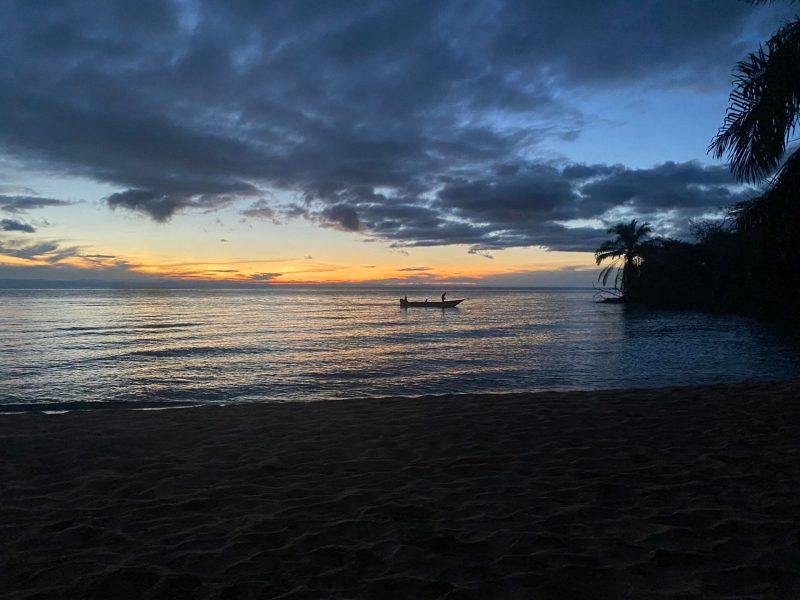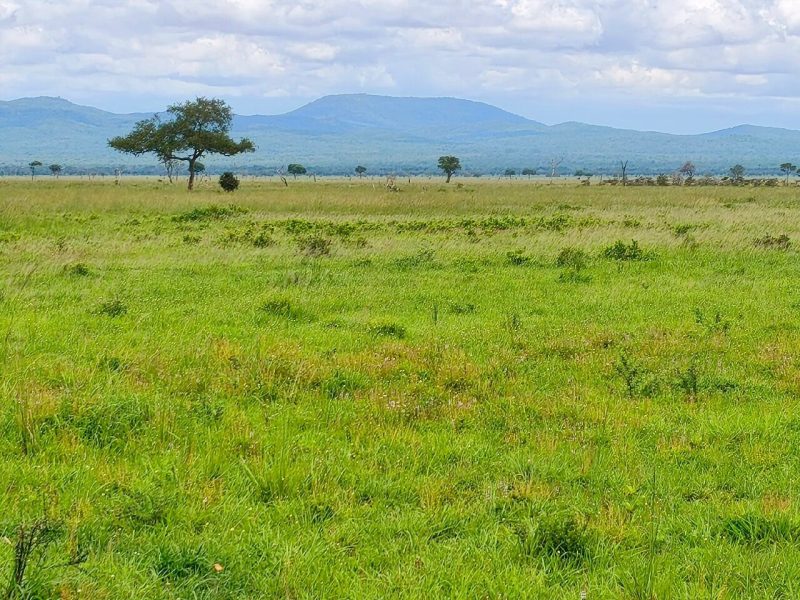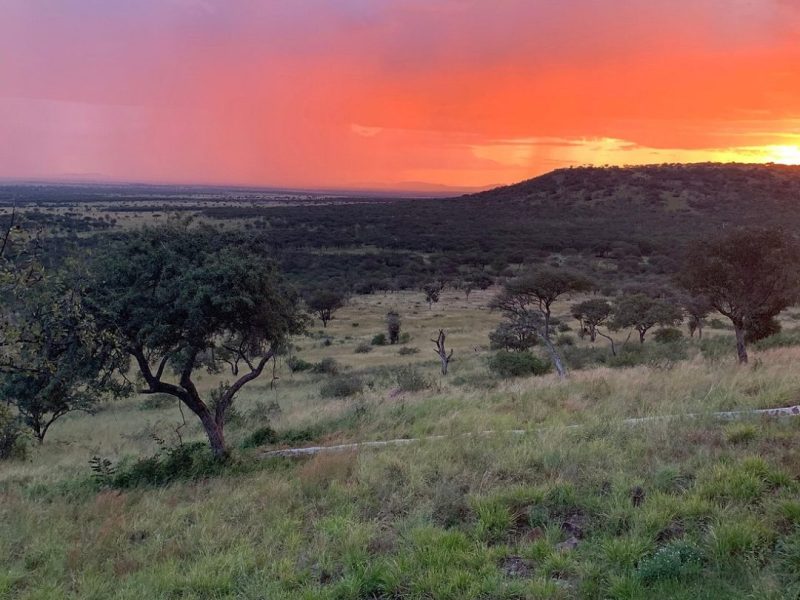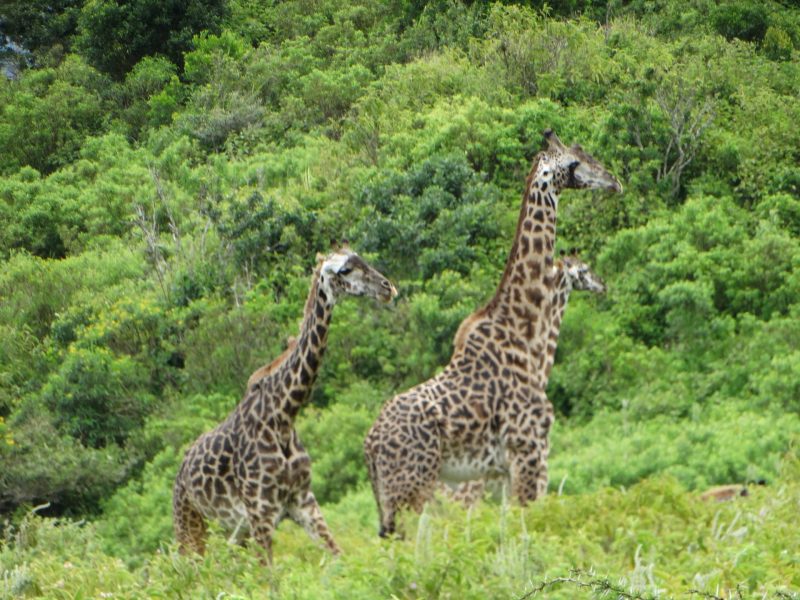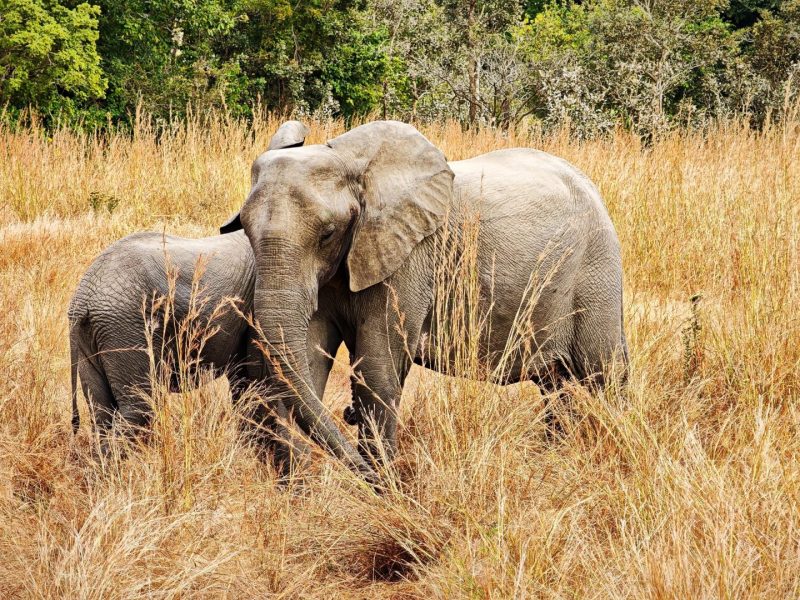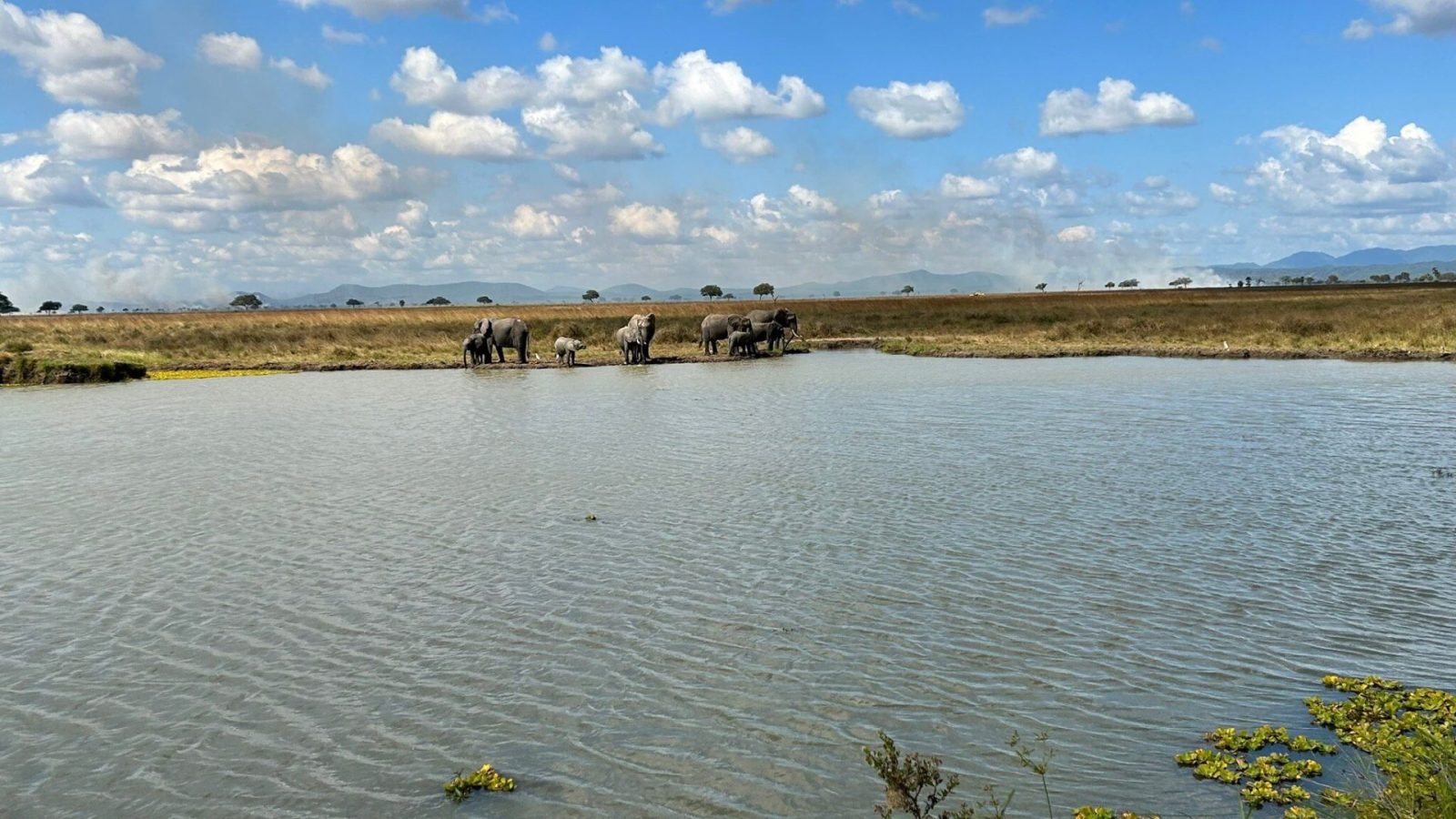
Elephant viewing in Burigi-Chato National Park centres on the drainage lines, floodplain margins and Lake Burigi shoreline during the dry season, when the herds come to permanent water. Sightings depend on being in the right valley at the right time of year rather than on covering distance. Burigi-Chato spans 4,707 square kilometres of northwestern Tanzania, and its elephant population is rebuilding after heavy losses in the 1990s.
Elephants here are a recovering population using a very large area. That combination sets what a visit can realistically deliver.
The Elephant Population on a Burigi-Chato Safari
Any honest account of elephant viewing here has to start with what happened to them.
The three reserves that became this park were badly affected in the mid-1990s. After the Rwandan genocide of 1994, several hundred thousand refugees arrived in the surrounding districts, with the main camp on the very edge of Burigi Game Reserve, and wild meat hunting rose steeply. Studies report large mammal populations falling by around sixty percent between 1994 and 1996, with district reports putting depletion in Burigi and Kimisi at roughly two thirds. Elephants were among the species most affected by illegal hunting in and around the protected area.
Recovery has been running since the late 1990s and accelerated when national park status ended hunting in 2019. Park literature now describes elephant among the species becoming more numerous across the park.
No reliable population figure is published. Treat anyone quoting you a precise number with caution.
Ask your guide where elephant have been seen in the past week rather than where they are usually found. In a park this large with a recovering population, recent movement is worth more than general habitat advice.
Where to Look for Elephant on a Game Drive Safari
Three types of ground are worth working, and they are all connected to water.
The drainage lines between the park’s parallel north to south ridges are the main movement corridors. Elephant use these low routes to move between areas, and a track running along a valley floor is more likely to intersect them than one on a crest.
The floodplains are the second. These flood after each rainfall peak and drain through the dry months, and as the seasonal water disappears the herds pull in toward what remains. By August and September the floodplain margins are the most productive ground in the park for everything, elephant included.
The Lake Burigi shoreline is the third and the most reliable. Permanent water holds when everything else goes, and in the late dry season the shore is where the drinking happens.
Riverine forest along the watercourses gives daytime shade and cover, so scan the tree lines rather than only the open ground.
Elephant Viewing From a Boat Safari on Lake Burigi
The boat is an underused tool for elephant here and often the better one.
From the water you look back at an open shoreline with nothing between you and the animals drinking there. In wooded savannah with medium and tall grass, a herd two hundred metres from your vehicle track can be entirely hidden. From a boat the same herd is in plain view against clear ground.
Late afternoon is the window, when the heat has eased and animals move down to water. Early morning works too, catching the tail end of overnight movement.
Elephants are usually untroubled by boats, which lets you hold position and watch behaviour rather than getting a glimpse as they move off. That is a real advantage over vehicle viewing in a park where the animals are not yet fully relaxed around people.
The boating safari fee is charged per person on top of your daily conservation fee, and trips need booking in advance because capacity is limited.
Reading Elephant Sign on a Guided Walking Safari
Walking will not usually put you in front of elephant, and should not be trying to. What it gives you is the ability to read where they have been.
Walking safaris here are conducted with an armed ranger, split into short walks of one to four hours and long walks above four hours. On foot, guides read the sign a vehicle passes at speed: dung and its freshness, footprints in damp ground at a water crossing, bark stripped from Combretum and Terminalia trunks, branches broken at browsing height, and paths pushed through grass.
That reading builds a picture of what moved through overnight and in which direction, which then informs where you drive at dusk. It is a more satisfying way to understand a population than a single distant sighting.
Elephant and buffalo are the two species that make walking here genuinely serious. Follow the ranger’s instructions exactly, walk in single file, and keep talk quiet.
In a park with a recovering population, learning to read sign is often more rewarding than the sighting itself. It tells you the animals are there even on the mornings you do not see them.
The Moyowosi Corridor and Elephant Movement
Elephants here do not stay inside the park boundary, and that matters for where and when you find them.
Movement between the Burigi area and the Moyowosi country to the south has been documented along connecting routes, with elephant particularly noted as users of that corridor. To the west, the Kagera River drainage runs toward the Rwandan border, with Akagera National Park protecting the opposite bank of the same system. North of the park the corridor extends toward Ugandan rangeland.
Merging three separate reserves into one national park in 2019 was itself a connectivity measure, since managing a corridor as three units meant three sets of rules across ground the animals crossed freely.
The practical consequence for a visitor is that elephant numbers inside the park fluctuate. A herd present in one valley in July may be elsewhere entirely by October.
Elephant Behaviour and Safety on Safari
A few points on conduct, which matter more in a park where animals have a recent history of being hunted.
Populations that have experienced heavy poaching pressure tend to be warier and more reactive around vehicles and people than those in long-established tourist parks. Give more distance than you would in Serengeti, keep the engine running when close, and do not position between a herd and water or between a cow and her calf.
Signs to take seriously: ears spread wide, head raised, trunk held up testing the air, a foot swinging, or a young bull moving forward with head shaking. Back off rather than staying for one more photograph.
Park rules apply throughout. Keep to authorised tracks, do not feed animals, and observe the six in the morning to six in the evening driving hours and the 50 kilometre per hour speed limit. Drones are prohibited in every Tanzanian national park.
On foot, never attempt to walk unaccompanied anywhere in the park.
Elephant Photography on a Burigi-Chato Safari
The photographic opportunities here differ from the famous parks and play to context rather than portraits.
From a boat you get animals at the water with clean foreground and reflection, which is difficult to obtain from a vehicle. On the floodplain edges at dawn you get herds moving out of the tree line with mist on the grass behind.
In the wooded sectors the technical problem is patchy light through open deciduous canopy, where an animal half in sun and half in shade will defeat automatic metering. Faster glass and wider apertures help more than reach.
The fever tree stands east of the ridges, where large tracts of Acacia xanthophloea grow on the poorer soils sloping toward Lake Victoria, give open canopy and clear ground beneath. They are the most photogenic woodland in the park for large mammals.
Dust in the late dry season produces backlit atmosphere that green months do not.
Best Season for Elephant Viewing Safaris
June to September: The strongest window by a wide margin. Seasonal water dries up, herds concentrate on Lake Burigi and the permanent rivers, grass falls back and sightlines open. August and September are the best weeks.
October to December: Rains return, water becomes available across the park and herds disperse over a very large area. Sightings become considerably harder while the country looks better.
January to February: A drier interval, though grass is high from the November rains and animals remain widely spread. Workable rather than good.
March to May: Grass at maximum height and elephant at their most scattered. Access on unsurfaced tracks becomes the limiting factor before wildlife does.
Combining Elephant Viewing With Other Activities
Because elephant sightings here are not dependable enough to build a trip on alone, the sensible plan spreads your effort.
A dawn boat safari on Lake Burigi gives you near-certain hippo, large Nile crocodile and African fish eagles at high density, with elephant coming to drink as a strong possibility in the dry months. A late afternoon drive along the floodplain margins gives buffalo, zebra, topi, impala and waterbuck, with elephant again possible.
A guided walk in between teaches you to read the sign. A night game drive, permitted here and prohibited across much of the Tanzanian park system, adds serval, genet, civet, hyena and the chance of leopard.
Two nights at the lake covers all four. That is the shape of trip that gives elephant the best chance without depending on them.
Frequently Asked Questions About Elephant Viewing
What does elephant viewing cost here?
There is no separate charge for elephant viewing beyond your normal park fees. The conservation fee is currently US$30 per person per day for non-East African adults aged sixteen and above and US$10 for children aged five to fifteen, with US$15 and US$5 for expatriates and Tanzanian residents and TZS 5,000 and TZS 2,000 for East African Community citizens. A boat safari adds US$20 per person, walking safaris US$20 for short walks and US$25 for long ones, and a park guide US$20 per group per day. Add 18 percent VAT to all TANAPA charges.
How many elephants are in Burigi-Chato?
No reliable published figure exists, and the park has not been comprehensively surveyed since gazettement in 2019. What is documented is the direction of travel: park literature describes elephant among the species becoming more numerous, following losses of around sixty percent in large mammal populations across these reserves between 1994 and 1996. Be sceptical of any source quoting a precise number.
Am I likely to see elephant on a two day visit?
Possible rather than likely, and much better in the dry season. Elephant here use drainage lines and floodplains across a park of 4,707 square kilometres, and their movements extend beyond the boundary toward the Moyowosi country to the south. Two days in June through September working the Lake Burigi shoreline and the floodplain margins gives you a reasonable chance. In the wet months, when water is available everywhere and the herds spread out, treat a sighting as a bonus.
Where is the best place to look?
The Lake Burigi shoreline in the late dry season, since permanent water holds when everything else goes. After that, the floodplain margins as they drain through June and July, and the drainage lines between the ridges, which are the main movement corridors. Scan the riverine tree lines along watercourses for animals in daytime shade rather than only watching open ground.
Is a boat better than a vehicle for elephant?
Often, yes. From the water you look back at an open shoreline with nothing between you and animals drinking, whereas in wooded savannah with medium and tall grass a herd can be hidden two hundred metres from your track. Elephants are usually untroubled by boats, which lets you hold position and watch behaviour rather than getting a brief look as they move off. Late afternoon is the window.
Are the elephants here dangerous?
They deserve more caution than in long-established tourist parks. Populations that have experienced heavy poaching pressure tend to be warier and more reactive around vehicles and people. Give more distance than you would in Serengeti, keep the engine running when close, and never position between a herd and water or between a cow and her calf. Watch for spread ears, a raised head, a trunk testing the air or a swinging foot, and back off rather than pressing for another photograph.
Can I walk to see elephant?
Walking safaris here are conducted with an armed ranger and are not built around getting close to elephant. What they give you is the ability to read sign: dung, tracks at water crossings, stripped bark on Combretum and Terminalia, and paths pushed through grass. Elephant and buffalo are the two species that make walking in this park genuinely serious, so follow the ranger’s instructions exactly and never walk unaccompanied.
Booking Your Burigi-Chato Trip
The safari companies and tour operators listed on this website put trips like this together for a living and know which camps, guides and routes actually deliver. We are an independent guide to Burigi-Chato; we do not book or sell tours ourselves.
When you are ready, arrange your safari, tour or holiday with one of the recognised operators listed here. Tell them your dates and what matters most, and a real person, not a form, will handle the itinerary, park bookings and logistics for you.