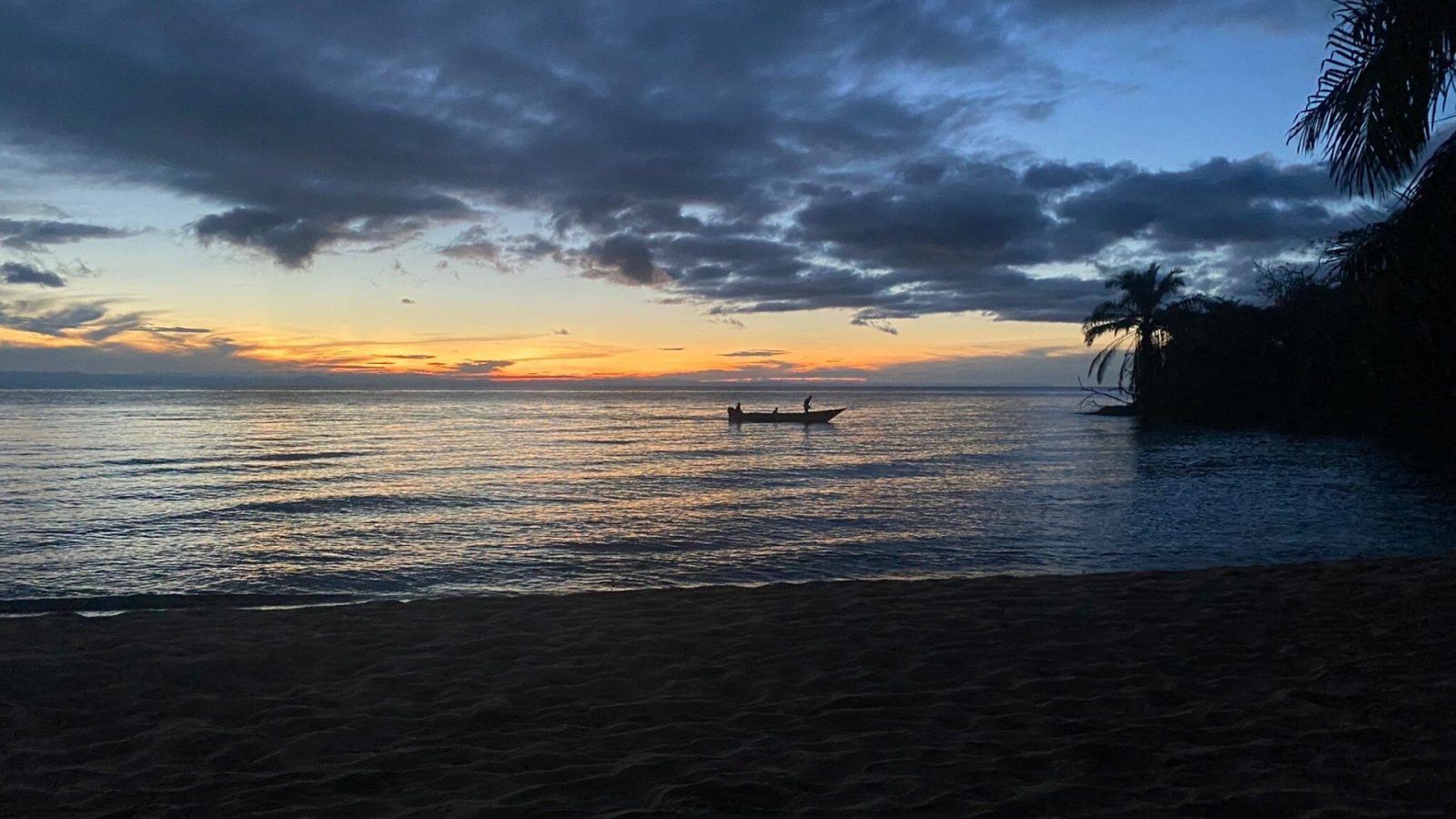
Fishing-community experiences around Burigi-Chato National Park centre on the Lake Victoria landing sites at Chato and along the Bukoba shore, where boats return at dawn with Nile perch, tilapia and dagaa. Visits are arranged through operators rather than the park. Burigi-Chato reaches Lake Victoria on its eastern side, and the lake supports one of the largest inland fisheries anywhere on earth.
The landing sites at first light are the most active thing happening within reach of this park, and almost no visitors see them.
Where the Fishing Communities Sit Relative to Your Safari
The geography here is worth setting out, because it explains why a Burigi-Chato safari can include this at almost no cost in time.
The park stretches from Lake Victoria in the east to the Kagera River and the Rwandan border in the west, reaching the lake around Bunkwe Bay. Chato town sits on the lake shore in Geita Region, roughly 40 kilometres from the Katete Gate, and Bukoba is north on the western shore in Kagera Region, two to three hours from the park by road.
Most visitors pass through one of these towns anyway, arriving or departing. Building in a dawn at a landing site costs you nothing you would otherwise be using, since the park’s own productive hours are at the same time but you are not inside the gate yet.
Mwanza, the largest city on the Tanzanian lake shore, is the other option, around 150 kilometres from the park with a drive of three to five hours.
Do the landing site on your arrival or departure morning rather than on a park day. You get the best hour of the fishing day without giving up the best hour of a game drive.
What Happens at a Lake Victoria Landing Site Tour
The rhythm is nocturnal, which is why timing matters so much.
Boats go out in the evening and work through the night, returning around first light. What follows over the next couple of hours is the whole economy of the shoreline compressed into one place: unloading, sorting by species and size, weighing, negotiating, icing for transport, and the immediate onward movement of the catch.
Three products dominate. Nile perch, the large predatory fish that transformed this lake’s commercial fishery, goes largely to processing and export. Tilapia serves both local and wider markets. Dagaa, the small silver fish, is spread on racks and open ground to dry in the sun and forms the staple protein trade across the region.
Drying grounds are as much part of the scene as the boats. Fields of silver fish laid out to dry are a striking sight and a considerable part of the local livelihood.
By mid-morning it is over and the beach is quiet.
Boats, Gear and How the Fishery Works, for Visiting Tourists
Watching is more interesting if you know roughly what you are looking at.
Craft range from small wooden planked boats worked by two or three people to larger vessels with outboard engines. Sails and paddles are still in use alongside motors. Gear varies by target species: nets of different mesh for perch and tilapia, and fine seine nets for dagaa, which is often fished at night using lamps to draw the fish.
Crews are typically small and the work is hard and genuinely dangerous. Lake Victoria produces sudden and severe squalls, and drowning is a real occupational risk across the fishery.
Ask your guide about the differences rather than assuming. Boat design, net type and the division of labour between fishing, sorting and trading vary along the shore, and the people at any landing site will explain it readily if asked with interest rather than through a camera.
Community Tours in the Fishing Villages
Beyond the beach itself, the villages behind the landing sites are where the rest of the story sits.
Smoking and drying operations, net repair, boat building and repair, ice supply and the trading networks that move fish inland all happen a short walk from the water. Women dominate much of the processing and trading side of this economy, which is worth knowing rather than assuming the fishery is only about the boats.
These are working communities in the districts around the park: Chato in Geita Region, and the Haya-dominated shoreline of Kagera around Bukoba and Muleba. Farming and fishing often run in the same household, with banana and coffee gardens inland from the same villages.
Visits are arranged through operators working in the region rather than through the park, since they depend on established relationships. Expect a contribution to be requested, which is appropriate.
Most of what makes a landing site interesting happens fifty metres behind the boats, among the drying racks and the traders.
Sport Fishing Trips Inside Burigi-Chato National Park
Fishing inside the park itself is a separate activity from visiting a community, with its own rules and fees.
Sport fishing is permitted in Burigi-Chato under specific guidelines, restricted to daylight hours between seven in the morning and five in the afternoon, and charged per person per day with a lower rate for children aged five to fifteen. Rods can be hired from the park if you have not brought your own.
Tilapia are the mainstay on Lake Burigi. This is not the trophy Nile perch fishery that Lake Victoria and Rubondo Island are known for, so anyone coming for large perch should look at Rubondo instead, where the relatively undisturbed waters produce very large specimens.
Where a boat is involved, the boating safari fee applies on top of the sport fishing charge.
Confirm current rules when you book, since fishing regulations inside national parks are reviewed periodically and are stricter than on open lake water.
How Fishing Pressure Affects the Wetlands You Visit on Safari
The connection between the fishery and the park is not incidental, and it is one of the more interesting things to understand here.
Conservation assessments of this area have identified the lakeside habitats as a priority, recommending that a larger share of Lake Burigi be brought within protection, that use of the lake and its resources be better controlled, and that the fishery be put on a longer-term footing.
The reasoning is habitat. The swampy margins of Lake Burigi support sitatunga, papyrus specialist birds and possibly breeding shoebill, and those margins sit at the edge of the protected area rather than safely inside it. Fishing activity reaching into a bay affects what lives there.
The wider system matters too. The Kagera River, running along the park’s western boundary, is the largest single tributary of Lake Victoria, and the swamps and floodplains along that drainage filter sediment and nutrients before the water reaches the lake that the fishery depends on.
A visitor seeing both sides of that relationship in one trip understands the park better than one who only drives it.
Eating the Catch and Local Food on Your Trip
The practical end of a fishing community visit is usually a meal.
Fresh tilapia grilled or fried is the standard lakeside dish, typically served with ugali, the stiff maize staple, or with rice. In the Kagera districts, matoke, the large green cooking bananas steamed or roasted, is the staple alongside maize and beans, and it appears with fish as readily as anything else.
Dagaa is eaten dried, often cooked into a stew or sauce, and is a far bigger part of local diets than the export species.
Small eating places at the landing sites and in the towns serve this straightforwardly and cheaply. Bring Tanzanian shillings in cash, since card facilities are limited outside Mwanza and Bukoba.
Bottled water is widely available in the towns, which is where you should buy your park supply in bulk.
Etiquette and Photography on a Landing Site Tour
These are workplaces, not attractions, and behaving accordingly is what makes a visit welcome.
Ask before photographing anyone and accept a refusal without argument. Photographing people without consent is the most common complaint communities make about visitors anywhere in East Africa, and a busy landing site at dawn is exactly where it happens most.
Stay out of the way. Unloading is fast and physical, the ground is wet and slippery, and people are working against the clock and the heat.
Dress modestly, greet people properly and unhurriedly, and let your guide handle introductions. Buy something if fish or crafts are offered rather than handing out money, since it is a more dignified exchange.
Do not hand sweets, pens or money to children.
Best Time for Fishing Community Tours
Time of day: First light, without exception. Boats return around dawn and the landing site is finished by mid-morning. This is the one activity here where the hour matters more than the month.
June to September: Settled dry conditions and calmer lake mornings, which also makes it the easiest season to combine a landing site visit with a park trip.
October to December: Storms build in the afternoons rather than at dawn, so mornings usually work. The lake can be rougher, which affects how many boats go out.
March to May: The heavier rains. Landing sites still operate, and this is a reasonable use of a day when park tracks are too wet to drive.
Frequently Asked Questions About Fishing Community Tours
What does a fishing community visit cost?
There is no TANAPA fee, since these take place outside the park at the lakeside towns and villages and are arranged through operators. Expect a contribution to the community, usually modest and typically organised by your operator. Bring Tanzanian shillings in cash, since ATMs are in Mwanza, Bukoba and the larger towns and card facilities are limited at landing sites. For comparison, park entry itself is US$30 per person per day for non-East African adults.
What does sport fishing inside the park cost?
Sport fishing in Burigi-Chato is currently US$25 per person per day for those aged sixteen and above and US$10 for children aged five to fifteen, with TZS 10,000 and TZS 5,000 for East African Community citizens. Rod hire is US$20 per rod per day. It is restricted to between seven in the morning and five in the afternoon under specific guidelines. If a boat is involved, the boating safari fee of US$20 per person applies on top. Add 18 percent VAT to all TANAPA charges.
What time should I arrive at a landing site?
First light. Boats go out in the evening, work through the night and return around dawn, and the unloading, sorting, weighing and trading all happen in the couple of hours that follow. By mid-morning the beach is quiet and there is little to see. Do this on an arrival or departure morning rather than a park day, so you are not giving up a game drive for it.
What fish will I see?
Three main products. Nile perch, the large predatory fish that transformed this lake’s commercial fishery, going largely to processing and export. Tilapia, serving both local and wider markets. And dagaa, the small silver fish spread on racks and open ground to dry in the sun, which forms the staple protein trade across the region and is a far bigger part of local diets than the export species.
Which town is best for this?
Chato is closest to the park, on the Lake Victoria shore in Geita Region about 40 kilometres from the Katete Gate, which makes it the natural choice on a trip entering from the east. Bukoba, north on the western shore, is Tanzania’s second largest lake port and is worth half a day in its own right. Mwanza has the largest markets and the widest range of options, though it is three to five hours from the park.
Can I go out on a fishing boat?
Sometimes, through an operator with relationships in a specific community, though it is not a standard offering and depends on the crew. Be aware that this is genuinely hazardous work: Lake Victoria produces sudden severe squalls and drowning is a real occupational risk across the fishery. Ask about life jackets and take the answer seriously. Watching from the landing site is the usual and safer arrangement.
How does the fishery affect the park?
Directly, at the margins. Conservation assessments of this area have recommended bringing a larger share of Lake Burigi within protection, controlling use of the lake and its resources, and putting the fishery on a longer-term footing. The reason is that the swampy lake margins support sitatunga, papyrus specialist birds and possibly breeding shoebill, and fishing activity reaching into those bays affects what lives in them.
Booking Your Burigi-Chato Trip
The safari companies and tour operators listed on this website put trips like this together for a living and know which camps, guides and routes actually deliver. We are an independent guide to Burigi-Chato; we do not book or sell tours ourselves.
When you are ready, arrange your safari, tour or holiday with one of the recognised operators listed here. Tell them your dates and what matters most, and a real person, not a form, will handle the itinerary, park bookings and logistics for you.