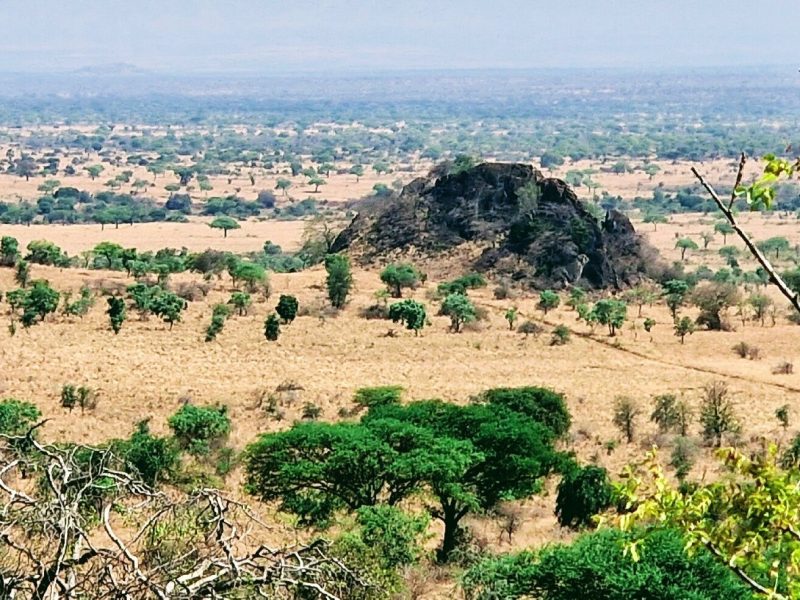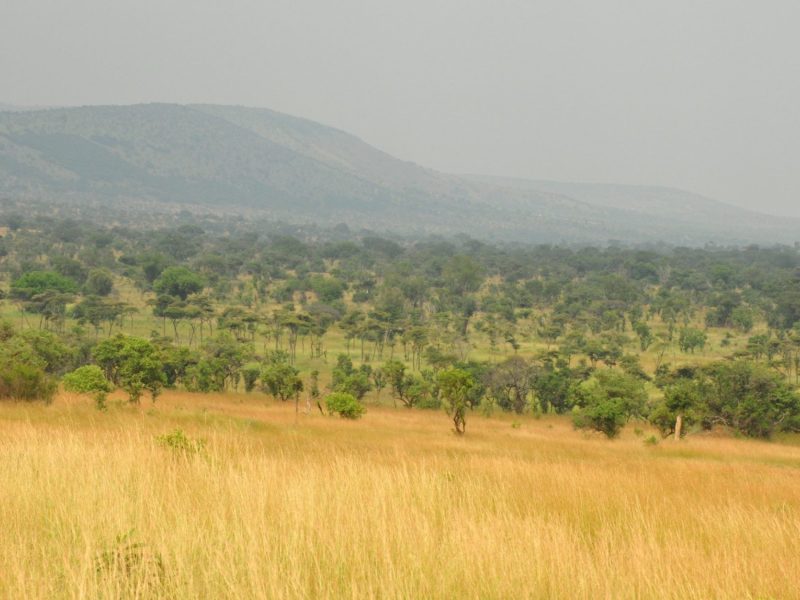
Miombo wooded savannah covers hundreds of square kilometres of Burigi-Chato National Park and is the dominant vegetation across most of its 4,707 square kilometres, a mix of medium and tall grass growing beneath an open deciduous canopy. Game drive safaris and guided walks here work the woodland edges, clearings and drainage lines rather than open plains. Miombo is the broad term for the deciduous woodland belt running across south-central Africa, and the Burigi-Chato version is made up largely of Combretum and Terminalia.
It is the habitat that defines how this park is seen, and it asks something different of a visitor than the Serengeti does.
Miombo Wooded Savannah Across a Burigi-Chato Safari
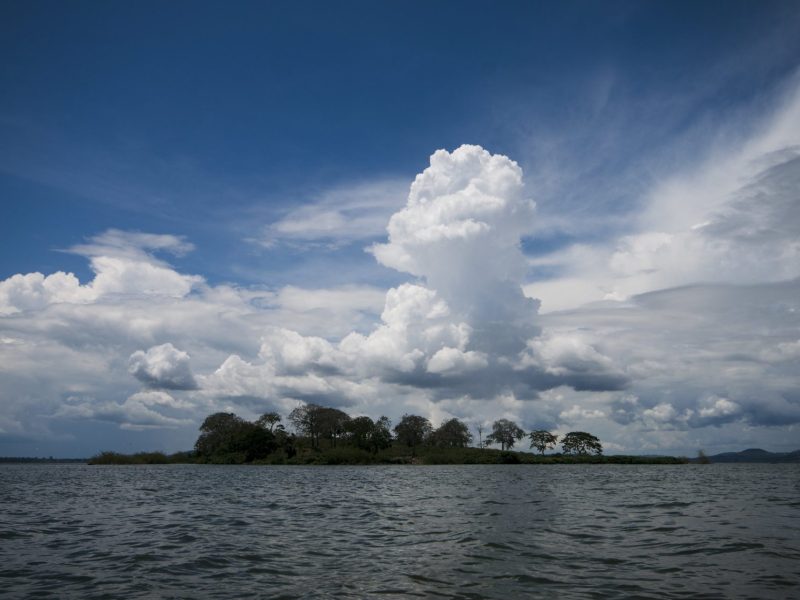
A Burigi-Chato safari spends most of its driving hours inside this woodland. The park stretches from Lake Victoria in the east to the Rwandan boundary in the west, and between the freshwater lakes, the swamps and the floodplains there is a great deal of wooded savannah filling in the space. Park descriptions consistently put it at hundreds of square kilometres of medium and tall grass under trees.
Terrain shapes it. Long hills, rocky crags along escarpments and deeply set valleys break the woodland up, so it is not uniform across the park. On ridges the trees thin and grass takes over. In the valleys the woodland thickens and becomes riverine forest along the watercourses. Between them sit the open plains and the flood-prone ground near the lakes.
That mosaic is why the park holds the species mix it does. Pure miombo is species-poor for large mammals. Miombo broken by water and grassland is not.
What Grows in the Miombo: Combretum and Terminalia on a Burigi-Chato Tour
The park’s own literature describes its wooded savannah as miombo and identifies the dominant genera as Combretum and Terminalia. Worth knowing, if you have read about miombo elsewhere: the classic Zambezian miombo of Tanzania’s south and west is dominated by Brachystegia, Julbernardia and Isoberlinia, and botanists usually class Combretum and Terminalia woodland as a related but distinct formation.
In practice the two look and behave similarly to a visitor. Both are deciduous, both have open canopies that let grass grow underneath, and both go through the same dramatic seasonal shift from bare grey branches to full leaf.
Combretum species are the bushwillows, often multi-stemmed and forming thickets on stony ground. Terminalia trees have a distinctive layered, flat-topped branching pattern that is easy to pick out once you know it. Acacias appear along the drainage lines and on the more open ground. Occasional palms stand along the lake valleys, which is one of the more striking sights in the western half of the park.
Ask your guide to point out the difference between Combretum and Terminalia on your first drive. Once you can read the woodland type you can read the terrain, and knowing which stretch you are in tells you which animals to expect.
Game Drive Safaris Through the Miombo Woodland
The Burigi-Chato game drive safari is built around this woodland, and it rewards a slower pace than open-country parks do. Tracks run through the trees and along the drainage lines, with the productive moments coming at edges: where woodland meets floodplain, where a track crosses a stream, where a clearing opens.
Density is the honest issue. Wildlife numbers here are recovering from years of poaching pressure during the area’s time as a game reserve, and the park is very large. You can drive for a long stretch through good habitat and see little, then come round a bend into a herd. This is not Serengeti arithmetic and nobody should sell it as such.
What you get instead is space. There is a reasonable chance you will not pass another vehicle all day.
Night game drives are permitted in Burigi-Chato, which is unusual among Tanzanian parks and genuinely useful in woodland, since several of the smaller nocturnal species are far easier to find after dark.
Why Miombo Game Viewing Is Harder Than Open Plains Safaris
Two things work against you in wooded savannah, and knowing about them changes how you plan.
Sightlines are short. In tall grass under trees you may be twenty metres from a buffalo and not know it. Animals see and hear you first, and in a park where they are not yet fully relaxed around vehicles, they move off before you arrive.
Second, the grass grows. Medium and tall grass savannah means exactly that, and after the rains it can stand well above the height of an antelope. The dry season burns and grazing knock it down, which is the main reason the June to September window matters so much more here than in short-grass country.
Miombo does not hand you sightings. It gives them to people who go slowly, stop often, and let the guide work the drainage lines rather than chasing across the park.
The practical answer is to concentrate your drives near water. Lake Burigi, the Kagera drainage and the seasonal pans hold the animals when the woodland dries out, and edge habitat consistently outperforms the interior.
Wildlife Watching in the Miombo Wooded Savannah
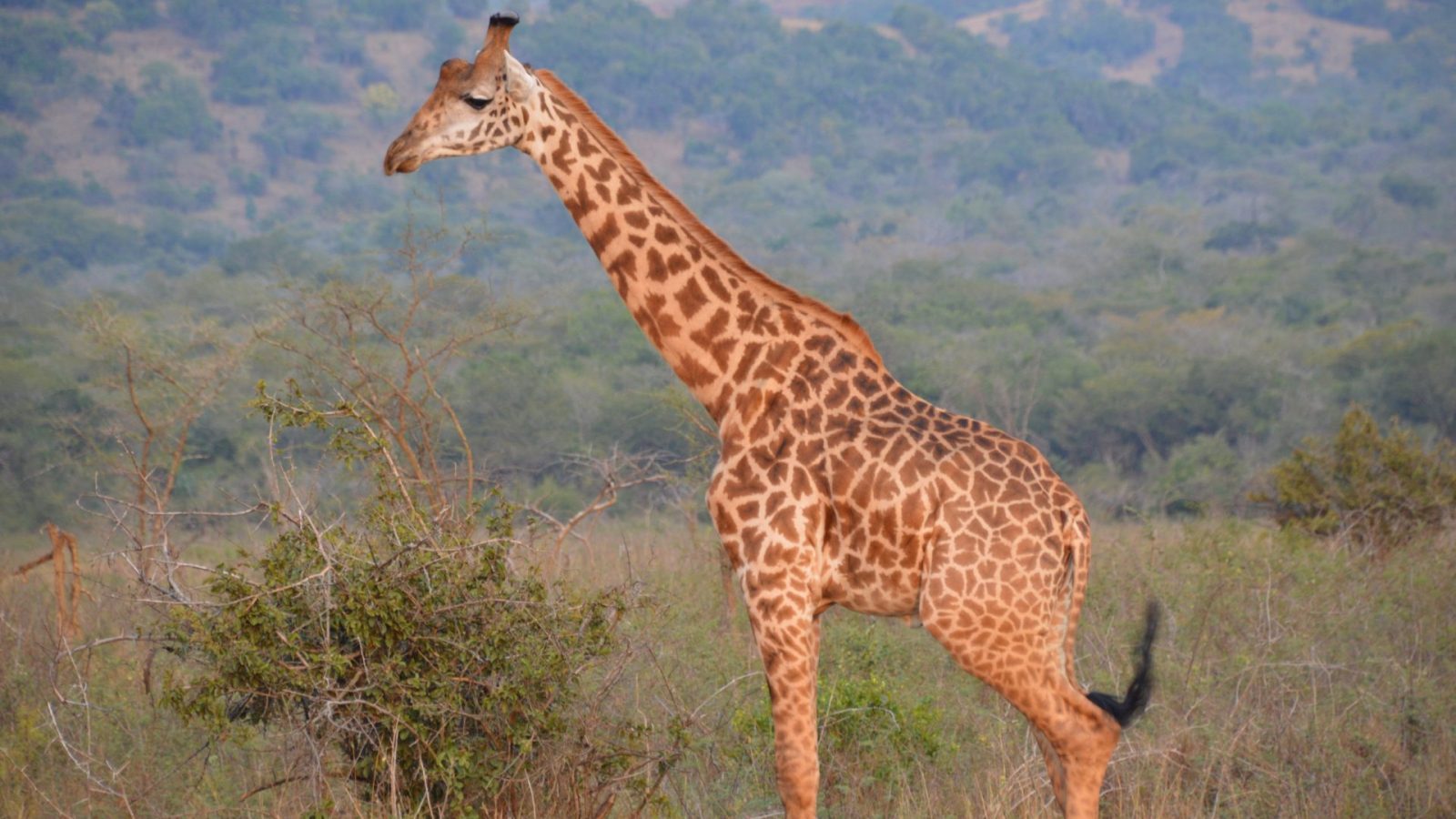
The large mammals recorded across Burigi-Chato’s woodland and grassland include elephant, buffalo in sizeable herds, zebra, giraffe, eland, topi, impala, waterbuck, warthog, bushbuck, reedbuck and oribi. Two miombo specialists stand out: roan antelope and sable antelope, both associated with this woodland type across their range and both present here.
Sable in particular are a miombo animal, and seeing them is one of the better reasons to spend time in this habitat rather than pushing straight for the lake. They favour woodland with good grass cover and access to water, which describes much of this park.
Predators occur but at recovering densities. Lion, leopard and spotted hyena are present, along with jackal and serval, and cheetah have been reported. Sightings are not guaranteed and should be treated as a strong day rather than an expectation.
Baboon and vervet monkey are common through the woodland. In the swampy sections along the lake margins, sitatunga hold to the papyrus, and hippo and large Nile crocodile occupy the lakes and rivers.
Birdwatching Tours in the Miombo Belt
Miombo has its own bird community, and a birdwatching safari that works both the woodland and the wetlands here produces a much longer list than either alone. Woodland birding is slow and often quiet for long stretches, then suddenly busy when you hit a mixed feeding party moving through the canopy.
Across the park, recorded species include African fish eagle at high density around the water, saddle-billed stork, wattled crane, wattled lapwing, Senegal lapwing, red-necked francolin, white-browed coucal, village weaver, cattle egret and a range of herons and kingfishers. Marabou stork, hornbills, guineafowl and various ducks are noted through the park. Eurasian migrants arrive from around November.
African grey parrots have been introduced in the wider Lake Victoria region and occur in parts of the park’s forested sections.
Bring binoculars with decent low-light performance. Woodland birding early and late is where the good sightings are, and the canopy shade costs you more light than you expect.
Guided Walking Safaris in the Miombo
Walking is where miombo comes into its own, because everything that makes it frustrating from a vehicle becomes interesting on foot. TANAPA offers walking safaris in Burigi-Chato, split into short walks of one to four hours and long walks above four hours, taken with an armed ranger.
On foot you notice the things a drive skips entirely: termite mounds and the vegetation growing off them, tracks in the dust, the bark stripping where elephant have worked a Combretum, dung, feeding sign, the smell of the woodland after rain. Guides use these to build a picture of what has moved through, which is a different and often more satisfying kind of wildlife viewing than ticking off species from a seat.
Night nature walks are also offered in applicable parks and are worth asking about, since the woodland after dark is a genuinely different place.
Wear long trousers and closed boots. Grass seeds, thorns and stony ground make shorts a bad idea here.
How the Miombo Changes Through the Safari Seasons
Miombo is deciduous, and the seasonal swing is more extreme than most people expect from an African woodland.
June to September, dry: Grass falls back, leaves drop, sightlines open up, and animals concentrate on permanent water. This is the best game viewing window by a clear margin, and the woodland looks grey and bare.
October to December: First rains arrive and the woodland flushes with new leaf, often in reds and coppers before it turns green. Grass grows fast, wildlife disperses, and birding improves as migrants arrive.
January to February: A drier interval. Grass is high but tracks are usable, and the park is very quiet in visitor terms.
March to May: The heavier rainfall peak. The woodland is at its densest and greenest, the grass is at its tallest, and unsurfaced tracks become the main constraint on where you can go.
The flush of new miombo leaf before the rains properly arrive is one of the more striking sights in this vegetation type, and it happens in a narrow window that most visitors miss entirely.
Wildlife Photography Safaris in the Burigi-Chato Woodland
Photographing in wooded savannah is a different technical problem from the open plains, and it catches people out.
Light comes through the canopy in patches, so an animal half in shade and half in sun will beat most automatic metering. Faster lenses and a willingness to push ISO help more than reach does. Backgrounds are busy, full of branches and grass, so isolating a subject takes wider apertures and patience about angle.
The compensations are real. Dust in the dry season gives you backlit atmosphere that open country rarely produces, and the bare architecture of Terminalia branches makes a better frame than an empty horizon. Water sites at dawn are the most reliable place to get clean shots.
Drones are not permitted in any Tanzanian national park, and commercial filming needs a permit arranged in advance.
Where the Miombo Meets Wetland, Hills and Floodplain on a Game Drive Safari
Burigi-Chato is not a single habitat, and the value of the wooded savannah is partly in what it borders. Freshwater lakes sit along winding valleys, with swampy inlets and papyrus. Rivers and floodplains run through the park. Long hills and rocky crags rise along escarpments, and deeply set valleys carry ribbons of forest.
Each edge between these produces different sightings. Woodland to floodplain gives you grazers and the predators following them. Woodland to swamp gives you sitatunga and papyrus birds. Woodland to rocky ground gives you klipspringer country and raptor perches.
Plan a day to cross at least two of these rather than staying in one. It is the single easiest thing you can do to improve what you see here.
Frequently Asked Questions About a Miombo Safari in Burigi-Chato
How much does it cost to visit the miombo woodland at Burigi-Chato?
Access is via the standard park conservation fee, currently US$30 per person per day for non-East African adults aged sixteen and above and US$10 for children aged five to fifteen. Expatriates and Tanzanian residents pay US$15 and US$5, and East African Community citizens pay TZS 5,000 and TZS 2,000. Under-fives are free. Burigi-Chato has no peak or low season fee split, and 18 percent VAT is added to all TANAPA charges.
What do walking safaris and night drives in the woodland cost?
Short walking safaris of one to four hours currently run at US$20 per adult and US$10 for children aged twelve and over. Long walks above four hours are US$25 and US$15. Night nature walks are US$10 per adult. Night game drives, which are permitted in Burigi-Chato, are US$50 per adult and US$25 per child aged five to fifteen. A park guide, which you will want here, is US$20 per group per day rather than per person.
Is Burigi-Chato’s woodland true miombo?
The park describes it as miombo, and locally that is the accepted name. Botanically, the dominant genera here are given as Combretum and Terminalia, whereas classic Zambezian miombo in southern and western Tanzania is dominated by Brachystegia, Julbernardia and Isoberlinia. The two formations behave very similarly: deciduous, open canopied, with grass growing underneath. For a visitor the distinction matters less than the fact that both produce the same slow, edge-focused style of game viewing.
When is the best time for game viewing in the miombo?
June through September. The grass falls back, the trees drop their leaves, sightlines improve dramatically, and animals concentrate on the permanent water at Lake Burigi and along the Kagera drainage. In the wet months the medium and tall grass can stand higher than an antelope, which makes woodland game viewing genuinely difficult regardless of how many animals are present.
Which animals are miombo specialists here?
Roan antelope and sable antelope are the two classic miombo species present in Burigi-Chato, both favouring wooded savannah with good grass and access to water. Both are worth naming to your guide as targets, since they are more reliably found in this habitat than in the open plains. Elephant, buffalo, eland, topi, impala, waterbuck, warthog, bushbuck, reedbuck and oribi also use the woodland, with sitatunga confined to the swampy margins.
Can I self-drive through the woodland?
Yes, with a 4×4 and a park guide, which is the sensible combination here. Tracks are unsignposted in places, the park is very large, and a guide who knows which drainage lines are productive will change your day. Driving hours in Tanzanian national parks run from six in the morning to six in the evening, with a 50 kilometre per hour speed limit, and you must keep to authorised tracks. Fuel up before you enter, since there is none inside.
Is the woodland safe to walk in?
Walking safaris are conducted with an armed ranger and follow park guidelines, which is what makes them safe. Elephant and buffalo are the main concerns in this habitat, and both are easier to walk into unseen in tall grass than in the open. Follow the ranger’s instructions exactly, walk in single file, and keep talk quiet. Do not attempt to walk unaccompanied anywhere inside the park.
Booking Your Burigi-Chato Trip
The safari companies and tour operators listed on this website put trips like this together for a living and know which camps, guides and routes actually deliver. We are an independent guide to Burigi-Chato; we do not book or sell tours ourselves.
When you are ready, arrange your safari, tour or holiday with one of the recognised operators listed here. Tell them your dates and what matters most, and a real person, not a form, will handle the itinerary, park bookings and logistics for you.