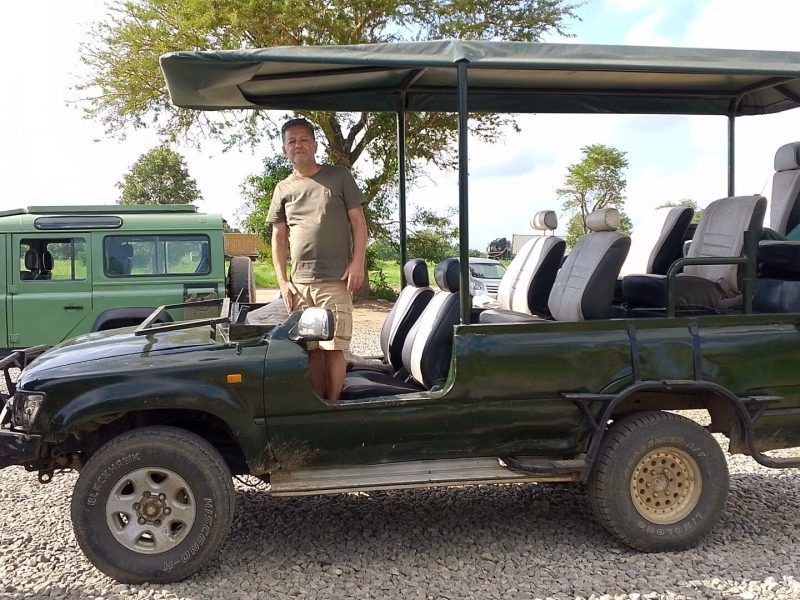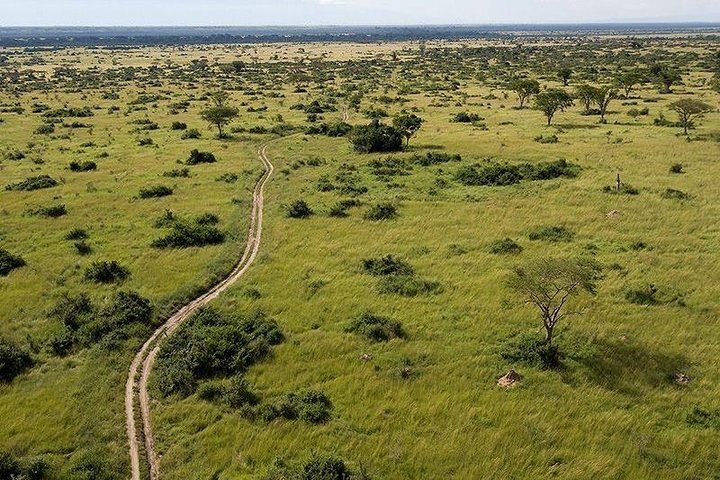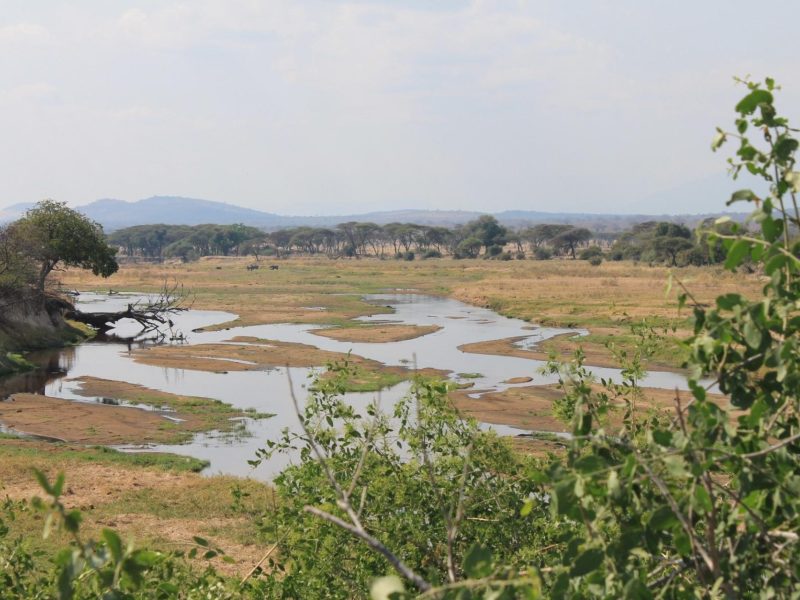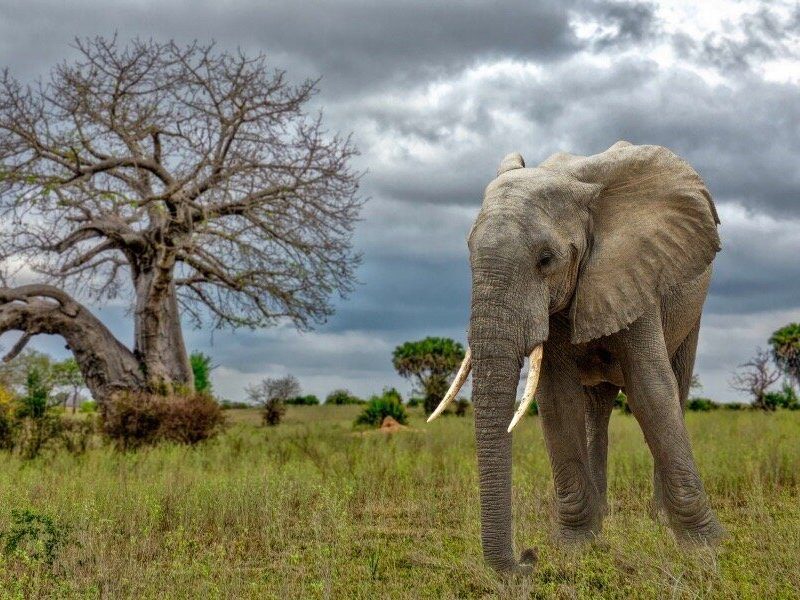
Most visitors should spend two to three days in Burigi-Chato National Park, which is enough to work one sector properly, take a boat safari on Lake Burigi and get two early starts. Four to five days lets you cover two sectors or add a neighbouring park. Burigi-Chato runs to 4,707 square kilometres of northwestern Tanzania, and its size relative to its track network is what makes short visits unsatisfying.
The mistake people make is budgeting by park size. Budget by sector instead.
Why Day Counts Work Differently on a Burigi-Chato Safari
Planning a Burigi-Chato safari means accepting two facts that do not apply in the northern circuit.
The first is that the park is enormous and its sectors are far apart. Tracks run along ridge crests or valley floors rather than crossing freely between drainage systems, so map distances understate travel time badly. Driving from the Chato side in the east across to the Lake Burigi valley in the west takes most of a day.
The second is that wildlife densities are recovering rather than high, following severe losses during the mid-1990s refugee period. That means productive game viewing here depends on being in the right place at the right hour, which in turn means you need mornings and evenings rather than middays.
Put those together and a day here buys you less than a day in Serengeti does. Two nights is the practical floor.
Count nights inside the park, not days on the itinerary. A trip described as three days from Mwanza with two nights in the park gives you two dawns, which is the number that actually determines what you see.
One Day: A Day Trip Safari and Why It Rarely Works
A single day is possible on paper. TANAPA issues a day-trip permit valid for twelve daylight hours with multiple entries within that window.
It works for one group of people: visitors already staying in Chato town, about 40 kilometres from the Katete Gate. They can be through the gate early, run a circuit in the eastern sector, and be back for the evening. That is a real day out.
It does not work from Mwanza. A round trip of six to ten hours of driving leaves a few hours inside the park, arriving and leaving outside the dawn and dusk windows when anything is moving. You would not reach Lake Burigi, you would not take a boat safari, and you would see the eastern woodland at the worst time of day.
If a single day is genuinely all you have, spend it at Saanane Island off Mwanza or on the western Serengeti corridor instead.
Two Days: The Practical Minimum for a Game Drive Safari
Two days with one night inside the park is the shortest visit worth making, and it works if you commit to one sector.
Arrive through your chosen gate in the afternoon, run a late game drive into the evening light, and sleep at a campsite, the rest house or the ranger post bandas. Next morning you have a full dawn drive before departing, which is the single most valuable few hours of the trip.
Choose the sector on purpose. The eastern ground near Chato and the Katete Gate suits arrivals from Mwanza or Geita. The Lake Burigi valley in the west suits anyone flying in by charter to the Nkonje airstrip, and it is the only choice if boat safaris or sitatunga are your reason for coming.
Do not try to see both in two days. You will spend the whole visit driving.
Three Days: Enough for Boat Safaris and Sitatunga Watching
Three days with two nights is where the park starts to deliver, and it is what most people should book.
Two full nights means two dawn sessions. If you are based at Lake Burigi, that is two first-light boat or canoe trips at the papyrus margins, which is roughly the number of attempts a realistic sitatunga watching plan needs. It also gives you an afternoon for a guided walk and an evening free for a night game drive, which Burigi-Chato permits and most Tanzanian parks do not.
Three days also absorbs a lost morning without wrecking the trip. Rain, a boat that fails to start, a bay that turns out to be occupied by fishermen: any of these costs you a session, and with only one you have nothing left.
Two dawns is the difference between having tried and having had a fair go. That is the argument for three days rather than two.
Four to Five Days: Two Sectors on One Safari
Four or five days is what it takes to see genuinely different parts of the park rather than one area well.
A workable shape is two nights on Lake Burigi for the water activities, a transfer day across to the ridge and escarpment country or the eastern fever tree ground, and two nights there. That gives you papyrus, open water, wooded savannah, ridge viewpoints and floodplain edges across one trip.
The transfer day is not wasted, since you are game driving across the park rather than sitting on a road, but it is a driving day and should be planned as one. Ask your guide about which routes are open, because ridge tracks and valley crossings close first in the wet months.
Five days also opens the option of a mobile camping trip using special campsites, which is how operators build routes around your own dates here.
Adding Burigi-Chato to a Wider Lake Zone Safari Circuit
For most travellers the better question is not how long to spend here, but what to combine it with.
Plus Rubondo Island, five to seven days: Two or three nights at Burigi-Chato, then fly or boat to Rubondo for chimpanzee trekking, forest walks and a second shot at sitatunga. The strongest Lake Victoria pairing.
Plus western Serengeti, six to eight days: Fly into Mwanza, run the western corridor with the Ndabaka Gate roughly 145 kilometres out, then continue west to Burigi-Chato. Works best when the migration is in the corridor.
Plus Rumanyika-Karagwe and Ibanda-Kyerwa, five to six days: All three gazetted in the same round, all in the same fee band, strung along the Kagera corridor. Very lightly visited and best suited to a self-sufficient trip.
Plus Akagera in Rwanda, eight to ten days: Cross at Rusumo Falls to see both banks of the same Kagera drainage. Note that Tanzania needs its own visa separate from the East Africa Tourist Visa.
Judged on its own against the famous parks, Burigi-Chato will disappoint a first-time visitor. Judged as two or three nights inside a wider route, it holds up well.
How Your Safari Interests Change the Right Number of Days
Different priorities need different lengths, and this is worth thinking through before you book.
Birders should allow three to four days minimum. The habitat mix of open water, papyrus, wooded savannah, riverine forest and floodplain produces a long list, and working all of them takes more than two dawns. Migrant season from November onward rewards longer stays.
Anyone here for sitatunga needs three days at the lake, no fewer, and preferably four.
Photographers benefit from four or more, since good conditions are a matter of returning to the same water site repeatedly rather than covering ground.
Travellers wanting general game viewing, with no particular target, will find two to three days gives them a fair picture. Beyond that the returns flatten, since the park’s densities do not reward extended searching the way a richer reserve would.
How the Safari Season Affects the Days You Should Allow
June to September: The most efficient season. Firm tracks, animals concentrated on permanent water, and every sector reachable. Two to three days achieves what four might in the wet.
October to December: Allow an extra day. Wildlife disperses across fresh grazing and takes longer to find, though birding improves as migrants arrive.
January to February: Similar to the shoulder months. Grass is high and sightings patchy, so a longer stay pays.
March to May: Build in slack days. Access rather than wildlife is the limiting factor, moving between sectors may not be possible, and you should plan to stay in one place.
Travel Days You Need to Budget On Top of Your Safari
The days you spend in the park are not the days your trip costs you, and the gap catches people out.
From Mwanza, allow most of a day each way: roughly 150 kilometres taking three to five hours depending on route and season, plus gate formalities. From Bukoba it is shorter at two to three hours. From Chato town, about 40 kilometres to the Katete Gate is a short run.
Flying compresses this. Scheduled services reach Chato and Bukoba with a road transfer onward. A private charter to the airstrip near the Nkonje ranger post beside Lake Burigi removes both the road drive and the internal crossing, saving the better part of a day at each end.
Park driving hours run from six in the morning to six in the evening. Plan your arrival to land well inside that window rather than at the edge of it.
Frequently Asked Questions About Safari Length in Burigi-Chato
What does each extra day cost?
The conservation fee is charged per person per day and currently runs at US$30 for non-East African adults aged sixteen and above and US$10 for children aged five to fifteen, with US$15 and US$5 for expatriates and Tanzanian residents and TZS 5,000 and TZS 2,000 for East African Community citizens. Vehicle entry adds from TZS 20,000 per day for a Tanzanian registered vehicle up to 2,000 kilograms. Accommodation runs from US$30 per adult per night on public campsites to around US$35 at the park rest house and cottages. Add 18 percent VAT to all TANAPA charges. The largest daily cost is usually the hired vehicle and driver, which is charged whether you move or not.
Is two days really enough?
Enough to see one sector and get one dawn, which is a fair introduction but not a thorough visit. It works if you commit to a single area rather than trying to cross the park, and if you accept that a poor morning leaves you nothing in reserve. Three days with two nights is the length most visitors should actually book, because two dawn sessions is what turns a gamble into a reasonable attempt.
Can I visit as a day trip from Mwanza?
Not usefully. Six to ten hours of round-trip driving leaves a few hours inside a park covering 4,707 square kilometres, arriving and leaving outside the hours when wildlife is active. The day-trip permit exists and is valid for twelve daylight hours with multiple entries, but it suits visitors already staying in Chato, about 40 kilometres from the Katete Gate. From Mwanza, plan at least two nights.
How long does it take to cross between sectors?
Most of a day from the Chato side in the east to the Lake Burigi valley in the west. Internal tracks follow ridge crests or valley floors rather than crossing freely, so distances on a map understate travel time considerably. This is why a two-day visit should target one sector, and why four to five days is the realistic length for seeing two.
How many days do I need for a decent chance at sitatunga?
Three days at Lake Burigi, giving two dawn boat or canoe sessions, with four being better. These animals feed at the papyrus margins only around first and last light and withdraw into the reed beds through the day, so a single attempt is a coin toss. Sightings are never guaranteed regardless of how long you stay, but two or three early sessions in the dry season with a guide who knows the bays gives you a fair go.
Is it better to add a second park than to stay longer here?
Usually yes, beyond three days. Wildlife densities here are recovering rather than high, so extended searching does not pay off the way it would in a richer reserve. Once you have had two or three dawns and a boat safari, a flight or drive to Rubondo Island, or a run down to the western Serengeti corridor, will add more to your trip than a fourth and fifth day in the same sector.
Should I allow extra days in the rainy season?
Yes. During the heavier March to May rainfall peak, unsurfaced tracks become the constraint on where you can go, ridge and escarpment routes close first, and moving between sectors may not be possible at all. Build a spare day into the schedule, base yourself near the lake, and plan to work one area rather than covering the park. The lighter November and December peak is less disruptive but still slows drive times.
Booking Your Burigi-Chato Trip
The safari companies and tour operators listed on this website put trips like this together for a living and know which camps, guides and routes actually deliver. We are an independent guide to Burigi-Chato; we do not book or sell tours ourselves.
When you are ready, arrange your safari, tour or holiday with one of the recognised operators listed here. Tell them your dates and what matters most, and a real person, not a form, will handle the itinerary, park bookings and logistics for you.