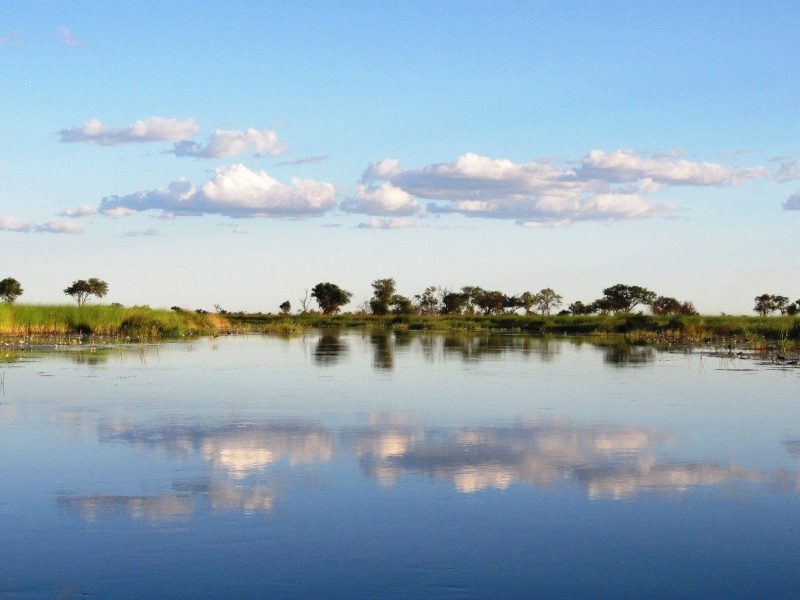
Sitatunga spotting in Burigi-Chato National Park is a fieldcraft exercise rather than a game drive: you sit still at a papyrus margin on Lake Burigi before sunrise, scan the reed line with binoculars, and wait for a head to lift above the vegetation. Boat and canoe trips reach the habitat. Burigi-Chato covers 4,707 square kilometres of northwestern Tanzania, and its swampy lake inlets are among the few places in the country offering protected access to this antelope.
What you are looking for is almost never a whole animal. Knowing that changes everything about how you look.
What Sitatunga Spotting Actually Involves on Safari
People arrive expecting a sitatunga safari to work like other wildlife viewing. It does not, and the mismatch is why most visitors miss.
You are not scanning open ground for a shape against a background. You are watching a wall of papyrus three metres high, looking for movement in the reed tops, a shadow at the water’s edge, or the top third of a head and a pair of horns held above the vegetation for a few seconds.
The animal is doing everything it can to remain unseen, and it is very good at it. When alarmed, a sitatunga does not run; it submerges, leaving only the nostrils above the surface, and holds that position while a threat passes.
Sightings are not guaranteed and no operator should tell you otherwise. What good technique buys you is a fair chance rather than a certainty.
Train your eye on the reed line rather than the water. Almost every sitatunga sighting here happens at the boundary between papyrus and open water, in the first metre of vegetation, not out in the open.
Identifying a Sitatunga on a Wildlife Watching Trip
Half the difficulty is knowing what you are looking at when something does appear, because several similar antelope use the same shoreline.
Sitatunga males are dark greyish-brown, shaggy-coated and heavily built, with spiral horns and a pronounced ruff of long hair at the throat. Females are noticeably smaller, reddish-brown, hornless, and carry faint white markings on the body. Both have the long, splayed hooves that let them walk on floating vegetation, though you will rarely see the feet.
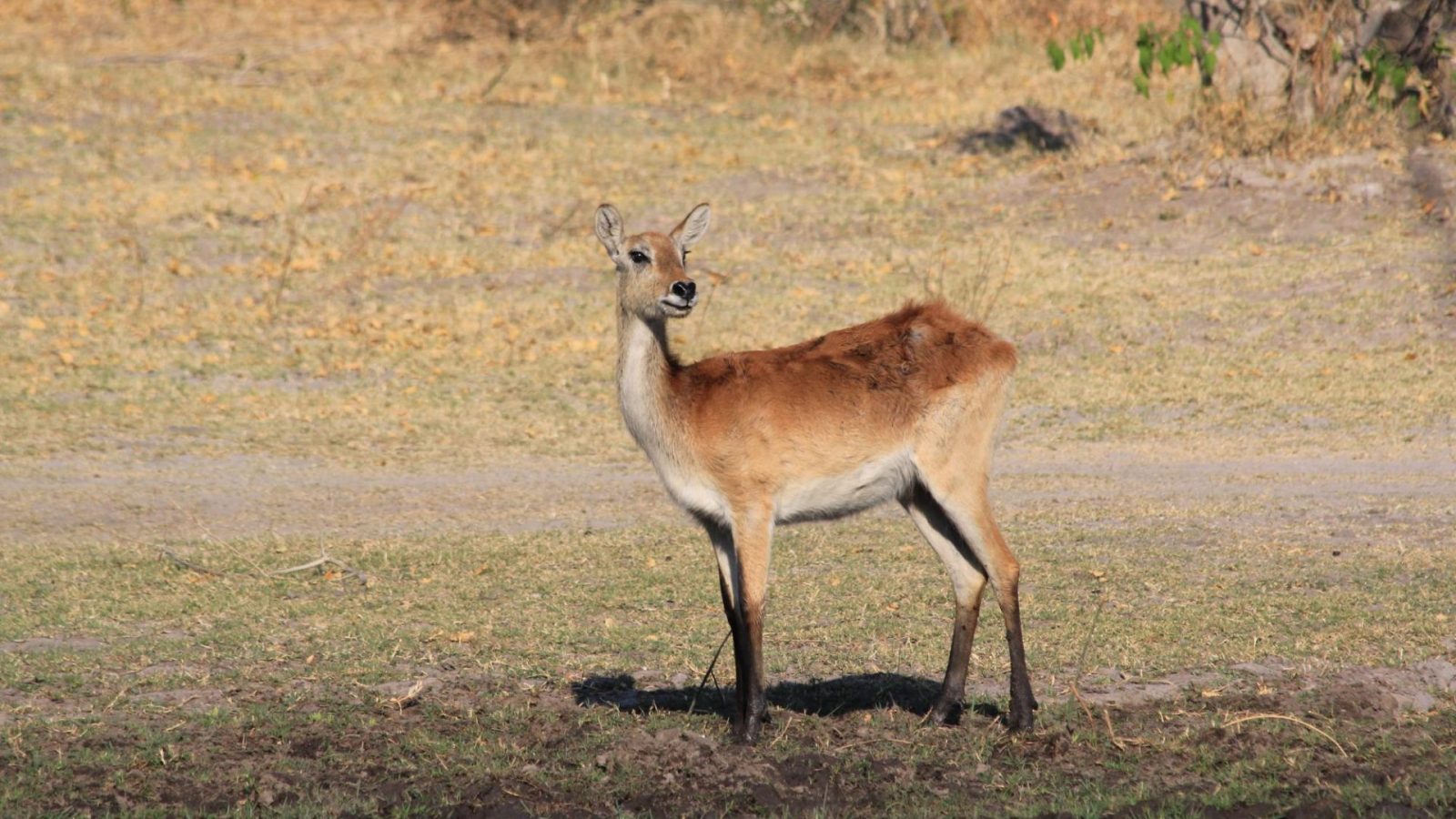
Bushbuck are the likely confusion, and they use the drier riverine cover behind the swamp rather than the papyrus itself. They are smaller, brighter chestnut, with white spots and stripes on the flanks and a distinctive white throat patch. If the animal is standing on firm ground under trees, it is a bushbuck.
Defassa waterbuck are much larger, greyer and shaggier still, with a broad white ring on the rump, and they graze the wetter margins in the open rather than hiding in reed.
Habitat is your best identification tool. In the papyrus, standing in water, it is a sitatunga.
Where to Position for a Sitatunga Watching Session
Location narrows down fast once you know what to rule out.
The main body of Lake Burigi, open water with clean shorelines, holds nothing. Neither does the wooded savannah, the ridge country or the floodplains that dry out between rains. What you want are the swampy inlets and bays branching off the lake, which park literature identifies as home to the rare sitatunga.
Lake Burigi runs roughly 30 kilometres long and about 4 kilometres wide with a scatter of islands and a great many side arms, so there are a considerable number of candidate bays. They are not equal. Productivity depends on how extensive the papyrus is, how enclosed the bay is, and whether fishing activity reaches into it.
Narrower, more sheltered inlets with undisturbed reed beds consistently outperform the broad open ones. Ask your guide which bays have produced sightings recently, because disturbance patterns change season to season.
Timing a Sitatunga Watching Session
Hour of the day matters more than any other variable, including season.
Sitatunga feed at the papyrus and reed margins around dawn and dusk, then withdraw into the beds through the day. A mid-morning trip to the best bay in the park will show you nothing. A first-light trip to a mediocre bay may well deliver.
Be on the water before sunrise, in position at the margin, engine off, and settled before the light comes up. Arriving as the sun clears the ridge is arriving late.
Late afternoon into dusk is the second window and works too, with the added benefit that hippo begin moving out toward night grazing at the same time.
Plan two or three separate early sessions across a stay rather than one long outing. Their activity is tied to the light, not to how many hours you accumulate on the water.
Three short dawn sessions beat one four-hour drift by a wide margin. Sitatunga do not respond to persistence, only to timing.
Boat or Canoe for a Sitatunga Watching Trip
Both work, and they do different jobs.
A motorised boat gives you range, which matters across a lake this long. One outing can take in several inlets, and being able to move on when a bay proves empty is worth a great deal. TANAPA charges a boating safari fee for Burigi-Chato alongside a small group of other water-based parks.
A canoe gives you silence, and along a papyrus edge that is worth more than distance. It lets you hold position at the reed line without pushing anything back into cover, and it reaches narrow channels a boat cannot enter. Canoeing is charged separately at a lower rate and capped at a maximum of three hours per session in this park.
The best combination is a motorised run to the general area, engine cut well out, then paddle or drift the final stretch. Ask for this by name, since it is not the default.
Fieldcraft on a Sitatunga Safari: How to Sit and Scan
Once you are in position, technique decides the outcome.
Stay still and stay quiet. Movement in a boat carries further than voices do, and standing up to get a better angle is the most common way people lose a sighting they had not yet noticed they had.
Scan slowly and systematically along the reed line rather than sweeping. Work a stretch of margin at a time, watching for reed tops moving against the breeze direction, for a darker shadow at the base, for the horizontal line of a back where everything else is vertical.
Listen, not just look. Movement through papyrus makes a distinct rustle and splash, and a sitatunga moving out to feed often announces itself before it appears.
Binoculars matter more than a camera here. Choose for low light rather than magnification: eight or ten power with large objective lenses beats high power on a boat in dim conditions.
What Else You See on a Sitatunga Spotting Trip
The honest way to sell a dawn session is on everything else it delivers, because that part is reliable even when the target is not.
Hippo pods hold in the deeper sections and are close to certain. Large Nile crocodiles bask on mud banks and sandbars. African fish eagles occur at unusually high density along this shoreline, calling across the whole valley.
Papyrus specialist birds live in the same reed beds, including the papyrus gonolek, alongside white-browed coucal and weaver colonies. Saddle-billed stork work the shallows, and herons, egrets, pelicans and kingfishers occupy the margins.
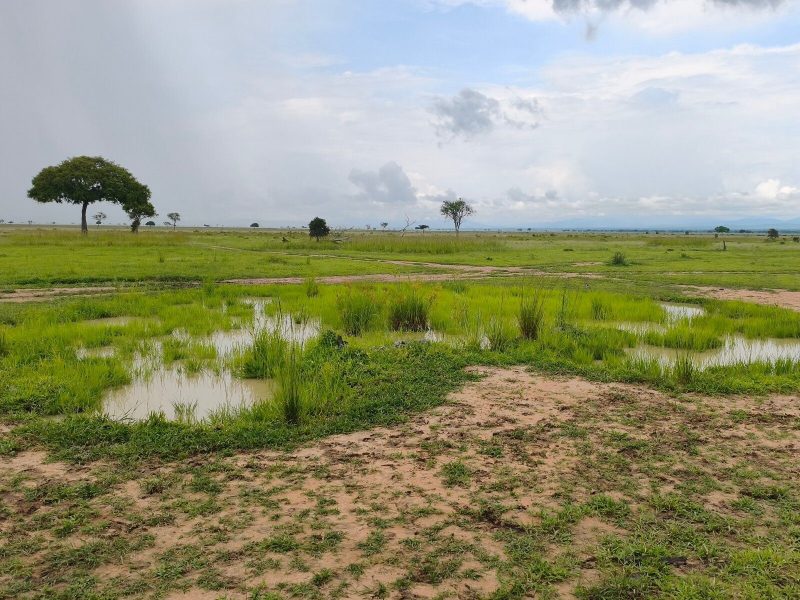
In the dry season, elephant, buffalo, zebra, giraffe, waterbuck and topi come down to drink along the shore. Bushbuck use the drier edges behind the swamp, and Defassa waterbuck the wetter margins.
Shoebill is a possibility rather than a target here, flagged in conservation assessments of the lakeside swamps but scarcely confirmed.
Best Season for Sitatunga Spotting Safaris
June to September: The strongest window. Lower water levels pull the swamp margins into a narrower, better-defined band, which concentrates the animals rather than letting them spread through flooded vegetation. Settled dawn conditions on the water.
October to December: Water rises with the first rainfall peak and sitatunga disperse through a wider area of flooded reed, making them harder to pin down. Birding along the same margins is at its best.
January to February: A drier interval between the peaks. Workable, quiet, and a reasonable second choice if the main season does not suit.
March to May: Heaviest rain and highest water, with the animals at their most scattered. Boats still run, but reaching launch points on unsurfaced tracks is the constraint.
July through September at first light is the answer if you have a free choice.
Ethics and Safety on a Sitatunga Watching Trip
A few things matter here beyond your own success.
Do not press closer than your guide is comfortable with. This is a shy species living in habitat it cannot easily leave, and pushing a boat into a bay repeatedly teaches the resident animals to avoid it. In a park where wildlife is still rebuilding from severe mid-1990s losses, disturbance costs the next visitor their sighting.
You cannot walk into papyrus. It grows on floating mats that will not carry a person’s weight, over water holding hippo and large crocodiles.
Swimming is not an option anywhere on this lake, including at launch points, and bilharzia is a further risk in still freshwater across the region.
Guides route around hippo pods and that routing is not open to negotiation, particularly in a canoe.
Frequently Asked Questions About Sitatunga Watching Safaris
What does a sitatunga spotting trip cost?
The park conservation fee is currently US$30 per person per day for non-East African adults aged sixteen and above and US$10 for children aged five to fifteen, with US$15 and US$5 for expatriates and Tanzanian residents and TZS 5,000 and TZS 2,000 for East African Community citizens. The boating safari fee adds US$20 per person and canoeing US$10 for up to three hours. A park guide is US$20 per group per day. Add 18 percent VAT to all TANAPA charges.
What are my realistic chances of spotting one?
Moderate over two or three dawn sessions in the dry season with a guide who knows the bays, and poor on a single mid-morning outing. These animals are shy, well camouflaged, active only around first and last light, and living in habitat you cannot see into. Nobody can guarantee this sighting, and an operator who promises one is telling you something about themselves rather than about the park.
How do I tell a sitatunga from a bushbuck?
Habitat first. Sitatunga stand in water among papyrus; bushbuck use the drier riverine cover behind the swamp. On appearance, sitatunga males are dark greyish-brown, shaggy and heavily built with a throat ruff and spiral horns, while females are smaller and reddish. Bushbuck are smaller and brighter chestnut with white spots and stripes on the flanks and a clear white throat patch. Defassa waterbuck, the other possible confusion, are much larger with a broad white ring on the rump.
How early do I need to start?
You want to be in position at the reed margin before sunrise, engine off and settled, rather than arriving as the light comes up. That means leaving your accommodation in the dark, which is only practical if you are staying on the lake at the Nkonje ranger post bandas, the tented camp or one of the shoreline campsites. Basing in Chato or Bukoba and driving in costs you the entire productive window.
Is a canoe better than a motorised boat?
For the last stretch, yes, because silence along a papyrus edge is worth more than range and a paddle lets you hold position without pushing the animals back into cover. The catch is that canoeing is capped at three hours per session here, which covers little of a 30 kilometre lake. The best arrangement is a motorised boat to the general area with the engine cut well out, then paddling or drifting the last stretch. Ask for this, since it is not standard.
What optics should I bring?
Binoculars chosen for low light rather than magnification, since you are scanning dim reed lines for partial glimpses from a moving boat. Eight or ten power with large objective lenses outperforms high power in these conditions. For photography, a fast telephoto with good high ISO tolerance and a dry bag. Bring your own rather than expecting to borrow, since the park has no visitor centre and no equipment hire.
Where else can I try for sitatunga in Tanzania?
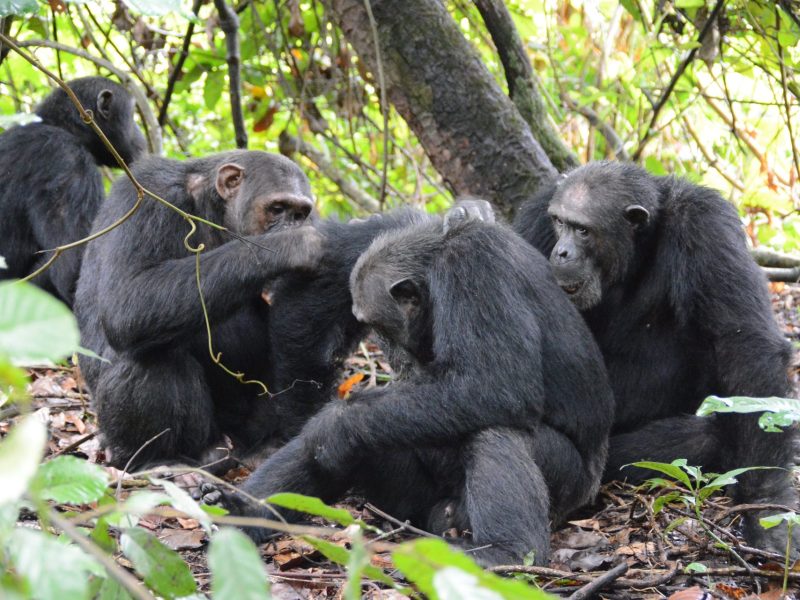
Rubondo Island National Park out in Lake Victoria is the other well-known site and is often easier, with an established camp and flights from Mwanza taking about an hour, plus chimpanzee trekking alongside. Rumanyika-Karagwe National Park north along the Kagera corridor holds similar habitat, and the Moyowosi and Kigosi wetlands to the south are extensive but remote. Across the border, Akagera in Rwanda has comparable papyrus. Burigi-Chato and Rubondo pair well on one Lake Victoria trip.
Booking Your Burigi-Chato Trip
The safari companies and tour operators listed on this website put trips like this together for a living and know which camps, guides and routes actually deliver. We are an independent guide to Burigi-Chato; we do not book or sell tours ourselves.
When you are ready, arrange your safari, tour or holiday with one of the recognised operators listed here. Tell them your dates and what matters most, and a real person, not a form, will handle the itinerary, park bookings and logistics for you.