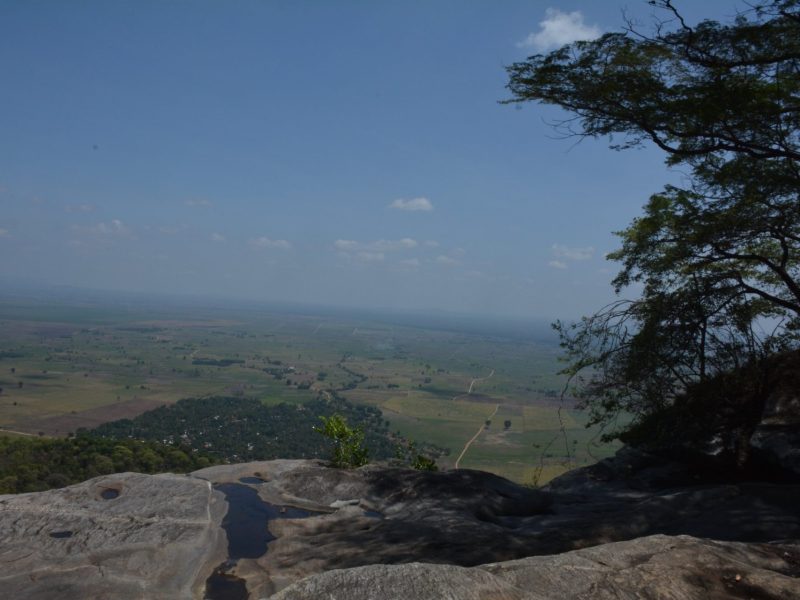
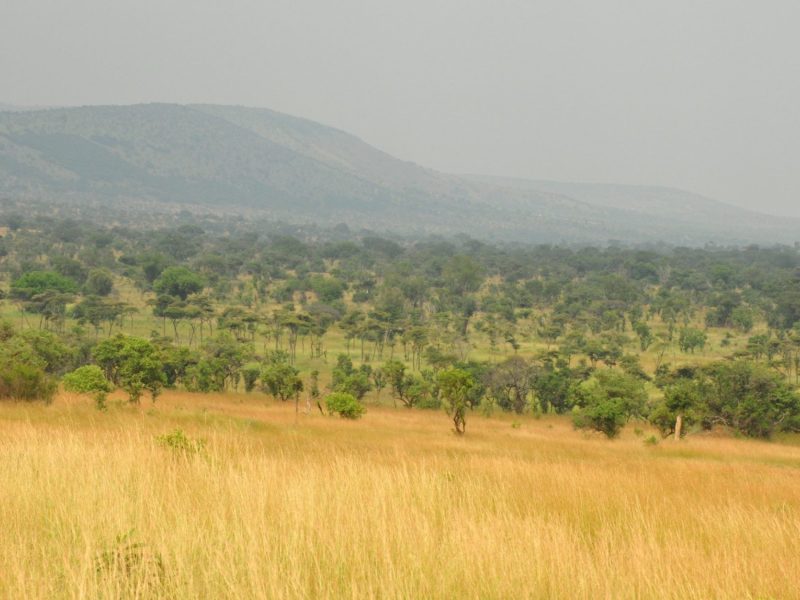
Burigi-Chato National Park is unusual among Tanzanian parks for combining a major freshwater lake, papyrus swamp, wooded savannah and ridge country inside one boundary, for permitting night game drives, and for being almost entirely free of other vehicles. It is one of the country’s largest parks and one of its least visited. Gazetted in 2019 from three former game reserves, it covers 4,707 square kilometres of northwestern Tanzania between Lake Victoria and the Rwandan border.
What it is not is a Serengeti substitute. Being clear about that is the fairest way into the question.
Size Without Crowds on a Burigi-Chato Safari
The first thing that separates a Burigi-Chato safari from the rest of Tanzania is the ratio of space to people.
At 4,707 square kilometres this ranks among the four largest national parks in the country, behind Nyerere, Ruaha and Serengeti, with sources differing on the exact ordering. Visitor numbers, by contrast, are a tiny fraction of what the northern circuit receives. Tourism infrastructure amounts to a handful of campsites, a rest house, some park cottages and tents, and a ranger post with bandas.
The practical result is that you can drive here all day and see nobody. In Serengeti, a good sighting attracts a queue of vehicles. Here there is no queue because there is nobody else in the park.
Whether that is a feature or a problem depends entirely on what you want from a safari.
Four Habitats in One Park on a Single Game Drive Safari
Most Tanzanian parks are built around one dominant habitat. This one holds at least four, and they sit close enough together to cross in a morning.
Wooded savannah: Hundreds of square kilometres of medium and tall grass beneath open deciduous canopy, described locally as miombo, with Combretum and Terminalia dominant and Brachystegia on the higher ground.
Freshwater lakes and papyrus swamp: Lake Burigi runs roughly 30 kilometres long and 4 kilometres wide, with islands, inlets and swampy bays holding sitatunga and specialised papyrus birds.
Ridge and escarpment country: A series of long north to south ridges with rocky crags along the escarpment edges, giving elevated viewpoints and their own set of rock-dwelling species.
Forested valleys and floodplains: Deeply set valleys with riverine forest, seasonally flooded grassland, and surviving fragments of Guinea-Congo forest in the steepest gullies.
Add the fever tree stands of Acacia xanthophloea on the poorer soils sloping toward Lake Victoria, and the Protea and Combretum on the drier western ridges, and the vegetation map alone is more varied than most parks twice as famous.
Sitatunga Watching in Habitat You Rarely Get Access To
The sitatunga is the species that gives this park a genuine claim to being different.
This is a semi-aquatic antelope with elongated, splayed hooves that let it walk on floating papyrus mats where nothing else of its size can follow. It swims well, feeds at the reed margins at dawn and dusk, and when alarmed submerges with only its nostrils above the surface. Very few places in Tanzania give a visitor protected access to extensive papyrus with boats and rangers on hand.
Lake Burigi’s swampy inlets do exactly that. Sightings are not guaranteed and should never be sold as such, but with early starts and a guide who knows the bays, this is a realistic goal rather than a fluke.
Rubondo Island is the other well-known Tanzanian site. Between them they make a strong pairing for anyone interested in wetland specialists.
Night Game Drive Safaris, Which Most Tanzanian Parks Do Not Allow
Night driving is prohibited across much of the Tanzanian park system. Burigi-Chato is one of the exceptions, alongside Katavi, Ruaha, Mikumi, Tarangire, Lake Manyara, Nyerere and Ibanda-Kyerwa.
In woodland this matters more than it would on open plains. Several of the smaller carnivores and nocturnal species are far easier to find with a spotlight than in daylight, and the valley floors after dark are a different park from the one you drove through at noon.
Night nature walks are also offered in applicable parks, which is rarer still.
Both carry a supplement on top of the daily conservation fee and require a park guide, and both need arranging in advance rather than deciding on the evening.
Boat Safaris and Water Activities on the Lake
A great many Tanzanian parks are dry-land operations. This one is not.
TANAPA lists Burigi-Chato among the small group of parks charging a boating safari fee, alongside Nyerere, Rumanyika-Karagwe, Mahale Mountains, Rubondo Island, Gombe and Saadani. Canoeing is offered separately, capped at three hours per session here. Sport fishing is permitted under park guidelines between seven in the morning and five in the afternoon, with tilapia the mainstay.
The angle a boat gives you is genuinely different. Woodland game drives fight tall grass and short sightlines. From the water you look back at an open shoreline with nothing between you and the animals drinking there, and hippo and large Nile crocodile go from occasional glimpses to constant company.
The lake is the reason to come here rather than to another quiet Tanzanian park. Take the boat trips seriously and the whole visit changes character.
A Cross-Border Corridor Linking Tanzania and Rwanda Safaris
Few parks sit so deliberately at a junction.
The western boundary follows the Kagera River, which carries water from the most distant headwater of the Nile and is the largest single tributary of Lake Victoria. Across that river, Akagera National Park in Rwanda protects the opposite bank of the same drainage. To the north the corridor extends toward Ugandan rangeland and the Lake Mburo country. Elephant movement between the Burigi area and the Moyowosi country to the south has been documented.
Ibanda-Kyerwa and Rumanyika-Karagwe National Parks, gazetted in the same round, fill the Tanzanian ground between. Rusumo Falls, where the Kagera drops roughly 15 metres over a 40 metre width on the Rwanda and Tanzania border, is the crossing point between the two national systems.
This makes an overland Rwanda and Tanzania trip ecologically coherent rather than just geographically convenient.
Low Fees and What That Means for a Budget Safari
Burigi-Chato sits in TANAPA’s lower fee band, along with Katavi, Ruaha, Mikumi, Rubondo Island, Saadani, Mkomazi, Kitulo, Udzungwa, Ibanda-Kyerwa, Rumanyika-Karagwe and Saanane Island. It also has no peak and low season split, unlike Serengeti, Nyerere, Tarangire, Lake Manyara and Arusha, so the rate is flat across the year.
What matters more than the gate price is what is not here. There are no luxury lodges inside the boundary, so there is no premium accommodation tier to inflate a nightly rate. Camping, a park rest house, cottages and tents, and guesthouses in the surrounding towns are the whole range.
That caps your spending whether you want it capped or not. For a budget-conscious traveller already in the Lake Zone, this is one of the cheapest genuine wilderness experiences in Tanzania.
A Recovery Story Rather Than a Finished Safari Destination
Honesty about this is what separates a useful account of the park from a brochure.
The three reserves that became Burigi-Chato were badly damaged in the mid-1990s. Following the Rwandan genocide of 1994, several hundred thousand refugees arrived in this part of Tanzania, with the main camp sited on the very edge of Burigi Game Reserve. Wild meat hunting rose steeply and woodland was cut heavily for building poles and fuel. Studies report large mammal populations across these reserves falling by around sixty percent between 1994 and 1996, with district reports putting depletion in Burigi and Kimisi at roughly two thirds.
Most refugees returned to Rwanda from the late 1990s and recovery has been under way since. National park status in 2019 ended hunting, brought the area under Tanzania National Parks rather than the wildlife authority, and increased ranger presence.
Numbers are reported to be climbing. They are not yet at anything like carrying capacity, and any operator promising Serengeti-style density here is misleading you.
How a Burigi-Chato Safari Compares With Tanzania’s Better Known Parks
Set against Serengeti, this park loses on wildlife volume by a wide margin and wins on solitude, price and habitat variety. Against Rubondo Island, it offers savannah and ridge country where Rubondo offers forest and chimpanzees, and the two pair rather than compete.
Against Katavi, which is the closest comparison in character, Burigi-Chato is easier to reach and has a stronger lake component, while Katavi has substantially better game densities.
Against Akagera across the border, the terrain is similar and the wildlife recovery story is parallel, though Akagera has had more sustained investment and now carries reintroduced lion and rhino that Burigi-Chato does not.
The right way to think about it is as a park for people who have already done the famous ones, or for people whose trip is anchored on Lake Victoria for other reasons.
Who This Safari Suits, and Who It Does Not
It suits birders, particularly anyone drawn to papyrus specialists and waterbirds. It suits travellers who value having a place to themselves over ticking off the Big Five. It suits people already in Mwanza, Bukoba or the western Serengeti, for whom the addition costs little. It suits photographers who want terrain and depth rather than density.
It does not suit first-time safari visitors with limited days, who will be better served by the northern circuit. It does not suit anyone whose trip depends on big cat sightings. It does not suit travellers who want comfortable lodges, since none exist inside the park.
Families with young children will find the long drives and basic facilities harder work than the wildlife justifies.
Frequently Asked Questions About What Sets a Burigi-Chato Safari Apart
Is Burigi-Chato cheaper than other Tanzanian parks?
Considerably, on both counts that matter. The conservation fee currently runs at US$30 per adult per day for non-East African visitors against US$70 in peak season for Serengeti and Nyerere, and US$50 for Lake Manyara, Tarangire and Arusha. Children aged five to fifteen pay US$10. There is also no peak and low season split here. Accommodation is where the bigger saving sits, since the park has no luxury lodges: camping runs at US$30 per adult per night on public campsites and US$50 on special campsites, with the park rest house and cottages at around US$35 per adult. All TANAPA charges carry 18 percent VAT.
What can I do here that I cannot do in Serengeti?
Take a boat safari, for one. Burigi-Chato is among the small group of parks charging a boating safari fee, currently US$20 per person, with canoeing at US$10 capped at three hours. Sport fishing is permitted at US$25 per adult per day. Night game drives are allowed, at US$50 per adult, which is prohibited across much of the park system. And you can look for sitatunga in protected papyrus, which is not something Serengeti offers at all.
Will I see the Big Five?
No. There are no rhino in Burigi-Chato. Elephant, buffalo, lion and leopard are all present, so four of the five occur, but predator densities are recovering from severe mid-1990s losses and sightings are not guaranteed. Anyone building a trip around Big Five ticking should go elsewhere. What this park delivers reliably is space, birdlife, hippo and crocodile, and a good chance at plains game concentrated near water in the dry season.
Why is this park so much emptier of visitors than others?
Partly location, partly age. It sits in northwestern Tanzania, a long way from Arusha and the established northern circuit, with the nearest major airport at Mwanza and no scheduled service into the park itself. It was only gazetted in 2019, so tourism infrastructure is minimal: a handful of campsites, a rest house, park cottages and tents, and a ranger post with bandas. Very few operators have built products around it yet.
Is it worth visiting on a first trip to Tanzania?
Usually not, if your days are limited. A first-time visitor with ten days will get far more from the northern circuit or a Serengeti and Zanzibar pairing. Burigi-Chato makes most sense as a second or third Tanzania trip, or as an addition for someone already in the Lake Zone for the western Serengeti, Rubondo Island or Mwanza. Judged on its own against the famous parks, it will disappoint. Judged as a quiet addition to a Lake Victoria route, it holds up well.
How does it compare with Akagera in Rwanda?
The terrain is closely related, since the two protect opposite banks of the same Kagera drainage, and both are recovering from heavy wildlife losses in the 1990s. Akagera has had more sustained conservation investment and now carries reintroduced lion and rhino, better roads and established lodges. Burigi-Chato is larger, cheaper, emptier and less developed. They combine well on an overland trip via the Rusumo Falls crossing, though Tanzania requires a separate visa from the East Africa Tourist Visa.
What is the single best reason to go?
The lake. Boat safaris and canoe trips on Lake Burigi, working the papyrus inlets at dawn for sitatunga and waterbirds, are the thing this park does that its neighbours do not, and they are what visitors consistently remember. The savannah game viewing is decent rather than exceptional. The water is what justifies the drive.
Booking Your Burigi-Chato Trip
The safari companies and tour operators listed on this website put trips like this together for a living and know which camps, guides and routes actually deliver. We are an independent guide to Burigi-Chato; we do not book or sell tours ourselves.
When you are ready, arrange your safari, tour or holiday with one of the recognised operators listed here. Tell them your dates and what matters most, and a real person, not a form, will handle the itinerary, park bookings and logistics for you.