Boat excursions in Burigi-Chato National Park run on Lake Burigi from launch points near the ranger posts, carrying a set per-person boating safari fee, with canoeing offered separately and capped at three hours per session. Trips need booking in advance because capacity is limited. Burigi-Chato is one of a small group of Tanzanian parks where TANAPA charges a boating safari fee, alongside Nyerere, Mahale Mountains, Rubondo Island, Gombe and Saadani.
Booking is the part people get wrong. There is no queue of boats waiting at the shore.
How Boat Excursions Work on a Burigi-Chato Safari
The practical mechanics of a boat safari here are worth knowing before you arrive, because this park is not set up like an established one.
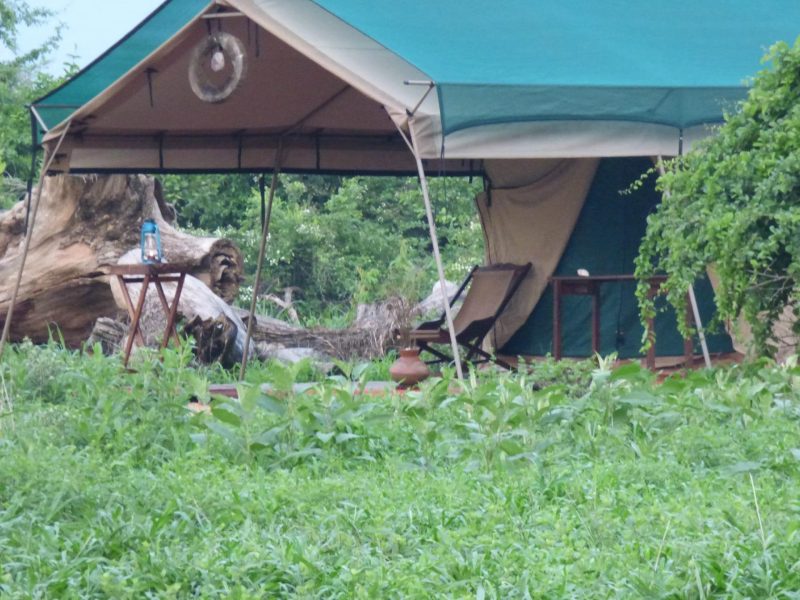
Trips launch from the shore near the ranger posts, with the Nkonje ranger post beside Lake Burigi the main base in the western sector. A ranger or park guide goes aboard. Craft are functional rather than comfortable, and this is not a cruiser operation with a bar and a shade deck.
The park was only gazetted in 2019 and visitor infrastructure remains minimal. Boat capacity is limited, so arrange your excursion through your operator or the TANAPA reservation system rather than assuming one will be free on the morning you want it.
The boating safari fee is charged per person and sits on top of your daily conservation fee.
Book the boat before you book anything else about the trip. Everything that makes this park worth the drive happens on the water, and a full boat on your only free morning wastes the whole visit.
Motorised Boat Safari Excursions and What They Cover
The motorised option is the workhorse and the right choice for a first outing.
What it buys is range. Lake Burigi runs roughly 30 kilometres long and about 4 kilometres wide with a scatter of islands and a great many inlets branching off the main body, and a single trip can take in several of them. When a bay proves empty you move on, which a paddle does not let you do.
Trips usually run two to three hours at either end of the day. Early morning is the productive window, with late afternoon into dusk the second choice, which has the advantage of catching hippo starting to move out toward their night grazing.
Ask the boatman to cut the engine as you come into a bay and let the craft drift the last stretch. Engine noise pushes wildlife back into cover well before you arrive, and it is the single biggest difference between a good boatman and a poor one.
Canoe Trips Along the Papyrus Margins
Canoeing is charged separately and more cheaply than motorised trips, capped at a maximum of three hours per session in Burigi-Chato under the same rule that applies at Mahale, Rumanyika-Karagwe and Rubondo Island.
Silence is the whole argument. Along a papyrus edge, a paddle lets you hold position at the reed line without pushing anything back into cover, and it reaches narrow channels a motorised boat cannot enter. For sitatunga and shy waterbirds it consistently outperforms the alternative.
The tradeoff is distance. Three hours of paddling covers a small fraction of this lake, so you need a guide who will put you in the right bay from the start rather than exploring.
Guides route around hippo pods and that routing is not open to discussion. A canoe and a hippo are a bad combination regardless of how still the water looks.
What You See on a Lake Burigi Boat Safari
This is the most reliable wildlife viewing available anywhere in the park, which is the main argument for prioritising it.
Hippo pods and large Nile crocodiles are close to certain. Hippo hold in the deeper sections in pods through the heat, surfacing regularly, while crocodiles bask on mud banks and sandbars through the middle of the day. African fish eagles occur at unusually high density along this shoreline.
Saddle-billed stork work the shallows, and herons, egrets, pelicans and several kingfisher species occupy the margins. Papyrus specialists including the papyrus gonolek live in the swampy inlets, and the same bays hold sitatunga at the reed edges at dawn and dusk.
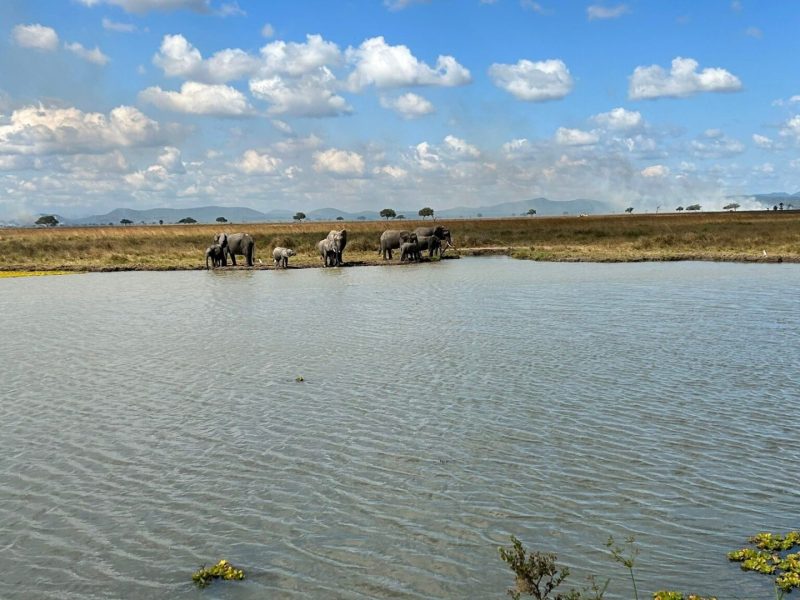
In the dry season, elephant, buffalo, zebra, giraffe, waterbuck and topi come down to drink along the shore, and seeing them from water level rather than from a vehicle track is a genuinely different experience.
From a vehicle you look down at animals through grass. From a boat you are level with a clean shoreline and nothing in between. That angle is the whole point.
Timing Your Boat Safari Through the Day
Time of day matters more here than time of year, and the difference is dramatic.
First light is the strongest window. Sitatunga feed at the papyrus margins around dawn and withdraw into the reed beds through the day, so a mid-morning trip to the best bay in the park will show you nothing while a dawn trip to a mediocre one may deliver. Birds are active, and the light is low and warm on the water.
The middle of the day is not wasted, since crocodiles bask openly precisely when everything else has gone quiet, but it is the weakest session for anything else.
Late afternoon into dusk is the second window, with hippo beginning to shift and the best light of the day in the last hour.
Dress for cold at dawn. Sitting still in an open boat before sunrise, with humidity off the water and wind chill on top, is the coldest you will be on the entire trip and bears no relation to the daytime forecast.
Sport Fishing Trips on the Lake
Fishing from a boat is permitted inside the park under specific guidelines, restricted to daylight hours between seven in the morning and five in the afternoon and charged per person per day. Rods can be hired from the park.
Tilapia are the mainstay of the catch on Lake Burigi. This is not the trophy Nile perch fishery that Lake Victoria and Rubondo Island are known for, where the isolated waters regularly produce very large specimens, so anyone coming for big perch should look at Rubondo instead.
Sport fishing here is charged separately from the boating safari fee, so a fishing excursion carries both where a boat is involved.
Confirm current rules with the park when you book, since fishing regulations inside national parks are reviewed periodically and are stricter than on open lake water.
Bringing Your Own Boat on a Lake Victoria Tour
Private vessels are permitted with the appropriate fees, which is worth knowing if you are running a wider Lake Victoria trip.
Boat and marine vessel entry to national parks is charged per day, scaled by passenger capacity, with different rates for private and commercial East African registered vessels. This is separate from the per-person boating safari fee, which still applies.
Burigi-Chato makes a workable start or end point for a boat or yacht circuit of the southern shoreline and islands of Lake Victoria. Such a route can take in Saanane Island National Park off Mwanza and Rubondo Island National Park in the southwest corner of the lake, and it can begin or finish at Musoma on the eastern shore.
Note that the park sits inland from Lake Victoria, reaching the lake around Bunkwe Bay on its eastern side, so a boat circuit still needs a vehicle at the shore to reach the gate.
Safety on Boat Safaris in the Park
The hazards here are real rather than theoretical, and the rules exist for reasons.
Swimming is not an option anywhere on this water. Hippo pods and large Nile crocodiles are present throughout, and bilharzia is a further risk in still freshwater across the region. This applies at boat launch points as much as out on the lake.
Hippo are the main danger to small craft. They are territorial in water, they surface unpredictably, and a canoe between a pod and deeper water is a serious situation. Follow your guide’s routing exactly rather than pushing for a closer photograph.
Take a windproof layer for dawn, sun protection for later, and a dry bag for anything electronic. Carry your own drinking water, since there is none available inside the park.
Best Season for Boat Safaris in Burigi-Chato
June to September: The strongest window. Lower water levels define the swamp margins, wildlife concentrates on the lake as seasonal water dries up, and dawn conditions are settled. Access tracks to launch points are firm.
October to December: Water rises with the first rainfall peak and wildlife spreads out, while birding improves as Eurasian migrants arrive. Boats run normally.
January to February: A drier gap between peaks. Good conditions on the water and very few other visitors anywhere in the park.
March to May: Boats still run and birding is strong, but reaching the launch points on unsurfaced tracks becomes the limiting factor rather than conditions on the lake itself.
Frequently Asked Questions About Boat Safari Excursions
How much does a boat excursion cost?
The boating safari fee in Burigi-Chato is currently US$20 per person for non-East African visitors, expatriates and residents, and TZS 10,000 for East African Community citizens. Canoeing, capped at three hours here, is US$10 per person and TZS 5,000 for EAC citizens. Both sit on top of the daily conservation fee of US$30 per non-East African adult. Sport fishing is US$25 per adult per day with rod hire at US$20 per rod. If you bring your own vessel, boat entry starts at TZS 10,000 per day for a private East African registered craft of up to ten seats. Add 18 percent VAT to all TANAPA charges.
Do I need to book in advance?
Yes. Boat capacity at the park is limited and visitor infrastructure remains minimal, since Burigi-Chato was only gazetted in 2019. Arrange your excursion through your operator or the TANAPA reservation system before you travel rather than assuming a boat will be available on the morning you want it. Park fee payment also goes through the government electronic payment gateway rather than cash at the gate, so both need sorting in advance.
How long does a boat excursion last?
Motorised trips typically run two to three hours at either end of the day. Canoeing is capped at a maximum of three hours per session in this park under TANAPA rules. Rather than one long outing, plan two or three separate early sessions across a stay, since wildlife activity on the water is tied to the light rather than to how many hours you accumulate.
What is the best time of day to go out?
First light, without much competition. Sitatunga feed at the papyrus margins around dawn and withdraw into the reed beds through the day, birds are most active early, and the light is at its best on the water. Late afternoon into dusk is the second window and catches hippo beginning to move out toward night grazing. The middle of the day is weakest, though crocodiles bask openly then when everything else has gone quiet.
Are boat trips safe?
With a park guide or ranger aboard and sensible behaviour, yes. Hippo are the main hazard to small craft, being territorial in water and surfacing unpredictably, which is why guides route around pods and why that routing should not be argued with. Large Nile crocodiles are abundant. Swimming is not an option anywhere on this water, including at launch points, and bilharzia is a further risk in still freshwater across the region.
Boat or canoe, which should I choose?
A motorised boat for your first outing, since it gives range across 30 kilometres of shoreline and lets you take in several inlets. A canoe for the specific bay you want to work, because silence along a papyrus margin is worth more than distance and it reaches narrow channels a boat cannot enter. For sitatunga and shy waterbirds the canoe wins clearly, at the cost of a three-hour cap and much less ground covered.
Can I bring my own boat?
Yes, with the appropriate fees. Boat and marine vessel entry is charged per day by passenger capacity, starting at TZS 10,000 for a private East African registered vessel of up to ten seats, rising for larger craft and for commercially registered ones. The per-person boating safari fee still applies on top. Burigi-Chato works as a start or end point for a wider Lake Victoria circuit taking in Saanane Island and Rubondo Island, though you will still need a vehicle at the shore to reach the gate.
Booking Your Burigi-Chato Trip
The safari companies and tour operators listed on this website put trips like this together for a living and know which camps, guides and routes actually deliver. We are an independent guide to Burigi-Chato; we do not book or sell tours ourselves.
When you are ready, arrange your safari, tour or holiday with one of the recognised operators listed here. Tell them your dates and what matters most, and a real person, not a form, will handle the itinerary, park bookings and logistics for you.