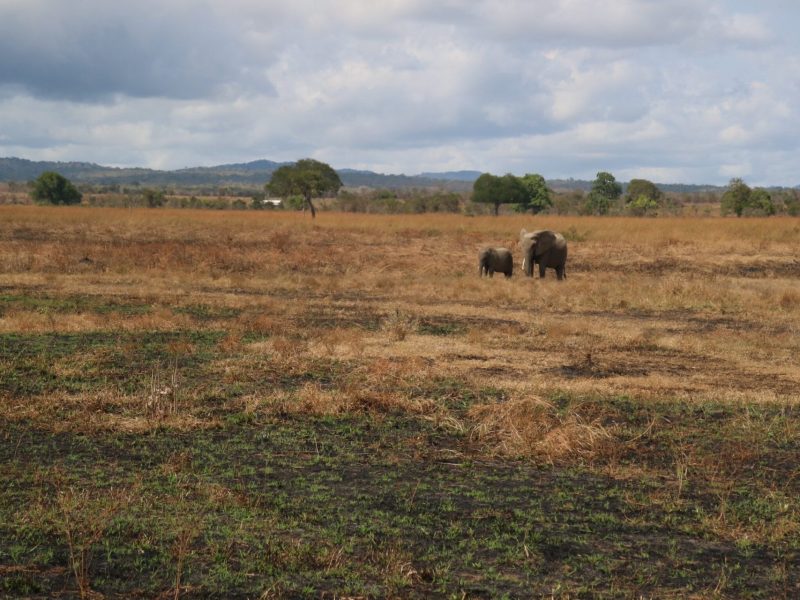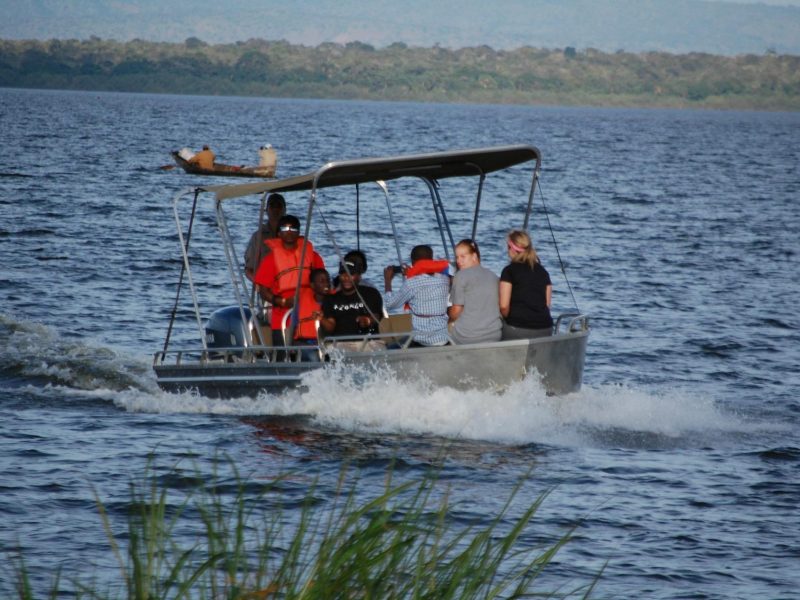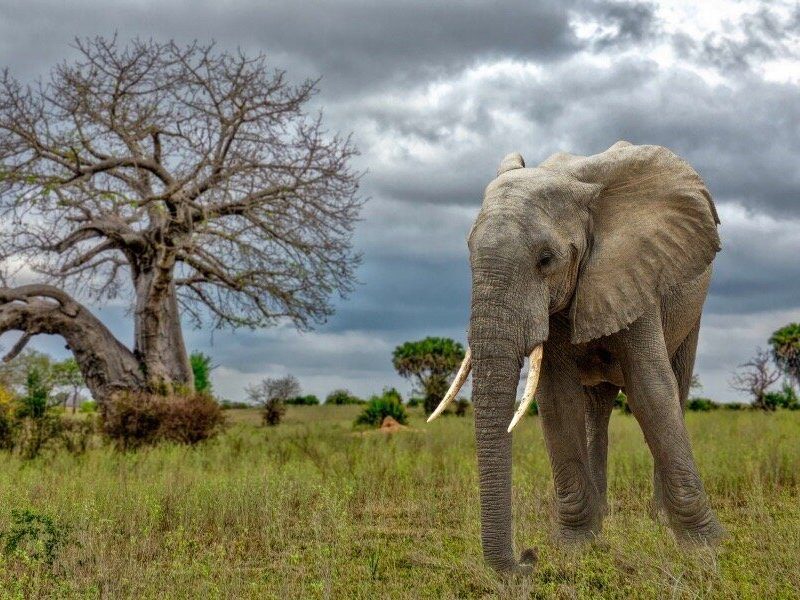
A 10-day Mahale chimps and Zanzibar beach combo splits into roughly five days of chimpanzee trekking on the shore of Lake Tanganyika and four on the Indian Ocean coast, joined by two internal flights. Most travellers book it as a fly-in package routed through Kigoma or Dar es Salaam, because Mahale has no road access at all. Mahale Mountains National Park sits on Tanzania’s far western border, while Zanzibar lies off the eastern coast, which makes this a genuine coast-to-coast pairing of forest trekking and reef.
The two halves feel nothing alike. That is the point of the trip.
What the 10-Day Mahale and Zanzibar Safari Actually Covers
The shape of this Mahale chimpanzee trekking safari is dictated by flight schedules rather than by how far you can drive, so the day count is less flexible than it looks. Ten days breaks down neatly into one arrival day, one transfer day into the west, three full days at Mahale, one long crossing day back east, three full days on Zanzibar and a departure day. Some operators trim the Dar es Salaam night at the start if your international flight lands early enough.
Days 1 to 2: Arrival in Dar es Salaam, then the domestic hop west to Kigoma on Lake Tanganyika, with an afternoon in town or at Ujiji.
Days 3 to 5: Boat or charter transfer into Mahale Mountains National Park, followed by two or three chimpanzee treks, forest walks and time on the lake.
Days 6 to 7: The long transfer east, usually Mahale to Kigoma or Mahale airstrip, then Dar es Salaam, then Zanzibar, with the first night in Stone Town.
Days 8 to 10: A spice farm tour, Jozani Forest colobus tracking, two beach days on the north or east coast, and the flight home.
Nothing about that schedule is padded. Mahale eats a full day at each end simply getting in and out, which is why a shorter version of this trip tends to disappoint people.
Getting to Mahale for Your Safari: The Kigoma Flight and Lake Tanganyika Boat Transfer
Reaching the park is the first real part of the Mahale safari, and it is worth knowing how it works before you commit. There are two ways in. The cheaper one runs a scheduled flight from Dar es Salaam to Kigoma, then a road transfer south to a village such as Sigunga or Kalilani, then a boat down the lake to the park. That combination takes most of a day and can stretch to eight hours end to end when the water is choppy.
The faster option is a light aircraft charter straight to Mahale airstrip, flown from Arusha, Dar es Salaam or Kigoma, followed by a short boat leg to your camp. It costs more and it saves you the better part of two days across the round trip.
Light aircraft on the western routes usually cap baggage at around 15 kilograms in soft bags. Hard-shell suitcases are refused outright on most charters, so pack a duffel and leave the rest at your Dar es Salaam or Arusha hotel.
Lake Tanganyika is the second deepest lake on earth and the water is startlingly clear. The boat leg, which many people brace themselves for, tends to be the part they talk about afterwards.
Chimpanzee Trekking Safaris With the Mahale M Group
The chimpanzee trekking safari at Mahale is why the western half of this itinerary exists. Trekking follows the M group, a community habituated over decades of Japanese primate research that began in the mid-1960s, and it is one of the longest-running chimpanzee study populations anywhere. Groups head out after breakfast with a park guide and trackers who have usually already located the chimps by radio.
Walking time varies enormously. On a good morning the group is feeding low on the slopes and you are with them inside an hour. On a bad one you climb for three hours through steep, humid forest with roots underfoot and no guarantee at the end. Sightings are not promised, though success rates during the dry months are high enough that most guests get at least one solid contact across a two or three night stay.
Time with the animals is capped at one hour once found, and a face mask is required to reduce disease transmission risk. Minimum age for trekking is normally twelve.
Bring gloves. The forest is full of thorny vines and you will grab things on the way up.
Lake Tanganyika Kayaking, Snorkelling and Dhow Trips at Mahale
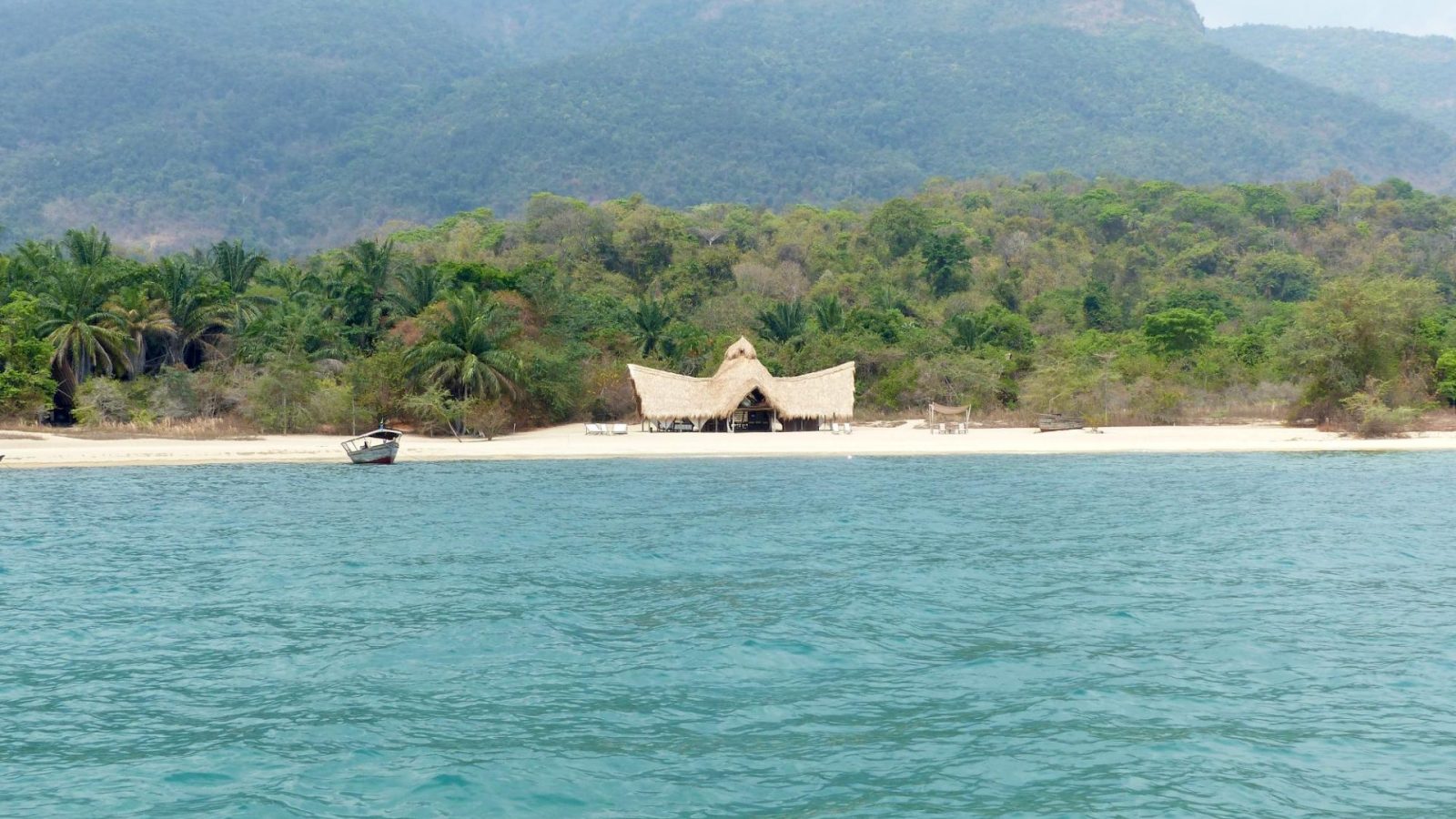
Afternoons at Mahale run on lake time, and these boat trips and water activities are included in most camp rates rather than booked as extras. The shoreline in front of the camps is white sand backed immediately by forested mountains, which is an odd combination to stand in the middle of.
Snorkelling here means cichlids. Lake Tanganyika holds hundreds of endemic species and the rocky shallows are dense with them, small and territorial and brightly marked. Kayaking along the shore in the late afternoon is the other standard option, along with a slow dhow trip out onto the water as the light drops behind the Congo side of the lake.
Swimming is permitted at the camp beaches. Crocodiles and hippos exist elsewhere on the lake, so follow whatever your guides tell you rather than your own judgement about where looks fine.
Forest Walks and Birding Tours in the Mahale Mountains
Beyond the chimp treks, guided forest walks and birding tours fill out the Mahale days. The park runs to roughly 1,613 square kilometres of miombo woodland, montane forest and grassland rising steeply from the shore to Nkungwe peak at just over 2,400 metres, and the habitat mix produces a long bird list.
Guides point out red colobus, red-tailed monkeys and blue monkeys along the lower trails. Palmnut vultures and fish eagles work the shoreline. On the forest edges you may pick up crested guineafowl, Ross’s turaco and various greenbuls, though this is a park where a birding-specific guide makes a real difference to what you actually identify.
Flying From Mahale to Zanzibar: How the Crossing Day Works
Day six or seven is a travel day and there is no way around it. The country is wide, and getting from Lake Tanganyika to the Indian Ocean means either two flights via Dar es Salaam or, on some schedules, a routing through Arusha. Expect to leave your Mahale camp early and reach your Zanzibar hotel in the late afternoon or evening.
A handful of operators build in a Dar es Salaam overnight rather than pushing the connection on the same day. If your Mahale departure depends on a boat leg to Kigoma first, take the overnight. Missing an international connection because the lake was rough is a miserable way to end the western half.
The transfer day is not wasted time. It is the price of putting two places this different into one trip, and most people find the contrast is what makes the pairing work.
Stone Town Walking Tours on the Zanzibar Leg
Zanzibar opens with a Stone Town walking tour, usually on the afternoon or morning after arrival. The old quarter is a UNESCO World Heritage Site, built from coral rag and mangrove poles, and the interest lies in the layering: Omani, Indian, Persian and European elements sitting on top of each other along streets too narrow for cars.
Guided routes typically take in the carved doors, the Old Fort, the House of Wonders exterior, the former slave market site and the Anglican cathedral built over it, and the Darajani market. Two to three hours covers it comfortably. The Forodhani night food stalls open along the seafront after dark and are worth a wander even if you eat lightly.
Dress modestly in town. Shoulders and knees covered is the norm away from the beach hotels, and it is noticed.
Spice Farm Tours and Jozani Forest Colobus Tracking
The classic Zanzibar day trip pairs a spice farm tour with Jozani Forest colobus tracking, and both sit within easy reach of Stone Town. Spice farms inland from town grow cloves, nutmeg, cinnamon, cardamom, vanilla and pepper, and the tours are hands-on in a low-key way: you smell, taste and scratch bark for two hours or so while a guide explains what the island’s trade was built on.
Jozani Chwaka Bay National Park protects the last substantial groundwater forest on the island and holds the Zanzibar red colobus, a subspecies found nowhere else. The troops near the main trail are habituated and sightings are reliable, which is unusual enough to be worth saying plainly. A boardwalk through the mangroves rounds out the visit.
Both fit into a single day if you start early.
Beach Days and Sunset Dhow Cruise Tours on the Zanzibar Coast
The last two full days are deliberately unstructured. Where you spend them changes the trip more than people expect, so it is worth choosing on purpose rather than letting an operator default you.
Nungwi and Kendwa, north coast: Minimal tidal variation, so you can swim at any hour. Busier, more nightlife, best for a short stay where you do not want to plan around the water.
Paje and Jambiani, southeast coast: Big tides that pull the water far out twice a day, exposing seagrass flats. Quieter, and the centre of the island’s kitesurfing scene.
Matemwe and the northeast: Closest base for Mnemba atoll snorkelling trips, calmer in character, with reef in easy boat range.
A sunset dhow cruise is the standard evening excursion from most beach bases and from Stone Town, run on traditional wooden sailing boats. Snorkelling trips to Mnemba and the reefs off the northeast are the other main add-on. Dolphin trips off Kizimkazi are widely sold, though the pursuit-style boat behaviour on many of them is worth asking about before you book.
Best Time for a Mahale and Zanzibar Combination Trip
Timing is set by Mahale, not by the coast, since Zanzibar is pleasant across far more of the year than the western forests are.
June to October: The dry months and the strongest window for chimpanzee trekking. Trails are firmer, the chimps often feed lower down the slopes, and treks tend to be shorter. This is also reliable beach weather on Zanzibar.
December to February: A shorter dry spell. Trekking is workable, the coast is hot and clear, and camps are quieter than in the main season.
March to May: The long rains. Mahale trails turn slick and steep, several camps close entirely, and the Zanzibar coast sees its heaviest downpours. Avoid this window for this particular pairing.
If you have a free choice, aim for July through September. The tradeoff is that Mahale camps are small, and the good ones fill six to twelve months out for those months.
Who This Combination Trip Suits, and Who It Does Not
This works well for reasonably fit travellers who want one demanding wildlife experience rather than a rolling park-to-park circuit, and who like the idea of finishing flat on a beach. It suits second-time visitors to Tanzania who have already done the northern circuit and want somewhere with almost no vehicles in it.
It suits families less well. The trekking age minimum rules out younger children, the transfers are long, and Mahale camps have limited capacity for large groups. If you are travelling with under-twelves, a Rubondo Island or northern circuit pairing with Zanzibar will serve you better.
It is also a poor fit if you want the big cats and plains game. Mahale is forest and lake. There are no game drives, there is no vehicle circuit, and you walk everywhere.
Frequently Asked Questions About the Mahale and Zanzibar Safari
How much does a 10-day Mahale and Zanzibar combo cost?
The park fees themselves are a small slice of it. Mahale conservation fees currently run at US$80 per adult per day for non-East African visitors, US$20 for children aged five to fifteen, and TZS 5,000 for East African citizens, with all TANAPA charges quoted exclusive of 18 percent VAT. A park guide is charged at US$20 per group per day. Where the money actually goes is flights and camps: the internal air legs across this routing typically land somewhere between US$800 and US$1,500 per person, and Mahale’s camps sit at the premium end of Tanzanian pricing, with the best-known lodge running well over US$1,000 per person per night in high season. Simpler bandas and the park rest house exist at a fraction of that. A realistic all-in range for the ten days, excluding international flights, is roughly US$5,000 to US$12,000 per person depending almost entirely on which camp you choose.
What are the Mahale chimpanzee trekking permit fees?
Unlike gorilla trekking, Mahale does not charge a separate high-value trekking permit. Your daily conservation fee covers entry, and the guide fee is charged per group per day. The Chimpanzee Habituation Experience, which is offered at Mahale for those who want longer contact time, is charged separately at US$100 per adult and US$50 for children aged five to fifteen. Camping in the park, where permitted, is charged at US$30 per person per night on public campsites, and park-run cottages at Mahale are around US$40 per person per night.
How fit do I need to be for chimpanzee trekking at Mahale?
Moderately fit. The terrain is steep and the humidity is high, and a hard trek can mean three hours of climbing on uneven forest floor before you reach the group. Most people in reasonable walking condition manage it. If you have knee trouble, use poles and tell your guide before you set out, because they can sometimes route you differently. The minimum age is twelve.
Can I do this trip in fewer than ten days?
You can, but you lose the buffer that makes it safe. Mahale needs two travel days built in, and the crossing to Zanzibar needs one more. Cutting to eight days usually means a single chimp trek, which is a lot of flying for one attempt at an animal that moves. If ten days is not available, a better compromise is dropping Zanzibar to two nights rather than dropping a Mahale night.
Is Zanzibar safe to visit at the end of a safari?
Yes, with the usual sensible caution. Petty theft on beaches and in Stone Town’s back streets is the main issue, so leave valuables in the hotel safe and avoid quiet stretches of beach after dark. Zanzibar is majority Muslim and modest dress away from beach resorts is expected. Ramadan affects restaurant opening hours in town, which is worth checking against your travel dates.
Do I need malaria prophylaxis for both halves?
Yes. Both western Tanzania and Zanzibar are malaria areas, and prophylaxis is standard medical advice for the whole trip rather than one leg of it. Yellow fever certification is required if you are arriving from a country with risk of transmission. Speak to a travel clinic well before departure, since some regimens need to be started in advance.
Booking Your Burigi-Chato Trip
The safari companies and tour operators listed on this website put trips like this together for a living and know which camps, guides and routes actually deliver. We are an independent guide to Burigi-Chato; we do not book or sell tours ourselves.
When you are ready, arrange your safari, tour or holiday with one of the recognised operators listed here. Tell them your dates and what matters most, and a real person, not a form, will handle the itinerary, park bookings and logistics for you.