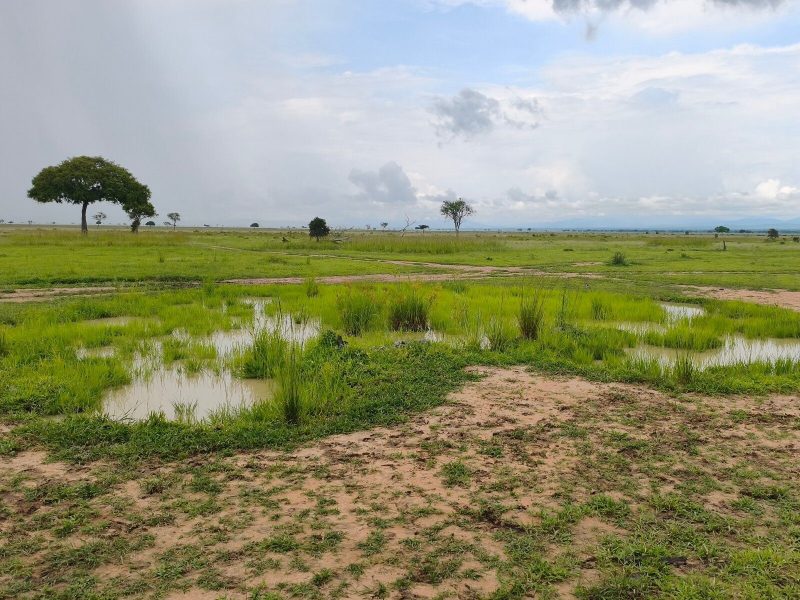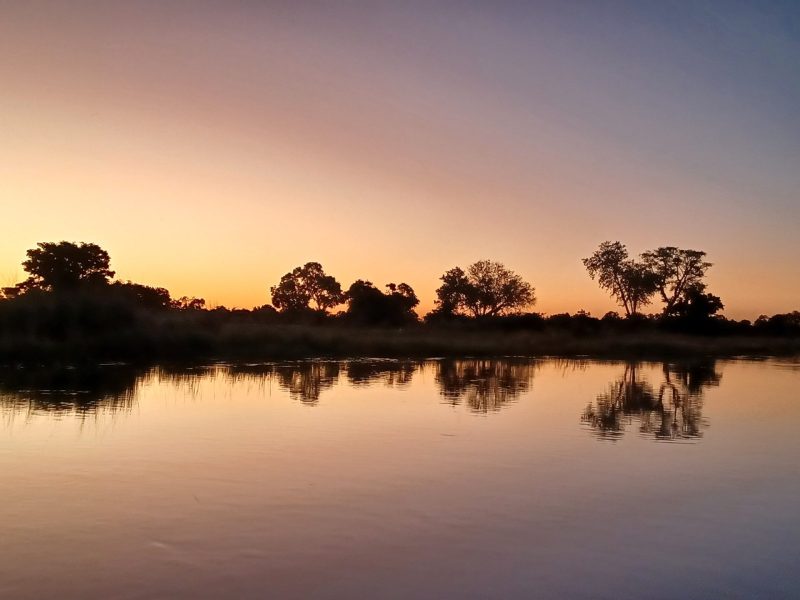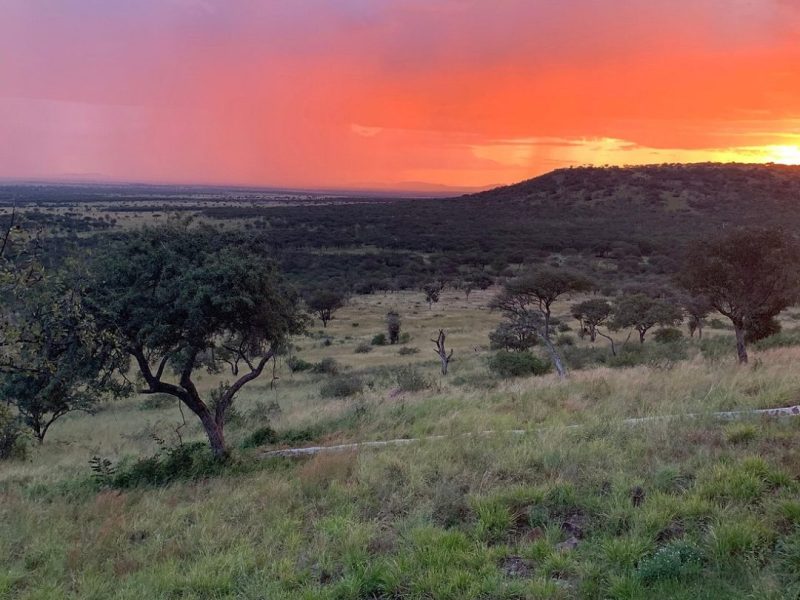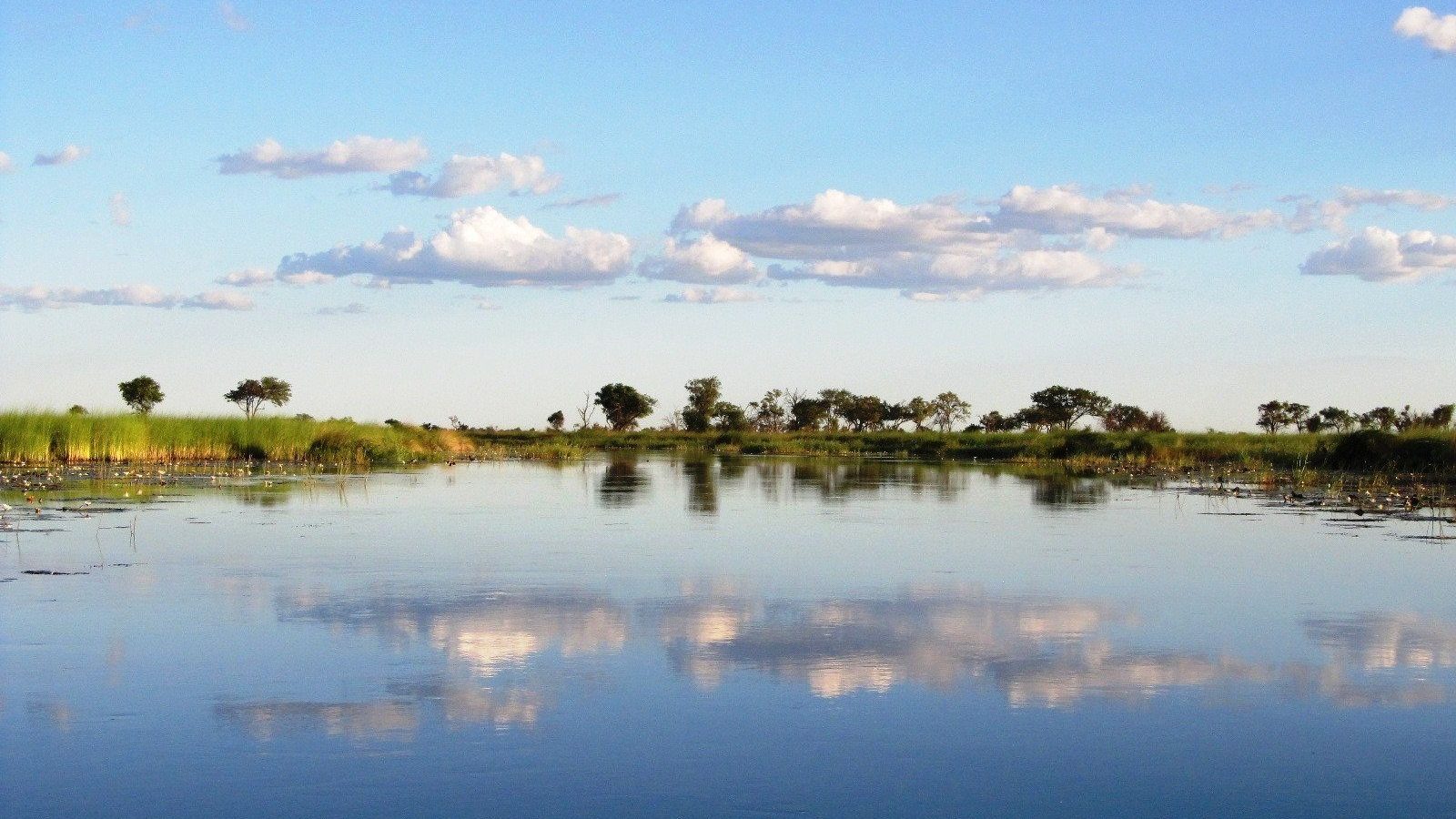
Sitatunga swamp habitats in Burigi-Chato National Park are the papyrus and reed beds lining the inlets and bays of Lake Burigi, where this semi-aquatic antelope feeds at dawn and dusk and shelters through the day. Early morning boat and canoe trips along the swamp margins give the best chance of seeing one. Burigi-Chato covers 4,707 square kilometres of northwestern Tanzania, and its swampy lake arms are among the few places in the country where sitatunga watching is a realistic aim.
They are not easy to see. That is most of the appeal.
What Makes a Sitatunga Swamp on a Burigi-Chato Safari
Not all wetland is sitatunga habitat, and knowing the difference tells you where to spend your time on a Burigi-Chato safari.
What the animal needs is permanent standing water with dense emergent vegetation growing out of it, deep enough to keep ground predators out, and wide enough that the animal can move without leaving cover. Papyrus does this better than anything else in East Africa. It grows three metres or more in dense stands, on floating mats of root and decaying plant matter, and it creates a habitat closed to almost every other large mammal.
Lake Burigi supplies this along its swampy inlets. The lake runs roughly 30 kilometres long and about 4 kilometres wide along a valley floor, with a scatter of islands and a great many bays and side arms running off the main body. Some of those arms are open water. The swampy ones are where the sitatunga are.
Reed and sedge beds fill the shallower margins between papyrus and open water, and those transition zones are where the animals actually feed.
The Sitatunga Itself: What Safari Visitors Are Looking For
The sitatunga is a spiral-horned antelope of the same group as the bushbuck and the kudu, and everything about it is modified for swamp.
The hooves are the giveaway. They are elongated and widely splayed, with flexible pasterns, spreading the animal’s weight across floating vegetation that would not hold a bushbuck of similar size. The coat is long, shaggy and water-repellent. Males are dark greyish-brown with spiral horns and a shaggy throat; females are considerably smaller, reddish, and hornless, with faint white markings.
Sitatunga swim well and readily. When alarmed, rather than running, they submerge, leaving only the nostrils above the surface, and they will hold that position for a long time while a threat passes. This is a defensive strategy that works against almost everything except a patient observer with binoculars.
A sitatunga’s response to being seen is to disappear downward. Once you know that, the papyrus edge stops looking empty and starts looking occupied.
They are largely crepuscular, feeding on aquatic plants, papyrus shoots, sedges and marginal browse at first and last light, then withdrawing into the reed beds. Males are usually solitary. Females may be seen alone or in small groups.
Sitatunga Watching Tours on Lake Burigi
The practical business of sitatunga watching here comes down to four things: being on the water, being there early, moving quietly, and being willing to try more than once.
Boat trips launch from near the ranger posts, and TANAPA charges a boating safari fee for Burigi-Chato. Canoeing is offered separately and more cheaply, capped at a maximum of three hours per session in this park. For sitatunga, the canoe is the better tool. Silence along a papyrus edge is worth more than the range a motor gives you.
The method is unglamorous. You position at the margin of a bay where the papyrus meets open water, before sunrise, and you wait. Guides who know the specific inlets will put you in the right one. Scanning is done with binoculars along the reed line, watching for movement and for the shape of a head above the vegetation rather than a whole animal.
Sightings are not guaranteed and nobody should tell you otherwise. Success across a two or three night stay with early starts is a reasonable hope, not a promise.
Plan two or three separate dawn attempts rather than one long outing. Sitatunga activity is tied to the light rather than to how many hours you put in, so three short early sessions beat one long mid-morning drift by a wide margin.
Where the Sitatunga Swamps Sit on the Wider Lake Zone Safari Circuit
Lake Burigi is one node in a much larger drainage. The Kagera River runs along the western side of the park, and the Kagera swamps extend toward the Rwandan border. To the east the ground falls away toward Lake Victoria, meeting the lake around Bunkwe Bay.
Sitatunga occur across this whole system wherever papyrus is extensive and undisturbed, and they are found in similar habitat at Rubondo Island National Park out in Lake Victoria and across the border in the Akagera wetlands. What Burigi-Chato offers is protected habitat within a national park, with boat access and rangers.
Conservation assessments of this area have recommended bringing a larger share of Lake Burigi and its lakeside swamps under protection, precisely because these margins matter for wetland specialists.
Other Wildlife Watching in the Sitatunga Swamps
You will see a great deal on the way to not seeing a sitatunga, which is the honest way to sell an early boat trip here.
Hippo pods hold in the deeper sections through the day and move out at night to graze. Large Nile crocodiles bask on mud banks and sandbars, and the bigger individuals in this system are substantial animals. Water monitor lizards work the banks. Pythons are recorded in the park.
Along the swamp margins, bushbuck and reedbuck use the drier edges where sitatunga use the wet. Defassa waterbuck favour the marginal ground. Buffalo, elephant and zebra come down to drink, and in the dry months that traffic is constant.
Predators work the same edges. Lion, leopard and spotted hyena are present in the park at recovering rather than high densities, and any sighting is a good day.
Papyrus Birdwatching Safaris Alongside the Sitatunga
Papyrus has its own bird community, and a birdwatching safari along these inlets picks up species you will not find in the woodland a kilometre away.
Papyrus specialists are the draw. The papyrus gonolek is associated with the reed beds of this system and is a bird that dedicated birders travel for. White-browed coucal works the swamp margins, and weaver colonies including village weaver hang over the water.
On the open water and shallows, African fish eagles occur at unusually high density, saddle-billed stork work the edges, and wattled crane, wattled lapwing, Senegal lapwing, herons, egrets, pelicans and several kingfisher species are all recorded. Eurasian migrants arrive from around November.
Shoebill is the bird people ask about. Conservation surveys have flagged that Burigi’s lakeside swamps may hold breeding Balaeniceps rex, and the habitat suits the species, but confirmed sightings here are scarce and the area is barely surveyed. Treat it as a genuine possibility rather than a target you can book.
Threats to the Sitatunga Swamps and Ongoing Conservation Work
The history here matters, and it is not a comfortable one.
Following the Rwandan civil war and the genocide of 1994, very large numbers of refugees arrived in this part of Tanzania, with the main camp sitting on the very edge of what was then Burigi Game Reserve. Wild meat hunting rose sharply, and woodland was cut for building poles and fuel to the point that tree stumps were being dug out. Studies from the period report large mammal populations in the reserves falling by around sixty percent between 1994 and 1996, with district reports putting the depletion in Burigi and Kimisi at roughly two thirds.
Most refugees returned to Rwanda, and the situation improved considerably. Gazetting the area as a national park in 2019 brought it under Tanzania National Parks rather than game reserve management, with the ranger presence and anti-poaching capacity that comes with that.
Fishing pressure on Lake Burigi remains a live issue for the swamp margins, and putting the lake fishery on a longer-term footing has been identified as a priority for protecting exactly the habitat sitatunga depend on.
Best Time for Sitatunga Watching in Burigi-Chato
Rainfall comes in two peaks here, one around November and December and a second in March and April, with dry weather from June through September.
June to September: The best window by a clear margin. Water levels are lower, the swamp margins are more defined, animals concentrate on permanent water, and boat conditions are settled at dawn.
October to December: Rains return and water levels rise, which spreads sitatunga through a wider area of flooded vegetation and makes them harder to pin down. Birding is at its best.
January to February: A drier interval. Workable for boat trips, quiet, and a reasonable second choice if the main season does not suit.
March to May: Heaviest rain and highest water. Boats still run, but reaching launch points on unsurfaced tracks is the constraint, and the animals are at their most dispersed.
July through September, at first light, is the answer if you have a free choice.
Getting to the Sitatunga Swamps for Your Safari, and What to Bring
Mwanza is the main road gateway at around 150 kilometres and three to five hours. Bukoba is closer at two to three hours. Chato town sits roughly 40 kilometres from the Katete Gate on the eastern side of the park.
Charter flights can reach an airstrip near the Nkonje ranger post beside Lake Burigi, which drops you directly at the swamp system. Chato and Bukoba receive domestic flights, with a road transfer onward.
Staying beside the water is what makes a dawn trip possible. The Nkonje area has bandas and a tented camp, and public and special campsites sit near the shore.
Optics: Binoculars with strong low-light performance are the single most useful item. Eight or ten power with large objective lenses beats high magnification in dim conditions on a moving boat.
Warmth: Dawn on open water is genuinely cold here. A fleece and a windproof layer, whatever the daytime forecast says.
Camera kit: A fast telephoto, high ISO tolerance and a dry bag. Subjects are distant, partly hidden and briefly visible in poor light.
Protection: Strong insect repellent for the swamp margins, malaria prophylaxis for the whole trip, and a hat for once the sun is up.
Frequently Asked Questions About Sitatunga Watching
How much does a sitatunga watching trip cost at Burigi-Chato?
The park conservation fee currently runs at US$30 per person per day for non-East African adults and US$10 for children aged five to fifteen, with US$15 and US$5 for expatriates and Tanzanian residents and TZS 5,000 and TZS 2,000 for East African Community citizens. On top of that, the boating safari fee is US$20 per person and canoeing is US$10 per person, capped at three hours. A park guide is US$20 per group per day. All TANAPA charges carry 18 percent VAT.
What are my realistic chances of seeing a sitatunga?
Moderate over a two or three night stay with early starts, and poor on a single mid-morning outing. The animals are shy, well camouflaged, active mainly at dawn and dusk, and living in habitat you cannot see into. Dry season conditions and a guide who knows the specific inlets improve the odds considerably. No operator can guarantee this sighting, and one who promises it is telling you something about themselves rather than about the park.
Is a boat or a canoe better for sitatunga?
A canoe, if you can get one and if the inlet you want is within reach. Silence matters more than range along a papyrus edge, and a paddle lets you hold position at the margin without pushing the animals back into cover. The tradeoff is that canoeing is capped at three hours per session here, so a motorised boat is the better choice if you need to cover several bays or reach a distant part of the lake.
Where else in Tanzania can I see sitatunga?
Rubondo Island National Park out in Lake Victoria is the other well-known site and is often easier, with the added draw of chimpanzee trekking. Sitatunga also occur in wetlands across the wider Kagera system and in parts of the Moyowosi and Kigosi country to the south. Across the border, the Akagera wetlands in Rwanda hold them in similar papyrus habitat. Burigi-Chato and Rubondo combine well on one Lake Victoria trip.
Can I walk into the papyrus to look for them?
No. Papyrus grows on floating mats that will not carry a person’s weight, and the water beneath holds hippo and large Nile crocodile. Walking safaris in the park are conducted with an armed ranger on firm ground, not in swamp. Bilharzia risk in still freshwater is a further reason to stay out of the water entirely, including at boat launch points.
Why are sitatunga numbers low in this area?
Partly because they are naturally scarce and habitat-restricted, and partly because of history. Large mammal populations across these reserves fell sharply during the mid-1990s refugee period, when wild meat hunting rose steeply and woodland was cut heavily. Reported declines run to around sixty percent between 1994 and 1996. Numbers have been recovering since, and national park status from 2019 brought stronger protection, but this is a population rebuilding rather than one at capacity.
What accommodation is closest to the swamps?
The Nkonje ranger post area beside Lake Burigi offers bandas and a tented camp with basic amenities, and there are public and special campsites near the shore. TANAPA rest house, cottages and park tents at Burigi-Chato currently run at around US$35 per adult per night for cottages and rest house and US$30 for park tents, with public campsites at US$30 per adult and special campsites at US$50. Anything more comfortable means basing in Chato, Biharamulo or Kayanga and driving in, which makes a pre-dawn boat departure difficult.
Booking Your Burigi-Chato Trip
The safari companies and tour operators listed on this website put trips like this together for a living and know which camps, guides and routes actually deliver. We are an independent guide to Burigi-Chato; we do not book or sell tours ourselves.
When you are ready, arrange your safari, tour or holiday with one of the recognised operators listed here. Tell them your dates and what matters most, and a real person, not a form, will handle the itinerary, park bookings and logistics for you.